Theology

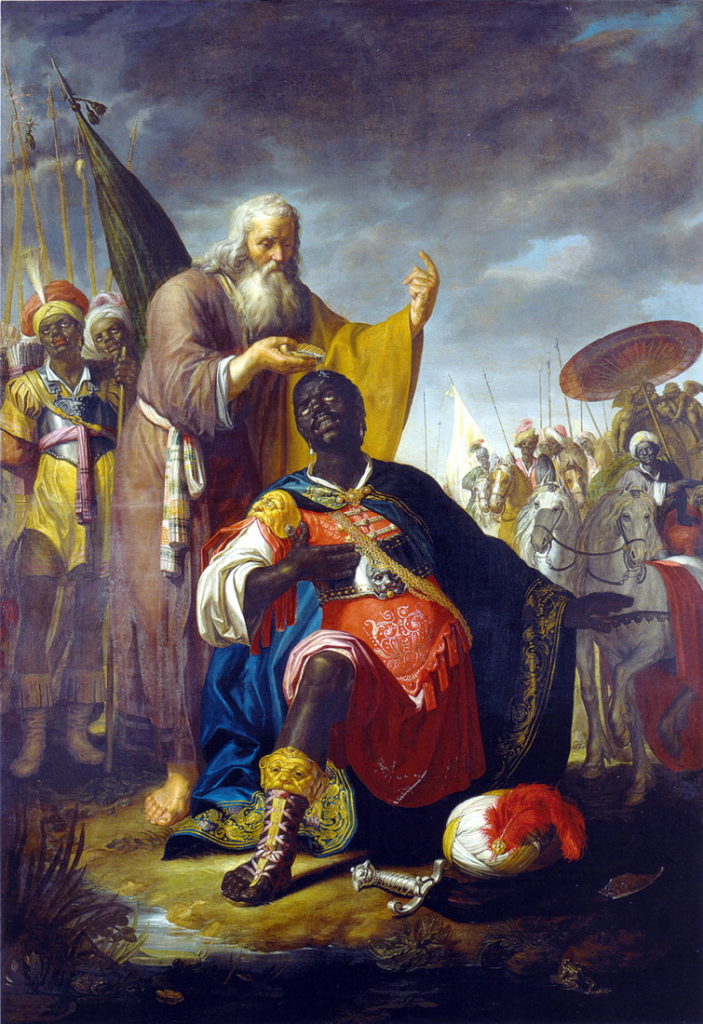
Baptism in Acts Chapter 10

As Peter starts his sermon it is important to remember the context. In context, this occurs immediately after Peter’s vision of the unclean animal’s being lowered down on the sheet, and God telling him to kill and eat. This was God instructing Peter that the gentiles are included in the New Covenant.

9 And on the next day, as they were on their way and approaching the city, Peter went up on the housetop about the sixth hour to pray. 10 But he became hungry and was desiring to eat. And while they were making preparations, he fell into a trance 11 and *saw heaven opened up, and an object like a great sheet coming down, lowered by four corners to the ground, 12 and there were in it all kinds of four-footed animals and crawling creatures of the earth and birds of the sky. 13 And a voice came to him, “Rise up, Peter, slaughter and eat!” 14 But Peter said, “By no means, Lord, for I have never eaten anything defiled and unclean.” 15 Again a voice came to him a second time, “What God has cleansed, no longer consider defiled.” 16 And this happened three times and immediately the object was taken up into heaven.
Acts 10:9-16

Peter begins to preach the gospel of Jesus for the gentiles in vv. 34-36. “34 And opening his mouth, Peter said: “I most truly comprehend now that God is not one to show partiality, 35 but in every nation the one who fears Him and does righteousness is welcome to Him. 36 As for the word which He sent to the sons of Israel, proclaiming the good news of peace through Jesus Christ–He is Lord of all– ”

He calls the Jews who were there to recall the first baptism mentioned in Acts chapter 10. It was John’s baptism of Jews for repentance. This is the baptism that Jesus participated in to fulfill all righteousness as as Jew. Even though He was not guilty of sin, nor did He need to repent of anything. He did it to fulfill all righteousness. This baptism of Jesus is not the baptism of New Covenant believers. We see later in Acts 10 which is the gentile believers being baptized as New Covenant believers. “37 you yourselves know the thing which happened throughout all Judea, starting from Galilee, after the baptism which John proclaimed. 38 You know of Jesus of Nazareth, how God anointed Him with the Holy Spirit and with power, and how He went about doing good and healing all who were oppressed by the devil, for God was with Him. 39 And we are witnesses of all the things He did both in the land of the Jews and in Jerusalem. They also put Him to death by hanging Him on a tree. 40 God raised Him up on the third day and granted that He appear, 41 not to all the people, but to witnesses who were chosen beforehand by God, that is, to us who ate and drank with Him after He arose from the dead. 42 And He commanded us to preach to the people, and solemnly to bear witness that this is the One who has been designated by God as Judge of the living and the dead. 43 Of Him all the prophets bear witness that through His name everyone who believes in Him receives forgiveness of sins.””

While Peter was preaching the gospel of Jesus to them, God poured out the Holy Spirit on them. This anointing was much like the anointing of the Apostles, and their disciples, who were with them at Pentecost. We know the gospel is the power of God unto salvation. We know it is the means He has ordained for the elect to come to the Faith. These gentiles who were there in this mixed crowd were born again by the preaching of the gospel of Jesus. Otherwise the Holy Spirit would not have been poured out on them in the fashion it was. They were speaking in tongues and magnifying God. In the next moment Peter addresses the mixed crowd. His question is an imperative in the form of an interrogative. 47 “Can anyone refuse water for these to be baptized who have received the Holy Spirit just as we did?” 48 And he ordered them to be baptized in the name of Jesus Christ. Then they asked him to remain for a few days.”

As you can see, saving faith and repentance are the preconditions for believer’s baptism. Over time, I will continue to post these articles on believer’s baptism until I have went through the entire New Testament. It is important for people to realize that baptism does not expiate sin. It does not regenerate the sinner to new life in Christ. It certainly does not justify the sinner to God. It is one of two sacraments of the New Testament Church. It is a symbolic death, burial, and resurrection of the believer where they are identified with their risen Savior, and Lord, Jesus Christ.

The Holy Spirit Poured out on the Gentiles

34 And opening his mouth, Peter said:
“I most truly comprehend now that God is not one to show partiality, 35 but in every nation the one who fears Him and does righteousness is welcome to Him. 36 As for the word which He sent to the sons of Israel, proclaiming the good news of peace through Jesus Christ–He is Lord of all– 37 you yourselves know the thing which happened throughout all Judea, starting from Galilee, after the baptism which John proclaimed. 38 You know of Jesus of Nazareth, how God anointed Him with the Holy Spirit and with power, and how He went about doing good and healing all who were oppressed by the devil, for God was with Him. 39 And we are witnesses of all the things He did both in the land of the Jews and in Jerusalem. They also put Him to death by hanging Him on a tree. 40 God raised Him up on the third day and granted that He appear, 41 not to all the people, but to witnesses who were chosen beforehand by God, that is, to us who ate and drank with Him after He arose from the dead. 42 And He commanded us to preach to the people, and solemnly to bear witness that this is the One who has been designated by God as Judge of the living and the dead. 43 Of Him all the prophets bear witness that through His name everyone who believes in Him receives forgiveness of sins.”
44 While Peter was still speaking these things, the Holy Spirit fell upon all those who were listening to the word. 45 And all the circumcised believers who came with Peter were astounded that the gift of the Holy Spirit had been poured out on the Gentiles also. 46 For they were hearing them speaking with tongues and magnifying God. Then Peter answered, 47 “Can anyone refuse water for these to be baptized who have received the Holy Spirit just as we did?” 48 And he ordered them to be baptized in the name of Jesus Christ. Then they asked him to remain for a few days.”
Acts 10:34-48 Legacy Standard Bible
Theology · Uncategorized

Baptism in Acts Chapter 8

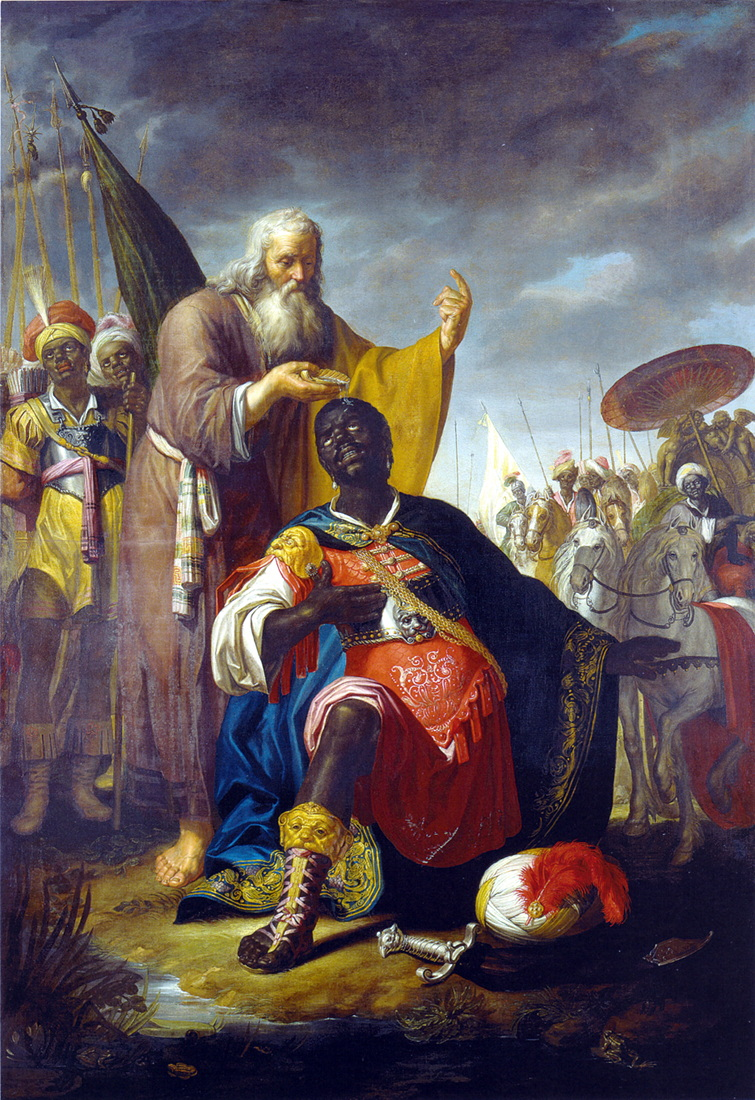
There are only about three sections in scripture that can be twisted into seemingly supporting the heresy of baptismal regeneration, but the tremendous weight of the entirety of scripture crushes the arguments based on those sections. I will go through the rest of the New Testament, as I have been doing, to demonstrate this. Keeping in mind the greater context of Acts chapter eight, please note the two instances of baptism here are preceded by faith in Jesus. The crowd of people in the first instance was comprised of men and women. The second instance was the individual Ethiopian eunuch of Candace, Queen of the Ethiopians.

In the first instance we read, “But when they believed Philip proclaiming the good news about the kingdom of God and the name of Jesus Christ, they were being baptized, both men and women.”

(Acts 8:12 Legacy Standard Bible)

https://accordance.bible/link/read/LSB#Acts_8:12

12 ὅτε δὲ ἐπίστευσαν τῷ Φιλίππῳ εὐαγγελιζομένῳ περὶ τῆς βασιλείας τοῦ θεοῦ καὶ τοῦ ὀνόματος Ἰησοῦ Χριστοῦ, ἐβαπτίζοντο ἄνδρες τε καὶ γυναῖκες. Acts 8:12

You can see that they believed the good news of what Jesus had accomplished on the cross, that Philip had preached. Then they were baptized. The Greek word is the same one translated as, “faith” in other sections of scripture. The word is, “ἐπίστευσαν.”(episteusan) It means; “to believe, put one’s faith in, trust, with an implication that actions based on that trust may follow; (pass.) entrust”

In Acts 8:25-40 we read about the Ethiopian eunuch coming to the true faith. The eunuch was returning to Ethiopia after visiting Jerusalem to worship. Implying he had believed in God in some fashion, probably in Judaism. It is interesting to note that as a eunuch he would not have been allowed access to the temple, or to become a full proselyte to Judaism. This eunuch was in service to the Queen of Ethiopia as her treasurer, or minister of finance in modern terms. The Bible mentions her as being called Candace. This could very well be a title like Caesar, and not truly her name.

As a wealthy, influential, and powerful convert to Judaism, the eunuch had access to the Jewish scriptures as evidenced by him reading from the scroll of Isaiah in the middle of nowhere on his way back to Ethiopia. One has to wonder what other texts he had access to due to his position. It is also interesting that he didn’t understand what he was reading until the appointed time of God intervening by sending Philip to him via the direction of one of His angels/messengers to preach the good news of Jesus.

The portion of the scroll of Isaiah that the eunuch was reading from was Isaiah chapter fifty three. This section is a prophecy about the coming Messiah, Jesus Christ. We read that God extended His grace to the eunuch by directing Philip to preach the Messiah to him. Consequentially, due to his conversion he desired baptism. Then returning to Ethiopia he would have been obedient to Jesus in sharing the same life giving good news to the people he had acquaintance with. Delivering the faith to the people of Ethiopia extended God’s grace to them likewise and providentially. Historically there has been a Christian presence in Ethiopia to this day, despite the influence of the evil Roman church in Europe, and the Antiochians in the east. The eunuch believing what Philip had preached to him about Jesus from the scroll was the impetus of his desire for baptism. God sovereignly arranged for the eunuch to be truly believing, and for him to return to Ethiopia, and spread the faith.

Theology

All occurrences of baptism in the New Testament.

Theology

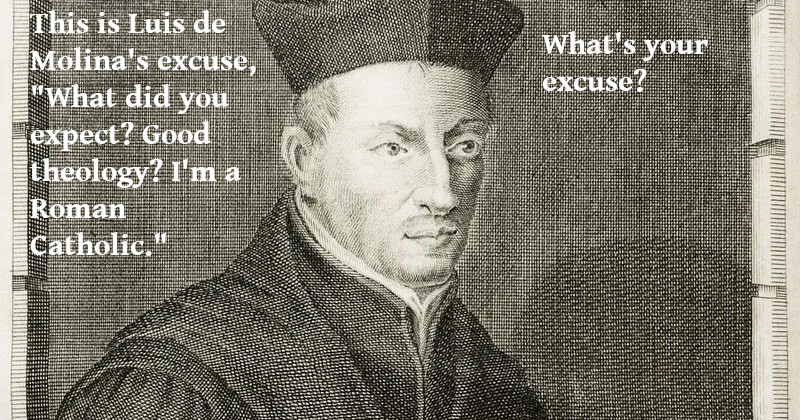
Molinism Seems Silly

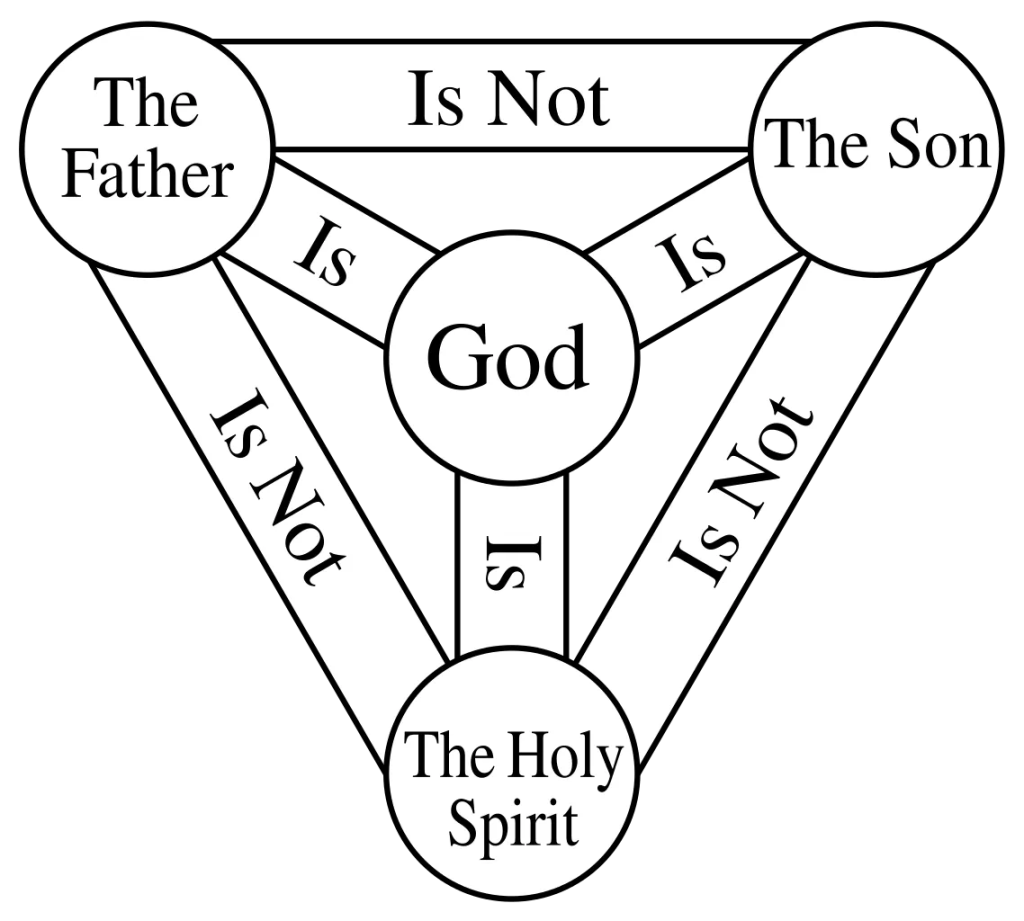
I think the inveracity of Molinism can be demonstrated by considering the attributes/perfections of God in relation to each other. Consider the perfect omniscience of God in conjunction with His aseity, and eternality. God has perfect knowledge. He possesses this complete, and unerring knowledge inside of time, and outside of time. He possesses this knowledge eternally. He has never, not known, what He has done. I write in the past tense of what He has done to illustrate that in eternity, His will is already a reality that is not to come, but is actual at the moment of His one word being spoke, but logically preexisted in Him. For us it is like ripples on a calm lake that emanate from a central impetus. This is due to our nature as temporal, finite, creatures. Time unfolds for us here. Eternity is an anthropologically unseen reality without the dimension of time. For us time, and space are connected in a profound way, as we cannot move through one without moving through the other. Consider God’s omnipresence as well. He is present in times, outside of times, and in between times. This last notion demonstrates His hyperdimensionality, and this necessitates God being more than one person, thus Father, Son, and Holy Spirit (Trinity). Only one has locus in spacetime, and that is the Son. The Father and the Spirit are both spirit. They do not have physical bodies, and the attribute of simplicity is found in their lack of parts. According to His attribute of aseity, He is perfectly without need, and has always been, is being, and will always be. He is not a created being, but the Creator of all beings that have existed, exist, and will exist. To exist means to come out of nothing, into being. This can only be said of creatures, not God Himself. He is being. To us, the future is uncertain. It hasn’t been actualized yet in temporal existence. We are temporally bound to this existence which will one day be destroyed by God with fire, and remade incorruptible, and will not be destroyed again. Those in Christ will be with Him in eternity. Those outside of Christ will be in Hell, undergoing conscious eternal torment, for all eternity at the hand of God, who is the just judge. Their punishment will bring glory to God by being vessels of His wrath on which His perfect justice is demonstrated. Those in Christ will bring glory to God, by being rescued by the grace of God, demonstrating His mercy.

Molinism is the attempt of the earthly bound mind to fit God into their small diorama of existence, and morality. For them, a God who does not create them with a completely autonomous free will is the author of evil, and a puppet master. This is ludicrous to anyone who has even superficially examined God’s perfections in relation to themselves. That is my overly judgmental opinion, and I understand if you don’t find it amiable.

Trinity

Modern English Athanasian Creed

Athanasian Creed

1. Whosoever will be saved, before all things it is necessary that he hold the universally true faith;

2. Which faith except every one do keep whole and undefiled, without doubt he shall perish everlastingly.

3. And the universally true faith is this: That we worship one God in Trinity, and Trinity in Unity;

4. Neither confounding the persons nor dividing the substance.

5. For there is one person of the Father, another of the Son, and another of the Holy Spirit.

6. But the Godhead of the Father, of the Son, and of the Holy Spirit is all one, the glory equal, the majesty coeternal.

7. Such as the Father is, such is the Son, and such is the Holy Spirit.

8. The Father uncreated, the Son uncreated, and the Holy Spirit uncreated.

9. The Father incomprehensible, the Son incomprehensible, and the Holy Spirit incomprehensible.

10. The Father eternal, the Son eternal, and the Holy Spirit eternal.

11. And yet they are not three eternals but one eternal.

12. As also there are not three uncreated nor three incomprehensible, but one uncreated and one incomprehensible.

13. So likewise the Father is almighty, the Son almighty, and the Holy Spirit almighty.

14. And yet they are not three almighties, but one almighty.

15. So the Father is God, the Son is God, and the Holy Spirit is God;

16. And yet they are not three Gods, but one God.

17. So likewise the Father is Lord, the Son Lord, and the Holy Spirit Lord;

18. And yet they are not three Lords but one Lord.

19. For like as we are compelled by the Christian verity to acknowledge every Person by himself to be God and Lord;

20. So are we forbidden by the universally true religion to say; There are three Gods or three Lords.

21. The Father is made of none, neither created nor begotten.

22. The Son is of the Father alone; not made nor created, but begotten.

23. The Holy Spirit is of the Father and of the Son; neither made, nor created, nor begotten, but proceeding.

24. So there is one Father, not three Fathers; one Son, not three Sons; one Holy Spirit, not three Holy Spirits.

25. And in this Trinity none is afore or after another; none is greater or less than another.

26. But the whole three persons are coeternal, and coequal.

27. So that in all things, as aforesaid, the Unity in Trinity and the Trinity in Unity is to be worshipped.

28. He therefore that will be saved must thus think of the Trinity.

29. Furthermore it is necessary to everlasting salvation that he also believe rightly the incarnation of our Lord Jesus Christ.

30. For the right faith is that we believe and confess that our Lord Jesus Christ, the Son of God, is God and man.

31. God of the substance of the Father, begotten before the worlds; and man of substance of His mother, born in the world.

32. Perfect God and perfect man, of a reasonable soul and human flesh subsisting.

33. Equal to the Father as touching His Godhead, and inferior to the Father as touching His manhood.

34. Who, although He is God and man, yet He is not two, but one Christ.

35. One, not by conversion of the Godhead into flesh, but by taking of that manhood into God.

36. One altogether, not by confusion of substance, but by unity of person.

37. For as the reasonable soul and flesh is one man, so God and man is one Christ;

38. Who suffered for our salvation, descended into hell, rose again the third day from the dead;

39. He ascended into heaven, He sits on the right hand of the Father, God, Almighty;

40. From thence He shall come to judge the quick and the dead.

41. At whose coming all men shall rise again with their bodies;

42. and shall give account of their own works.

43. And they that have done good shall go into life everlasting and they that have done evil into everlasting fire.

44. This is the universally true faith, which except a man believe faithfully he cannot be saved.

* The Latin word, “catholic” which meant universal has been translated to modern English. This has been done to eliminate any confusion as to the meaning.

Bible Reviews · Bibles

Stay Away From the Passion, “translation” and Charlatan Brian Simmons!

Fair use

I want to warn you all about the Passion, “translation” of the Bible. I review Bibles on my site. Publishers send me their works for review. I get them for free in exchange for a review. The author of the Passion is just one man. His name is Brian Simmons. He is not an ancient language expert. He is a false prophet. He is a worker of lying signs and wonders. He is a liar, and a charlatan. He sent me some of his work translating Koine Greek to English. He wanted a ringing endorsement. This was evident by the child-like temper tantrum he threw when I told him how horrible his work was. He did not even come close to actually translating the text. It was as if he read an English translation, and then put a bunch of uncalled for, flowery, word salad, in between the words that were actually present in the Hebrew, and Greek texts. Later this charlatan was on Sid Roth’s show, “It’s Supernatural” While on the program he claimed that Jesus appeared to him in his room. He claims that Jesus supernaturally empowered him to know the lost, and true, meanings of the ancient languages. He also claims that Jesus commissioned him solely to give the world Jesus’ true words in this new, “translation.” If you don’t believe me watch the linked video of the show. Start at the 15 minute, 20 second mark. That is where it gets to the point. The video before hand is full of lies about false miracles. https://sidroth.org/television/tv-archives/brian-simmons/
In case that video gets taken down, as many of them have been taken down, here is a link to another video where he tells his lies. https://www.dailymotion.com/video/x2jzaph The interesting part of this video starts at 13 minutes and 38 seconds. This man is a dangerous heretic. Nobody should ever, under any circumstance, use the Passion, “translation.”

Here is a good video from Fighting for the Faith that refutes Brian Simmons. https://youtu.be/M_jlDNWam_s

Here is another series of videos refuting the Passion, “translation” https://youtube.com/playlist?list=PLZ3iRMLYFlHuv-ISp_iIw1WL8zaEm86L8

BEZELT3 does an excellent refutation as well. https://youtu.be/eLRivGxgxqo

Let’s just look at one section of scripture in his fraudulent translation work. Here is the first verse of chapter one in the gospel of John. “1 Ἐν ἀρχῇ ἦν ὁ λόγος, καὶ ὁ λόγος ἦν πρὸς τὸν θεόν, καὶ θεὸς ἦν ὁ λόγος. John 1:1”

I’ll transliterate it for you. En arche en ho logos, kai ho logos en pros ton theon, kai theos en ho logos.

Now let’s look at how those words directly translate into modern English. I’ll put them in the right order given the context provided by the definite article. “In the beginning was the Word, and the Word was with God, and the Word was God.”

Here is how the phony renders it. “In the beginning the Living Expression was already there.
And the Living Expression was with God, yet fully God.”

Here is the Greek of verse 2. “οὗτος ἦν ἐν ἀρχῇ πρὸς τὸν θεόν. John 1:2”

Here is the transliteration. “Houtos en en arche pros ton theon.”

It translates to, “He was in the beginning with God. John 1:2”

In verse 2 he gives this false translation. “They were together—face-to-face, in the very beginning.”

These are not difficult passages to translate. So why does Brian get them so wrong? It is because he is a fraud. He is a huckster. He is a false teacher.

Don’t follow this charlatan! Stay away from the Passion, “translation.”

Movie Review

A Review of, “Top Gun: Maverick”

Curiosity got the better of me. Many of my online acquaintances have been raving about how good, “Top Gun: Maverick” was. Being an old geezer myself, I thought it might be good to check it out. After all, I was almost 15 when I watched the first one in the theatre. I remember how hot it was outside while I was in line waiting. I saw the original in Ontario Oregon. It was showing in one of the only movie theatres that was close to where I lived. I remember being really impressed with the jet fighter stunts. Back then there wasn’t any computerized special effects. I imagine it was a great recruiting tool for the Navy.

This movie was not what I was expecting. Lately all Hollywierd seems to put out is woke, sjw, perverted, pinko-commie, propaganda. I have had my fill of those American hating, red diapered, doper babies. I was pleasantly surprised by this movie, and by my online friends. They didn’t steer me wrong. One might bemoan the fact that there was a female Top Gun fighter pilot. I thought they were going to push radical feminism. I am from a time when women were not allowed in combat roles. I still think that should be the case, but it isn’t up to me. Women in combat roles is a reality now whether I like it or not. Most movies would beat this idea into you. They’d put it front and center, and force you to, “Hear her roar!” Well, this movie did not do that. It was just a matter of fact that she was there. It wasn’t pushing a feminist agenda. I’d say the same about the ethnic diversity reflected in the cast. America isn’t as homogeneous as it was when I was a kid. Again, they didn’t push this in the plot, or make it a propaganda subtext to be washing our minds with. Score one point for the team who made this movie. It was pure entertainment with no preaching, or blatant propaganda.

This was first, and foremost, a movie about Top Gun fighter pilots risking their lives for this country. It was patriotic. It was emotionally moving. It had some laughs along the way. There were scenes from the original movie worked in as memory moments. There were a couple memorable characters from the first film. I even had to try to hold back a tear now and then.

This movie achieved success because it was for the audience, not some perverted America hating fringe minority of America, but for Americans in general. “Guess what Hollywierd, there are more of us than there are of them, and they don’t go to see movies. When they do, the movies are never woke enough for them.” We, on the other hand, are easy to please. Just give us good movies! Hopefully the box office $$$ are teaching them a lesson. Tom Cruise may be a crazy, Hollyweird, Scientologist, but he hasn’t forgotten how to reach out to regular Americans. I think that is because he hasn’t forgotten that he is an American.

The jet stunts were phenomenal. If you have ever been to an airshow, and seen the Blue Angels perform, you know what I’m talking about. It looked like a lot of these stunts were completed by real pilots in real jets. I might be wrong. I’m sure some of the stunts in the end of the movie were computerized, but you don’t notice it during the action. The acting of the supporting cast was good. The younger crowd did their part to make the movie magic happen. There are even some mechanical and location cameos if you will. The Kawasaki motorcycle from the original, reprised it’s role, as well as the bar where the boys sang, “You’ve Lost That Lovin’ Feeling.” That song was not present, but there was another from the original that was. You’ll have to see it to find out.
If you haven’t seen it, and are thinking about it, just to do it. You’ll really enjoy it.

Uncategorized

Molinism

To affirm Molinism, I would think that one would have to assume other possible future realities other than the actual one that is already in eternity.

Uncategorized

What words are used for, “soul” and “spirit” in the Bible?

I see a lot of speculating among the Christians about soul and spirit. Some of us think a human is dichotomous. Some think a human is trichotomous. This article doesn’t answer the question, but rather shows the words the Bible uses that we translate into English as soul, and spirit. The text is quoted from Mounce’s Dictionary of Hebrew and Greek.

SOUL
Old Testament
Verb: נֶפֶשׂ (nepeš), GK 5883 (S 5315), 757x. nepeš has a wide range of meaning; the basic meaning is “breath,” but it can also mean “soul, life, entire being.”
(1) nepeš is not limited to human beings, for “breath” is something that all living creatures have. God gives life and breath to both humans and animals (Gen. 1:30). God formed “man from the dust of the ground, and breathed into his nostrils the breath of life; and the man became a living being” 2:7).
(2) As far as human beings are concerned, the Heb. understanding of nepeš encompasses the entire person, body and soul. It is not that a person has a soul; rather, a human being is a soul. Each individual is accountable for his or her sin, for which God may require that person’s nepeš (Gen. 9:5). Note Lev. 4:2 (“If a person sins”) and Ezek. 18:20 (“the person who sins shall die.” In Ps. 7:2, the psalmist cries out for deliverance lest his enemies “tear me [my nepeš] like a lion.” nepeš is so closely identified with the whole person that it can even mean a corpse (Lev. 21:11).
A human nepeš can have natural desires such as hunger (Deut. 12:15; 1 Sam. 2:16; Ps. 107:9; Mic. 7:1) and thirst (Isa. 29:8), as well as nonphysical desires. The psalmist pleads, “Do not give me up to the will of my adversaries, for false witnesses have risen against me, and they are breathing out violence” (Ps. 27:12, cf. Prov. 13:2). The nepeš is also the seat of emotions: Hannah has deep “bitterness of soul ” (1 Sam. 1:10 cf. also 30:6); Ezekiel has “anguish of soul ” (Ezek. 27:31).
(3) The relationship between humans and God is often expresses with nepeš. For example, “My soul yearns for you in the night, my spirit within me earnestly seeks you (Isa. 26:9). Elsewhere, “O God, you are my God, I seek you, my soul thirsts for you; my flesh faints for you” (Ps. 63:1). “As a deer longs for flowing streams, so my soul longs for you, O God.” 42:1). The soul can also be downcast 42:5, 11). Psalm 42 in particular captures the imagery of breath (the deer panting), hunger/thirst, and the living God, who alone can satisfy. Moreover, when the psalmist wants to sing in praise to God, he encourages himself out: “Praise the Lord, O my soul” 103:1-2, 22; 146,1). It is interesting that of all the occurrences of nepeš in Psalms (143x), only one does not have a personal possessive pronoun attached to it. Communion with God—from crying out to him to singing his praise—happens from the core of one’s being: life and breath, longing, emotions, the will. All of these are involved in the nepeš. See NIDOTTE, 3:133–34.
New Testament
Noun: ψυχή (psychē), GK 6034 (S 5590), 103x. psychē has a wide variety of meaning in the NT, being shaped by the Heb. word nepeš. Among other things, it means “life, soul, person, mind.” See life.

SPIRIT
Old Testament
Noun: רוּחַ (rûaḥ), GK 8120 (S 7307), 378x. While rûaḥ has a wide range of meanings in the OT, its basic sense is that of “wind” or “breath” (see wind). This latter sense naturally gave rise to “breath” as a sign of life, and hence rûaḥ also means “spirit” or “life.” This meaning of the term relates to several different ideas in the OT.
(1) Sometimes rûaḥ functions to describe the general character of an individual or group, and when used in this way closely resembles the meaning of nepes (“soul”), denoting the general personality or disposition of a person. Thus the “spirit of the Egyptians” will be demoralized when God punishes her for her idolatry (Isa. 19:3), so that she will have a “spirit of dizziness” 19:14, “perverse spirit,” KJV). In a similar fashion, rûaḥ can describe a state of mind or personal attribute: “bitter spirit” (Gen. 26:35, grief; Ezek. 3.14, anger), “sullen spirit” (1 Ki. 21:5, depression), “shortness of spirit” (Exod. 6:9, discouragement; Job 21:4, impatience), or “high spirit” (Prov. 16:18, pride) contrasted with “low spirit” 16:19, humility). We also find expressions such as “spirit of wisdom” (Exod. 28:3; Deut. 34:9) and “spirit of justice,” (Isa. 28:6).
(2) rûaḥ may also describe supernatural or angelic beings, such as the “spirit from God” that came on Saul, causing him mental torment (1 Sam. 16:15-16, 23; 18,10), or the “spirit” from the “host of heaven” sent to entice Ahab into battle by confounding the words of the prophets (1 Ki. 22:19f.). The angels are sent as “winds” or “spirits” (KJV) to accomplish God’s purposes (Ps. 104:4; cf. Heb. 1:7).
(3) The zenith of spiritual personality is God himself (Isa. 31:3). In the OT we find the expressions “Spirit of God” (11x), the “Spirit of the LORD” (25x), the “Holy Spirit,” (3x, Ps. 51:11; Isa. 63:10, 11), and “my Spirit” (13x, where the context shows the referent is to God’s Spirit). rûaḥ in these constructions may sometimes refer simply to the will or power of God (Isa. 40:13), but in the majority of cases it denotes the active presence of God via his Spirit. Thus, the Spirit is sent by the Lord 48:16), and he is placed on individuals (Num. 11:17, 29; Isa. 42:1) or within God’s people (Isa. 63:11). In all his activities, he assumes a distinct personality while at the same time being the very presence of God among those with whom he is pleased to dwell.
The opening verses of the Bible show the “Spirit” of God active in the process of creation (Gen. 1:2; cf. Job 33:4; Ps. 104:30). In the unfolding story of the Bible, the rûaḥ of God gives wisdom and endows people with abilities for leadership (Num. 11:17, 25) and for craftsmanship (in preparing items for the tabernacle, Exod. 31:2; 35,31), and his presence provides spiritual guidance (Neh. 9:20; Ps. 143:10; Hag. 2:5). God’s “Spirit” enables ordinary people to win military battles against formidable foes (Jdg. 6:34; 13,25; 14,6, 19; 15,14; 1 Sam. 11:6). He removes the rebellious heart and replaces it with one that responds in true obedience to God (Ezek. 11:19; 36,26-27). The “Spirit” is the “breath” that brings life to the dead (regeneration), as pictured in Ezekiel’s valley of dry bones (Ezek. 37).
The “Spirit” of God also gives divine revelation to prophets (Num. 11:25; 1 Sam. 10:10; Neh. 9:30; Ezek. 11:24; Joel 2:28; Zech. 7:12), and it is by the “Spirit” of God that the true prophet speaks (Ezek. 13:3). The promised Messiah accomplishes his work of redemption through the power of the “Spirit” of God (Isa. 11:2; 42,1; 61,1). The work of this “Spirit” is often pictured as a “filling” or “coming on” a person. Likewise, in the imagery of anointing, the “Spirit” of God is said to be “poured out” on those he endows with his redemptive presence (always of the restoration of Israel as God’s covenant nation, Isa. 32:15; 44,3-4; Ezek. 39:29; Joel 2:28). See NIDOTTE, 3:1073–78.
New Testament
Noun: πνεῦμα (pneuma), GK 4460 (S 4151), 379x. (1) Similar to rûaḥ in the OT, pneuma can mean “air in movement.” In Jn. 3:8 Jesus uses pneuma twice: once for “wind” or “air” and once for the “Spirit” (“the wind blows where it chooses … so it is with everyone born of the Spirit”).
(2) pneuma can also mean that which animates or gives life to the body (Mt. 27:50) or the human spirit in general (Jas. 2:26). It can also refer to the human person insofar as he or she belongs to and interacts with the spiritual realm. In this sense the human spirit is that aspect of a person through which God most immediately encounters him or her (Rom. 8:16; 1 Cor. 2:11; Gal. 6:18), where a person is most immediately open and responsive to God (Mt. 5:3; Rom. 1:9), or where most sensitive to matters of the spiritual realm reside (Mk. 2:8; Jn. 11:33; Acts 17:16).
(3) Beyond a human being, pneuma can refer to evil and good “spirits.” It was common in NT times for people to view the mysterious powers that afflicted people as evil spirits or demons. The Synoptic Gospels and Acts especially reveal this (Mt. 8:16; Lk. 4:36; Acts 19:12-16). These evil forces are considered to be “personal forces” from the spiritual realm. But the NT never claims that these “evil spirits” are as strong as God; all evil spirits are inferior to God and subject to the power of his “Spirit,” often operating through his agents: Christ and the apostles (Lk. 10:17-19; 11,19-20).
(4) Finally, pneuma in the NT can refer to the “Holy Spirit.” The Holy Spirit first of all filled Jesus and directed him throughout his earthly ministry (Lk. 1:35; 4,1, 14, 18). Then through his supernatural power, the Spirit worked through and directed the apostles (Acts 1:8; 4,8; 13,2, 4, 9; 16,6-7). The Spirit is presented as a powerful force with visible effects (Acts 2-5). In the early church the Holy Spirit was the “Spirit of prophecy” 1:16; 4,25), a transforming power in conversion 9:17), and the director of its mission 9:10; 20,28). In Jewish writings the “Spirit of God” often meant the spiritual reality that performed God’s work on earth, most notably in creation (Wis. 1:7; 12:1) and prophecy (Sir. 48:12).
The OT stress laid on Isaiah’s promise of a Messiah who would have a special endowment of the Spirit (Isa. 61:1-3) and on Joel’s prophecy about the pouring out of the Spirit on the godly in the last days (Joel 2:28-29). In the NT that understanding was fulfilled in the arrival of the Holy Spirit on Pentecost (Acts 2:1-36), who gave each believer various spiritual gifts (Rom. 12:6-8; 1 Cor. 12:8-11; 14,26; Eph. 4:11). Yet as Paul makes clear, though there are different kinds of gifts of the Spirit, there is still only one Spirit and one God (1 Cor. 12:4). Even more important, the Holy Spirit also wants to work his “fruit” in our daily lives and enable us to fight against the sins of the flesh (Gal. 5:22-23).
(5) Just as John baptized with water, the one coming after him would baptize with the Holy Spirit (Mt. 3:11; 16). Such imagery describes the type of “Spirit baptism” the believer receives—a baptism of the Spirit prophesied in the OT and fulfilled in the ministry of Jesus. See NIDNTT-A, 473-479.

Uncategorized

Demonic possession, and Christians.

Demonic possession, and Christians.

The Bible is clear that the Holy Spirit indwells a Christian. Since this is the case, a Christian cannot be possessed by a demon. God, and demons will not share a person. If you did cast a demon out of a lost person, their problem would persist, and be worse than it was before. After becoming free from the demon, it is possible that it would come back with more, so that the person’s condition would be even worse. The best solution for demoniacs, is to preach the gospel to them. If they repent, and believe, and are born again, then they are indwelt by the Holy Spirit. Their demonic possession will have ended, and God will put their mind in order. This isn’t to say a Christian cannot be tempted by demonic influence. It simply means they cannot be possessed by demons. As someone has already made clear, Satan is one created being. He is not omnipresent, omniscient, nor omnipotent. He does not possess aseity. He is bound by God in what he can do. After all, he is a creature, not the Creator. He is not God’s equal. He had to be permitted by God to do what he did to Job.

“In Him, you also, after listening to the word of truth, the gospel of your salvation—having also believed, you were sealed in Him with the Holy Spirit of promise, who is given as a pledge of our inheritance, unto the redemption of God’s own possession, to the praise of His glory.”
(Ephesians 1:13–14 Legacy Standard Bible)

““Now when the unclean spirit goes out of a man, it passes through waterless places seeking rest, and does not find it. “Then it says, ‘I will return to my house from which I came’; and when it comes, it finds it unoccupied, swept, and put in order. “Then it goes and takes along with it seven other spirits more wicked than itself, and they go in and live there; and the last state of that man becomes worse than the first. That is the way it will also be with this evil generation.””
(Matthew 12:43–45 Legacy Standard Bible)

“We know that no one who has been born of God sins; but He who was begotten of God keeps him, and the evil one does not touch him.”
(1 John 5:18 Legacy Standard Bible)

““And I will ask the Father, and He will give you another Advocate, that He may be with you forever; the Spirit of truth, whom the world cannot receive, because it does not see Him or know Him. You know Him because He abides with you and will be in you.”
(John 14:16–17 Legacy Standard Bible)

“You are from God, little children, and have overcome them; because greater is He who is in you than he who is in the world.”
(1 John 4:4 Legacy Standard Bible)