Apologetics · Theology · Uncategorized

Upon this rock I will build my Church? Matthew 16:18 and 1 Peter 2:4-8.

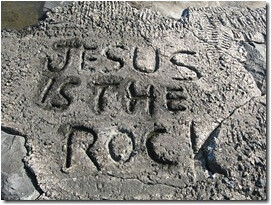
Jesus-is-the-rock

When Christ said in Matthew 16:13-20 ,

“ 13Now when Jesus came into the district of Caesarea Philippi, He was asking His disciples, “Who do people say that the Son of Man is?” 14And they said, “Some say John the Baptist; and others, Elijah; but still others, Jeremiah, or one of the prophets.” 15He said to them, “But who do you say that I am?” 16Simon Peter answered, “You are the Christ, the Son of the living God.” 17And Jesus said to him, “Blessed are you, Simon Barjona, because flesh and blood did not reveal this to you, but My Father who is in heaven. 18“I also say to you that you are Peter, and upon this rock I will build My church; and the gates of Hades will not overpower it. 19“I will give you the keys of the kingdom of heaven; and whatever you bind on earth shall have been bound in heaven, and whatever you loose on earth shall have been loosed in heaven.” 20Then He warned the disciples that they should tell no one that He was the Christ.”

He wasn’t talking about making Peter the first Pope, nor was He talking about the Roman Catholic’s claim to Apostolic succession.  He was saying, they may call you Peter the rock, but I’m the true rock, the chief cornerstone, or foundation stone, that I will build my Church on.  Then He tells all the Apostles, “I will give you the keys of the kingdom of heaven; and whatever you bind on earth shall have been bound in heaven, and whatever you loose on earth shall have been loosed in heaven.” 20Then He warned the disciples that they should tell no one that He was the Christ.”

If you don’t believe me, look what Peter had to say about it in 1 Peter 2.

4And coming to Him as to a living stone which has been rejected by men, but is choice and precious in the sight of God, 5you also, as living stones, are being built up as a spiritual house for a holy priesthood, to offer up spiritual sacrifices acceptable to God through Jesus Christ.

6For this is contained in Scripture:
“BEHOLD, I LAY IN ZION A CHOICE STONE, A PRECIOUS CORNER stone,
AND HE WHO BELIEVES IN HIM WILL NOT BE DISAPPOINTED.”

7This precious value, then, is for you who believe; but for those who disbelieve,
“THE STONE WHICH THE BUILDERS REJECTED,
THIS BECAME THE VERY CORNER stone,

8and,
“A STONE OF STUMBLING AND A ROCK OF OFFENSE”;
for they stumble because they are disobedient to the word, and to this doom they were also appointed.

I think from this it pretty obvious what He meant.

God · heresy · mormonism · Repentance · Theology · Uncategorized

NO OTHER GODS!!! REPENT OF YOUR HERESY!!!

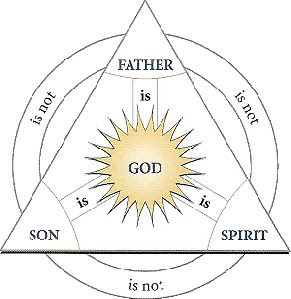
trinity-1


There Are No Other True Gods

There are no other true gods anywhere. There are none in other solar systems. There are none on any other planets. There is no true God except for the God of the Bible, and He is triune.

If you deny these truths, you are not Christian, but an idolator! You have made up a god to believe in, and you are in a very, very, very bad sin. Believing in the wrong god will not save you. It will damn you to Hell!

Please repent of your Mormon beliefs! I love my LDS friends, and desperately don’t want you to go to Hell. Some of you, who I maintain ties with, are exceedingly nice people. I’d love for you to become true brothers in Christ.


What Mormonism Teaches

Mormonism teaches that there are potentially an infinite number of gods, and currently there are countless ones ruling countless solar systems/planets. Mormonism teaches that the only eternal things are matter and intellect. It claims that its people worship only the god of this world/solar system.

The Bible says the god of this world is Satan. The Bible is clear that there is only one true God. He created everything. That includes all solar systems and worlds. Logic dictates that there would have to be one original originator—uncaused causation. If there were many gods, there would be no true god among them. God cannot share His power with other gods, nor can He be known as many gods. He is one God in trinity.


To Jehovah’s Witnesses and Assemblies of Yahweh

For the Jehovah’s Witnesses, and Assemblies of Yahweh cult members, repent of your Aryanism! You and the Mormons share this in common. You believe that Christ is not the incarnate second person of the Trinity, the Son, but rather a created being, and brother to Satan.

You believe that both are the true children of a father god, and mother god, who copulated to produce them as spirit children. They are only two of millions upon millions. You believe in a lie. You must repent!

Read the Old Testament, keeping an eye out for the Christophanies. If you do that, you will see Christ from the beginning. Read John 1:1-14. How can you study the Bible and believe such lies about Christ our God, Saviour, Lord/Master κῦρος, Prophet, Priest, Prince, and King?


The Word of the Lord


Joseph Smith’s “First Vision”

The Mormons believe in Joseph Smith’s lie called, “The First Vision.” In this supposed revelation from god, he claims that god the father and Jesus both appeared to him at the same time, and that they both appeared in flesh and bone.

The Bible says otherwise:

On the LDS site, they hide this now problematic information, and only show people the 1838 account of it, but at last count there were over 27 different accounts of the first vision. Joseph Smith wasn’t even consistent within himself.

Nonetheless, if you look at their Doctrines and Covenants, the same information is laid out, and has not been scrubbed yet.


Doctrine and Covenants 130:22 (Recorded in 1843)


Why Mormonism Is Not Christian

This are just a few of the reasons Mormonism is a cult, and not Christian. There are so many glaring, and obvious, deceptions, it is amazing to me that people call them Christian.

The only way this can happen is that people are so egregiously biblically ignorant, and have absolutely no relationship with God as their Savior, Father, & King, they easily believe lies, and are themselves deceived.


God · prayer · sanctification · Sovereign choice · Theology · Uncategorized

Christian Prayer, and the Sovereignty of God.

god-is-sovereign
Experientially, we know that Christian prayer can accomplish miracles. When we consider the omniscience, and sovereignty of God, we know that our prayers don’t change anything that has already been spoken by God, once and for all. We experience life one way. We think something that seems to contradict what we experience. If we can’t square them, it is because we are limited. Some people can justify the sovereignty of God with the experiences of the creature. We don’t look down on those who can’t. I would hope that those who can’t won’t look down on those of us who can.

Consider that God decrees the ends and the means. As I pray for something according to God’s will, as explained in the progressive revelation of His word, I am sanctified. My thoughts and feelings are focused on God and His will. The situation I am praying about changes. I attribute it to God answering my prayers. He willed it to happen by using me to pray at exactly the time He decreed, in the way He decreed, so He could answer in the way that He decreed. The reality of His decree was actual at the moment He spoke everything into being. We are part of that decree. We exist in space-time, when and where He decreed. As our reality unfolds, we are not able to perceive how eternity is experienced. If we can accept that there is an infinite instance that contains our finite, linear experience, and transcends it, then we can also appreciate how the sovereign decreed will of God, and the experience of man are related. Does prayer change things? Yes it does, in our material experience. It changes, here because it was changed before in eternity.

debate · election · Sovereign choice · Theology · Uncategorized

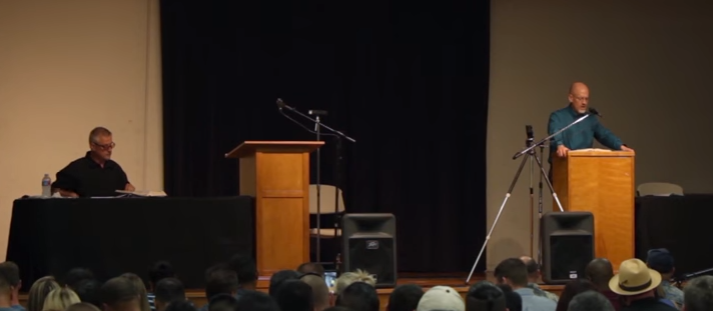
Was Anyone Else Vexed by the James White vs. Steve Tassi Debate?

whitetassi
As some of you might recall, I posted a short article about a debate that James White had with Leighton Flowers.  It was supposed to be about Romans 9.  When Leighton pretty much just ignored the topic of debate, and used it as an excuse to launch into what was basically a screed against Calvinism.  After watching that debate, I thought, “What a hash, and waste of time.”  I was hoping for a well thought out position that could interact, and challenge some of the notions that I hold to.  Not to overthrow those notions, but rather to sharpen, and hone them. (Good arguments have a way of doing that.)

Well, I went into this debate with low expectations because, “I heard things.”  Let me just say that my expectations were a bit high.  It was very disappointing to me.  I have some friends who are Calvary Chapel peeps, and they usually can separate their feelings towards Reformed soteriology, and their feelings for me as a person.  We can have a chat, and discuss theology without it getting to the, “Shots fired!” battleground.  This debate was a, “bait and switch.”  James White went to Norwalk, California prepared to debate Romans 9.  When the debate started it turned into an anti-Calvinist, sneak attack.  Where Steve Tassi abandoned the rules and format of formal debate.  He used the debate as a forum to express anti-Calvinist, and anti-James White sentiments, that seemed to be fueled by his personal traditions, and a false caricature of Calvinism. (Straw Man)

I felt bad for everyone there, especially people who paid to travel there.  I felt bad for them, not just because of financial expenditures, but mainly because they were not able to get the benefit of a spirited, well thought out debate.    The debate Dr. White had with Dr. Michael Brown was much more educational and edifying for all involved.  It followed the rules of debate, and both sides presented well thought out arguments from their own positions, while remaining friendly and respectful.

I enjoy watching debates that are well done.  I get a lot out of them.  I am vexed, because in  many ways this was a waste of time, resources, and efforts.  It was also a waste of opportunity.  This could have been a great way for the men to genuinely listen to each other, to hear and understand what was being expressed.  They could have come away from this as better friends, and more understanding brothers in Christ.  I don’t blame James White for this.  I understand why he got impatient.  I could even understand why some people might have misunderstood his attempts to coax or goad Dr. Tassi into following the rules as snarky or mean.  I don’t think Dr. White was being snarky or mean.  I just said I could understand why some people would think that, so don’t be putting words in my mouth, so to speak.  I thought James did as good a job as could be expected, under the circumstances.  I don’t think I could have been so gracious to Dr. Tassi.  I was fighting my frustration just watching the debate.

Let’s look forward to more good debates, and learn from the bad ones as well.  That way they aren’t a total loss.  I learned that when you get thrown a curve ball you need to think on your feet, and be well prepared ahead of time.  If you’re a Christian who is well studied in the word of God, you can respond to most arguments thrown at you, even if they are off topic.  Also I learned that we must be patient with people who don’t see, or hear what we are really saying.  We have to maintain our composure and soldier through, just like Dr. White did.  We can do those things, and still call people on their errors, without being unloving.  Squishy doesn’t equate to loving, or non-loving.  Standing firm for, and on the word of God, is loving.

Apparently, the video won’t play on other sites, because the owner(Tassi’s ministry outreach) has disallowed it.  So here is a link to the video on Youtube so you can watch it.

Book Reviews · God · gospel · sanctification · saved · Stress · Theology · Uncategorized

A Review of, “Stressed Out: A Practical, Biblical Approach to Anxiety” by Todd “Freakishly Tall” Friel.

StressedOut
First off, I must issue a disclaimer.  I am a fan of Wretched Radio, and Wretched TV.  That being said, I will still give an honest review of this latest work from Todd.  If you aren’t familiar with Todd, and the gang over at www.WretchedRadio.com I suggest you go look at their web page.  Make sure to stop by the Wretched Store and peruse their wares.  You can also pick up a copy of this book there.  If you prefer you can get it at Amazon or Christianbook as well.

The thought that I kept having while reading this book was, “Where was this when I was in my 20’s?”  I had so many issues with stress then.  I got married to my Wife when I was 19 years old.  She had 2 little baby boys from a previous marriage.  I was an instant Daddy.  I was working part time for K-mart, and Wendy’s.  We lived in a low income apartment with people using drugs near by, and couples fighting, police in the parking lot every weekend breaking up said fights, and little to no opportunities to get out.  So, I was stressed.  My Wife was stressed.  Our families were stressed.  It was a stressful time.  I think you are getting the picture.  I was a new Christian.  I didn’t have anyone to disciple me, and the only resources I had to draw from were the Bible, and prayer.  I had to swallow my pride, and ask my Dad for money for hamburger to feed the kids dinner.  I worked as much as I could, and we kept going forward, even when we got knocked down.  What it has taken me the better part of 25 years to learn, Todd has isolated in his new book.  The Biblical principles detailed in, “Stressed Out” have been distilled from the Bible skillfully with a focused effort to apply the knowledge for the benefit of the reader’s peace of mind, and sanctification.

Before you get all upset and… triggered, don’t assume that Todd is one of those wacky guys who wants you to, “Name it, claim it!” your mental illness away.  He makes sure to acknowledge the differences between situational stress/anxiety from biological/chemical problems with the brain.  This book is for people who are experiencing situational stress and anxiety, who are having difficult times dealing with it.  I don’t want to give too many details away.  I also don’t want to leave information out that would encourage you to pick up a copy.  I want you to have an idea of what is in the book so take a look at this screen capture I did of the Table of Contents;
stressedoutcontents
So much of our peace of mind depends on our view of God, and ourselves.  In this book, Todd helps you to see the sovereignty, omniscience, omnipotence, righteousness, and love of God, as well as our own condition in relation to Him.  With the Bible applied to properly inform us, and correct us in areas where needed, we can discover a deeper, satisfying, peace with God.  That peace and contentment will affect every aspect of your life.  So to say, I recommend this book is an understatement.  It is a quick read, but by no means “lite, cotton candy theology.”  If you are a young person, who is struggling to make sense of things, pick up a copy of this book.  Even if you are older, and need a reminder of the peace that comes with trusting God and who He is, this book is for you.

Todd’s book is a good reminder for us. When we don’t see things rightly, we are like Don Quixote. He didn’t see things as they truly were, and he wasted his time tilting at windmills. He thought they were enemies. In reality they were faux-foes or pseu pseu pseudo-foes whoa oh oh… (The butchering of Phil Collins’ song is for mature audiences only, “old people.”) We can see the things, and situations, that we have anxiety, worry, and stress over as ominous, and potent enemies. Todd reminds us in his book, via abundant scripture references, that we are in sin if we succumb to these assaults. In light of God’s word, His attributes, and our place in His redemptive plan, we should know peace, security, gratitude, and contentment.


Stressed Out: A Practical, Biblical Approach to Anxiety

ISBN-13: 9780892217434

God · government · Theology · Uncategorized

Romans 13

Properly understood we can see God’s providence, and common grace demonstrated in these verses.  Through the ordination of governmental authority the people are restrained from being as evil as they would be if left with no law and order.  This grace is afforded both to the lost, and the saved, thus His grace in common to both.  This is not a mandate to submit to a Godless secular government if it demands that we violate the faith, or the word of the true and living God.  The exhortation at the end compels us to live in a practice of righteousness, and to seek to please God, in such a way that a Christian would not be concerned about incurring the ire of the government, as they would be beyond reproach.  I hope that helps.

Romans 13
New American Standard Bible

Be Subject to Government

1Every person is to be in subjection to the governing authorities. For there is no authority except from God, and those which exist are established by God. 2Therefore whoever resists authority has opposed the ordinance of God; and they who have opposed will receive condemnation upon themselves. 3For rulers are not a cause of fear for good behavior, but for evil. Do you want to have no fear of authority? Do what is good and you will have praise from the same; 4for it is a minister of God to you for good. But if you do what is evil, be afraid; for it does not bear the sword for nothing; for it is a minister of God, an avenger who brings wrath on the one who practices evil. 5Therefore it is necessary to be in subjection, not only because of wrath, but also for conscience’ sake. 6For because of this you also pay taxes, for rulers are servants of God, devoting themselves to this very thing.7Render to all what is due them: tax to whom tax is due; custom to whom custom; fear to whom fear; honor to whom honor.

8Owe nothing to anyone except to love one another; for he who loves his neighbor has fulfilled the law. 9For this, “YOU SHALL NOT COMMIT ADULTERY, YOU SHALL NOT MURDER, YOU SHALL NOT STEAL, YOU SHALL NOT COVET,” and if there is any other commandment, it is summed up in this saying, “YOU SHALL LOVE YOUR NEIGHBOR AS YOURSELF.” 10Love does no wrong to a neighbor; therefore love is the fulfillment of the law.

11Do this, knowing the time, that it is already the hour for you to awaken from sleep; for now salvation is nearer to us than when we believed. 12The night is almost gone, and the day is near. Therefore let us lay aside the deeds of darkness and put on the armor of light.13Let us behave properly as in the day, not in carousing and drunkenness, not in sexual promiscuity and sensuality, not in strife and jealousy. 14But put on the Lord Jesus Christ, and make no provision for the flesh in regard to its lusts.


Apologetics · Church · God · gospel · heresy · Repentance · sanctification · saved · sharing the gospel · Sovereign choice · Theology · Uncategorized

The Differences Between Sins, and Mistakes.


Recently, I had a conversation with a person on social media about sins, and mistakes. Their first assertion was that, sins are the willful transgression of the known will of God. The second assertion was that people are not culpable to God for mistakes that they make. Lastly, they failed to define what mistakes are, even when asked several times. I quickly identified this as a Nazarene Church member, because I had been a member for approximately 19 years give or take. I decided since they came to my page to discuss this issue that it was a proper opening to engage them. I typically don’t go to other people’s pages and comment on things I don’t agree with. I see it as bad etiquette, but if they come to me, so be it. Listed below is the section 5.3 Sin, Original and Personal from the Nazarene Church’s Preamble and Articles of Faith;

5.3. We believe that actual or personal sin is a voluntary violation of a known law of God by a morally responsible person. It is therefore not to be confused with involuntary and inescapable shortcomings, infirmities, faults, mistakes, failures, or other deviations from a standard of perfect conduct that are the residual effects of the Fall. However, such innocent effects do not include attitudes or responses contrary to the spirit of Christ, which may properly be called sins of the spirit. We believe that personal sin is primarily and essentially a violation of the law of love; and that in relation to Christ sin may be defined as unbelief.

(Original sin: Genesis 3; 6:5; Job 15:14; Psalm 51:5; Jeremiah 17:9-10; Mark 7:21-23; Romans 1:18-25; 5:12-14; 7:1-8:9; 1 Corinthians 3:1-4; Galatians 5:16-25; 1 John 1:7-8

Personal sin: Matthew 22:36-40 {with 1 John 3:4}; John 8:34-36; 16:8-9; Romans 3:23; 6:15-23; 8:18-24; 14:23; 1 John 1:9-2:4; 3:7-10)”

As you can see from their article, it is what has led some of them to their minimization of sin, thus diminishing the importance of the gospel, as well as creating a legalistic approach to righteousness. This last consequence is also a product of their doctrine of Entire Sanctification. Their doctrine of Entire Sanctification is also a product of their minimization of sin. This is what Article 10 says about Entire Sanctification;

X. Christian Holiness and Entire Sanctification


10. We believe that sanctification is the work of God which transforms believers into the likeness of Christ. It is wrought by God’s grace through the Holy Spirit in initial sanctification, or regeneration (simultaneous with justification), entire sanctification, and the continued perfecting work of the Holy Spirit culminating in glorification. In glorification we are fully conformed to the image of the Son.

We believe that entire sanctification is that act of God, subsequent to regeneration, by which believers are made free from original sin, or depravity, and brought into a state of entire devotement to God, and the holy obedience of love made perfect.

It is wrought by the baptism with or infilling of the Holy Spirit, and comprehends in one experience the cleansing of the heart from sin and the abiding, indwelling presence of the Holy Spirit, empowering the believer for life and service. Entire sanctification is provided by the blood of Jesus, is wrought instantaneously by grace through faith, preceded by entire consecration; and to this work and state of grace the Holy Spirit bears witness.

This experience is also known by various terms representing its different phases, such as “Christian perfection,” “perfect love,” “heart purity,” “the baptism with or infilling of the Holy Spirit,” “the fullness of the blessing,” and “Christian holiness.””

Not that long ago the Nazarene Church made some changes to their Articles of Faith. What I linked to is their current one. They have clarified it to some degree, but you can’t lay all the blame on the average Church goer for their personal affirmation of false doctrines. After reading the Articles of Faith, I can see what they are trying to express, but it can confuse the layman. I think this is mostly due to their Ordo Salutis, and Semi-Pelagianism that is all part of the traditions of a portion of the people in the denomination. From what I understand they are slowly trying to move away from the errors of Semi-Pelagianism that were made in the past.

If you are old enough you’d remember a different looking CotN. The girls mostly wore dresses, and dancing was not allowed. They looked and acted like Pentecostal versions of the Mennonites almost. Some believed that a person could be entirely sinless in their life. That is what their personal understanding of their doctrine of Entire Sanctification looked like. If you read it now, you can see it is a bit more nuanced, but you can also see how it could lead someone to believe the other way. When you look at Wesley’s writings on the topic, if you have a good theological foundation, you can see where he is heading. The problem lies in the fact that so many people are very simple in their education and ability to reason, that they take his work to mean what it appears to mean at a superficial reading. I’m not saying I agree with his conclusions. I actually think he was poorly repaving a road that had been well paved, and traveled long before him, by men more learned and brilliant.

I see Wesley as more of an evangelist and less of a theologian.  I understand him to be attempting to make room for people who don’t know, or believe, everything rightly all the time to still be saved. All of us are wrong all the time about something whether we know it or not. That doesn’t ruin our justification. I used to think the Trinity was best expressed as the Father, Jesus, and the Holy Spirit as all three parts of God. I had no idea that was the heresy of partialism. Once I was taught by more mature Christians from scripture that they are three persons, one God I was able to repent of my heresy. Was I not saved back then? I think I was, but I was a material heretic. I was not a formal heretic. If I’d persisted to death in a heresy, and rejected all correction, then I would have proven to be a false convert and formal heretic.

The person I was having the discussion with was of the old fashion persuasion. They didn’t read Wesley. They just took a superficial approach to their denomination’s doctrines and ran with it. So for them, sin was simply willfully transgressing a known law of God and it excludes mistakes, infirmities, failures, faults, emotions, (feelings) and thoughts. They also argued that a Christian will stop sinning completely, even though I showed them 1 John 1:8 and explained that John was addressing Christians. I was also told that if I sinned and then died immediately after, without repenting, that I would go to Hell. This is another one of their misguided beliefs. They believe that a genuine Christian can apostatize by willfully sinning. What I was dealing with was a Semi-Pelagian. It is interesting because they make a categorical error by contrasting sins with mistakes. I don’t know if it ever occurred to them that a sin is always sinful, but a mistake can be sin or not sin. I mentioned this and got no answer. The same can be said for the other things listed that they say are not sin. We know that having a lustful thought pop into your head and dwelling on it, is a sin. We must take every thought captive so it doesn’t come to fruition in deed. We also know that to God we are guilty of that sin. It sure is a good thing that Christ justified me, and paid for all of my sin. I am exceedingly sinful, and exceedingly thankful for His righteousness that He imputed to me. I think this eludes the Semi-Pelagian. They are in a works righteousness faith where they must maintain their position of being righteous by works. This particular flavor of Semi-Pelagian makes this task less daunting by watering down sin and man’s responsibility. In so doing they rob God of the glory, as it were. So much the worse for them, as many of them are not truly saved, but still lost. Of course, I would not say that all of them are lost. Some may be material heretics, just waiting to be corrected and brought to repentance. Could you be the one to speak into their lives with the truth?

Book Reviews · Theology · Uncategorized

A Review of, “Evangelical Influences” by Dr. J. I. Packer.


In honor of Dr. J.I. Packer’s 90th birthday this July 22, I offer this review.

I’d like to start out by saying that there are some good books written, and published in Christendom still today, and this is one of them.  I would contrast it with my most recent review of, “Audacious” by Beth Moore.  One is a piece of fluff, with virtually no value at all to the reader.  The other is a wonderfully educational book that enriches the reader.  Of course, Dr. Packer’s book is the latter.  It should also be noted, that I don’t affirm Dr. Packer’s ecumenism, views on evolution, or the age of creation.  In light of these differences, I still recommend this work for your Christian education, as our differences are not of primary import, but rather of secondary or tertiary consideration.   I think this book should be on the reading list for men going into seminary. I admire his passion for knowing God, strength of conviction, and his intelligence.  Here is a link to a short bio if you are not familiar with J. I. Packer.  I am also including this link, so you can read about his character.

In Dr. Packer’s book, “Evangelical Influences” he introduces us to three sets of men via short biographies and citations of their works.  These three sets of men come from three distinct times during Church history.  The first is comprised of Martin Luther, and John Calvin.  They represent evangelicalism during the Reformation.  The second group is Richard Baxter, and George Whitefield.  They represent evangelicalism as Puritans.  The third and last set is Dr. Martyn Lloyd Jones, and Francis Schaeffer who could be considered Dr. Packer’s contemporaries representing modern evangelicalism.  One thing that impressed me most about the biographies is the kind affection that Packer expressed for, “The Doctor” Martyn Lloyd Jones.  Even though they didn’t see eye to eye on every issue, the fond recollections Packer expresses are very touching.  Sometimes we let our differences cause undue animosity towards one another.  It is encouraging to read these fond memories.

The rest of the book is spent relaying historical information about the works of these men, and the effects those works had, and continue to have on evangelicalism.  They have done much of the heavy lifting for us fleshing out the doctrines so that we could have concise expressions of them, which are precise and nuanced.

I especially like the section where Packer explains how we have benefited from Calvin’s work on the inerrancy of scripture. Through cited passages from Calvin’s work, we can read what he thought about scripture and how it should be thought of. Much of our conservative modern understanding comes from the work these predecessors did. In the 1970’s Rogers and McKim criticized Calvin’s explanations of inerrancy. Dr. Packer’s answers to their criticism are well worth reading. I think this conclusion on pages 166 and 167 expresses perfectly how Packer understands Calvin’s convictions “…For Calvin, Scripture was able to fulfil its God-given function precisely by virtue of its God-given form, and the Holy Spirit, through whose agency that function is fulfilled, was directly responsible for producing the words in that particular form. The Spirit teaches from a textbook that in effect he wrote himself. For Calvin, therefore, anyone who set the form and the function of Scripture, its givenness and its usefulness, in antithesis to each other, treating them as alternative rather than complementary theological concerns, would be talking a kind of nonsense, just as one would if one set food in antithesis to eating…” As you can see, Packer understood Calvin’s work differently than Kim Rogers and McKim. I tend to agree with Packer.

In the section about predestination Packer lists 10 things predestination does not mean. I found this helpful for explaining the topic to my 15 year old daughter. I hope she found it helpful. Many people have questions or presuppositions about predestination that make them biased against it, even though it is blatantly taught throughout scripture. We dare not disregard it. Number 6 said, “Predestination does not mean that the door of mercy is barred to anyone who actually wants to enter. To no such person does God say, ‘No, you can’t come in; there is no redemption, no mercy for you. You were predestined to stay outside, and outside you must remain.’ The reason why this never happens is because no one ever wants to come in except God’s chosen, whom he draws to Christ and brings to faith according to his predestining purpose. We are dealing, remember, with God’s action towards our fallen race, in which nobody naturally seeks God. Nobody naturally wants to come to Christ. One who wants to come to Christ is already the subject of a work of grace, and will find the Saviour whom he or she is seeking.” Instead of being a cause for distress or anxiety about predestination, this should give the Christian great peace.
Dr. Packer cites large sections from the works of these fellows. He does so to examine the work they did, and to provide the historical context, so we can see the effect they had on us. It is always noteworthy to me, to understand how our situation today isn’t much different from our predecessors. The issues that Luther and Calvin dealt with are still being dealt with today. By studying their works we can see how they recognized, understood, and dealt with them. Dr. Packer’s proficiency at engaging the reader, while simultaneously educating them is appreciated. Even though this material can seem a bit difficult to get through for some, I adjure you to read all of it. For the rest of us, who are accustomed to reading works laden with theology and history, I think you’ll find this to be a good read.

Pick up your copy here or here.


  • ISBN-13: 978-1619701564
Theology · Uncategorized

Supralapsarianism, Infralapsarianism, or Something Else?

I know that this subject comes up from time to time.  When theology starts getting discussed, you want to see where the other person stands.  We learn a concept or doctrine.  We learn the label for the specific doctrine, and we use it in our dialogue to be more efficient with words.  Some people don’t know the doctrine behind the label, and just use the label to sound smart.  Those folks get exposed soon enough.  Let’s not be like that.  If you’ve never heard these terms before, don’t feel bad.  They are used by theology nerds.  It doesn’t make you less of a Christian if you haven’t heard of them.  Simply put, they describe the logical order of God’s decrees involving the fall and salvation.  Understand that the logical order is not necessarily the perceived order.

Supralapsarianism is the view that God elected the people who would be saved, and those who would be eternally condemned.  He then decreed to create both groups of people.  Then, He decreed to permit the fall.  Finally, He decreed to save the elect with the penal substitutionary atonement of Christ.  So to sum up, God’s decrees of election and eternal condemnation logically preceded the decree of the fall.

Infralapsarianism is that God decreed the creation of all people.  Next, He decreed to allow the fall.  Then, He decreed who the elect would be and to save them by the substitutionary atonement of Christ.  To sum up, God decreed who the elect would be, after He decreed the fall.

Again, these are supposed to be logical orders not necessarily experiential orders in a linear time.  For instance, when we talk about the ordo salutis, we reason through the process, assuming that regeneration precedes justification, and glorification, but we realize that the moment between regeneration and justification may be imperceptibly small, like the short amount of time between when the light switch is toggled and the light actually occurs.  It seems instantaneous, but we logically conclude that one had to happen before the other, even if we don’t have the perceptive abilities to experience it.

Let’s say an artist creates an eternal image and uses it as a stamp.  He places it on a roller and then begins to press it on a piece of parchment.  The shadow copy begins to appear, from left to right in spacetime as the artist rolls the stamp, the image is revealed and the little creatures experience their lives in spacetime.  The eternal image was already there.  It was created entirely at once.  We did not know it.  How could we?  We didn’t exist, but the artist knows it all, all at once, and perfectly.  He doesn’t have to reason it through from one point to another.  He doesn’t have to deduce or induce any conclusions.  The eternal image He created, He created at once, with perfect knowledge of everything in that image.  He doesn’t have to look from left to right as He stamps the image on the parchment to see what comes next.

The idea I’m attempting to flesh out here is that God’s knowledge of all things is perfect and has never not been perfect.  He has always known what He was going to do and how He was going to do it.  It was never not a reality to Him.  To say it was inevitable is to denigrate this concept.  To say that it was going to happen is like saying that it hasn’t happened yet.  Well to us, it hadn’t, but to Him, it had, has, is, is going to be.  We feel the need to make sense of things.  We want to know how they happen and in what order.  What if in eternity, everything never was, will be, and always was?  It is paradoxical for us in this existence.  It seems only natural to attempt to make sense of God in accord to how we perceive things here and now.  Even when we enter into eternity, our experience and perception will be different than God’s.  We after all, are still creatures with limited abilities to know and perceive.  So the concept goes something like this, God decreed everything simultaneously in one humanly imperceptible instance according to His omniscience and sovereignty, not violating any of His other attributes, but rather in concert with them as a whole in accord with His purpose.  cum creare casus esset decretum: “With the creation (or creating) the fall was decreed (or ordained).  Thanks to Dr. Dennis for the Latin.  Then again, maybe I’m wrong.  It is one of those things we can ponder.  

God · Theology · Uncategorized

God is Sovereign, and uses Men and Nations.

romans-1136_4872_1600x1200

Some folks have the notion that the Bible, and Christianity, is all about them, and getting saved by Jesus because He loves them soooooo much.  Don’t get me wrong, Jesus does love those He has been given by the Father, but you know what He loves more than sinners saved?  If you said anything other than the will of the Father, you might try again.  That’s right, He loves the will of the Father.  So much so, that He loved sinners, while they were yet sinners, so much that He died for them.  So if Jesus loves the will of the Father, why do we seem to love our own wills so much?  Why do we seem to put this inordinate value on our own volition and liberty?  Why, when Christ our Savior, submitted His will to that of the Father, by dying on the cross, do we refuse to bear our cross?

I believe the answer is this man centered hermeneutic when reading the Bible.  It seems to be intrinsic to a large part of American Christianity.  So when we read a passage like this one, where God is using the Assyrians to punish the Israelites as judgment against them, we see it as mere history.  We completely glaze over the obvious fact that God has used them like a weapon.  Even the Assyrian king didn’t give God the glory.  He wasn’t humble at all.  In his impudence, he thought that he was the one who did all of those things to Israel.  Just read the passage, and I’ll be there when you are done…

“Isaiah 10:12-15 NASB So it will be that when the Lord has completed all His work on Mount Zion and on Jerusalem, He will say, “I will punish the fruit of the arrogant heart of the king of Assyria and the pomp of his haughtiness.” (13) For he has said, “By the power of my hand and by my wisdom I did this, For I have understanding; And I removed the boundaries of the peoples And plundered their treasures, And like a mighty man I brought down their inhabitants, (14) And my hand reached to the riches of the peoples like a nest, And as one gathers abandoned eggs, I gathered all the earth; And there was not one that flapped its wing or opened its beak or chirped.” (15) Is the axe to boast itself over the one who chops with it? Is the saw to exalt itself over the one who wields it? That would be like a club wielding those who lift it, Or like a rod lifting him who is not wood.”

Finished?  If you’ll notice how arrogant and proud the king was, it is obvious that he suffered the same self-delusion that many Christians suffer from today.  We think we are just the center of the Christian world.  Oh sure, we give lip service to Jesus, just like some musician on an awards shows thanks Him, along with their entourage and momma.  I encourage you to look at what God says about this arrogant man.  Look at verse 15.  In verses 12, and 13, God says He is going to punish the king after He is done using him.  We then read why God has determined to do these things,

“Isaiah 10:16-22 NASB Therefore the Lord, the GOD of hosts, will send a wasting disease among his stout warriors; And under his glory a fire will be kindled like a burning flame. (17) And the light of Israel will become a fire and his Holy One a flame, And it will burn and devour his thorns and his briars in a single day. (18) And He will destroy the glory of his forest and of his fruitful garden, both soul and body, And it will be as when a sick man wastes away. (19) And the rest of the trees of his forest will be so small in number That a child could write them down. (20) Now in that day the remnant of Israel, and those of the house of Jacob who have escaped, will never again rely on the one who struck them, but will truly rely on the LORD, the Holy One of Israel. (21) A remnant will return, the remnant of Jacob, to the mighty God. (22) For though your people, O Israel, may be like the sand of the sea, Only a remnant within them will return; A destruction is determined, overflowing with righteousness.”

God is the author, His glory is the point, His Holy One is who it is all about.  God chose Israel to demonstrate this through, just like He chose us in Him before creation to demonstrate this through.  Be honored to be used by God in your lowly state as a vessel of honor.  Don’t think that there is something about you that warrants this utilization, not your works, not your choice, not your fallen faith, not your fallen repentance, no there is nothing about you that would make you appealing to God.

“1 Corinthians 1:22-31 NASB (22) For indeed Jews ask for signs and Greeks search for wisdom; (23) but we preach Christ crucified, to Jews a stumbling block and to Gentiles foolishness, (24) but to those who are the called, both Jews and Greeks, Christ the power of God and the wisdom of God. (25) Because the foolishness of God is wiser than men, and the weakness of God is stronger than men. (26) For consider your calling, brethren, that there were not many wise according to the flesh, not many mighty, not many noble; (27) but God has chosen the foolish things of the world to shame the wise, and God has chosen the weak things of the world to shame the things which are strong, (28) and the base things of the world and the despised God has chosen, the things that are not, so that He may nullify the things that are, (29) so that no man may boast before God. (30) But by His doing you are in Christ Jesus, who became to us wisdom from God, and righteousness and sanctification, and redemption, (31) so that, just as it is written, “LET HIM WHO BOASTS, BOAST IN THE LORD.””

It is all about Jesus.  God grants the new birth, the saving faith, the saving repentance from dead works, to Christ, God is the author of our salvation, for His glory, amen.