Bible study · hermeneutics · How to · Uncategorized

The Basics of How to Study the Bible.

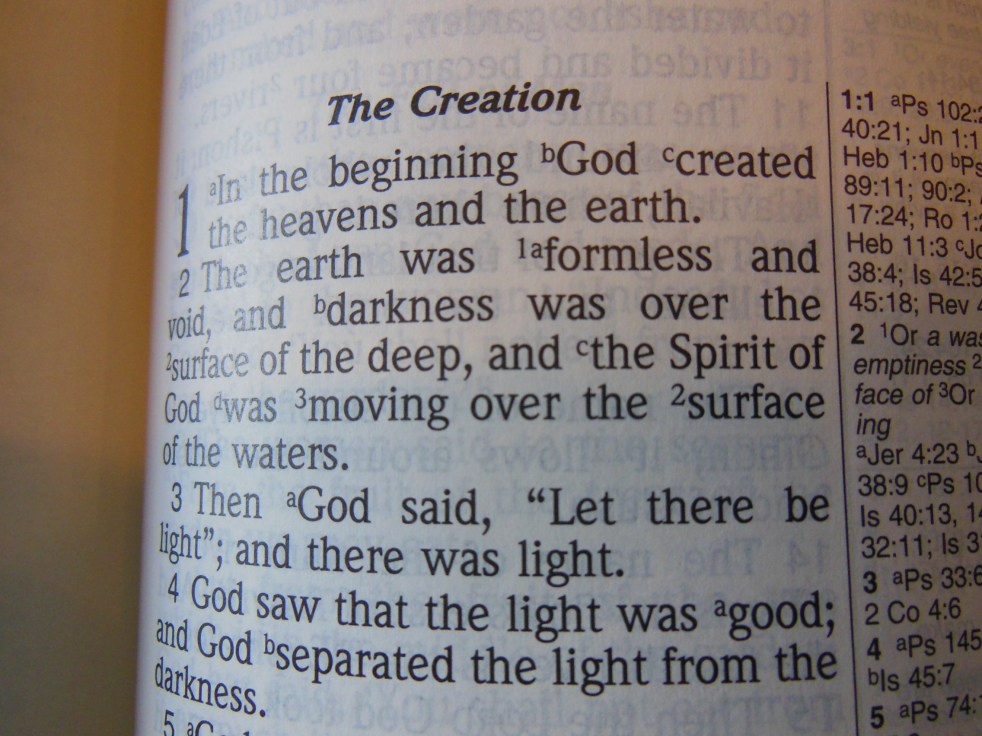
DSCN2856As a Christian, it is good for us to desire the pure milk of the word. If you are a new believer, or even if you have been a believer for a while, it isn’t uncommon for Christians to have questions about how they should study the Bible. There are many articles out there that give some very generic information on how to study the Bible, and there are yet more that flatly get it wrong. The goal of this article is to be helpful, without being too complicated, or too simple. Hopefully it will be just the right combination for most of you.

If you are indwelt by the Holy Spirit, you are blessed with a teacher who will lead you into truth. (1 John 2:27) This isn’t to say you shouldn’t learn from Christians who came before. The same Holy Spirit who indwelt them, indwells you. He teaches them the same truth, and since they already lived, and learned, we can glean some hard-won understanding from reading their works. Equipped with the Holy Spirit, your next consideration should be prayer. Pray for God to make Himself known to you by the study of His word and the power of His Spirit. Obviously, you’ll need a Bible, and a place to study. It also helps to have some way to take notes, and some reference materials, like a concordance, dictionary, and some commentaries. You can get many of these materials online for free on certain web sites, or as apps for your tablet or smart phone.

The next step is to have a plan, whether it is for a short-term word study, topical study, or long-term in-depth study of the entire Bible. I’m the type of person who reads slowly. I study while I read. Other people who read much faster do a study that is separate from their daily reading. If you are reading along, and not paying close attention you can find yourself many pages into a section with no recollection or understanding of what you just read.

You’ve got your materials, your plan, a place and time set aside to study, and you’ve prayed, now what? Time to consider some hermeneutical ideas before diving in. These are things you’ll have to remember to employ while you study, or you could come up with meanings to the scriptures that God, the author did not intend. It is imperative that we don’t approach the word of God irreverently, or eisegetically. We should come seeking the truth, not to bolster an argument for our own position.

I have two fancy words for you, “exegesis, and eisegesis.” Exegesis is when you read the Bible and allow it to inform your understanding. The meaning of the scriptures, and the intent of the author are brought out of the text through faithful study. Eisegesis is when you come to the text with a preconceived notion and read it into the text. You may have seen some false teachers do this. They will cherry pick a few verses out of context, arrange them in a way that seems to make them say what they want them to say. If you aren’t armed with the truth, you might fall for this trick. This is another good reason to understand how to study the Bible.

While focusing on the hermeneutical concept of exegesis we must also consider who the author is writing to, what language is being used, what idioms of that language are being employed, when the audience lived, where they lived, what their culture was like, what relationship the author had with the audience, what type of literature the writing is,(e.g. poetry, historical narrative, songs, prescriptive, prophetic, apocalyptic, epistles/letters, allegory, and wisdom/proverbial language to name some.) grammatical rules, transmission of the text to man by God, modern applications for the individual Christian, and the Church, and finally context, context, context!

Context is key. The meanings you come to by analyzing a verse must fit with the verses surrounding them, and the sections of scripture that speak to those topics in the rest of the Bible. They must also fit with the entire message of God’s word in toto.

I know all of that sounds daunting, but it really is worth the time, and effort to consider these things when you are studying. Since God as the author intended for us to understand His word, and by His Spirit has made it understandable to us, we can, and should read it in its literal sense most of the time. As you mature in faith, and become more familiar with scriptures, much of those aspects will become self-evident, and you’ll find yourself checking a couple of them to get the point of a difficult passage.

With all of that in mind you can follow along as we examine some small passages of scripture. First let’s examine Genesis 11:31-32, “31Terah took Abram his son, and Lot the son of Haran, his grandson, and Sarai his daughter-in-law, his son Abram’s wife; and they went out together from Ur of the Chaldeans in order to enter the land of Canaan; and they went as far as Haran, and settled there. 32The days of Terah were two hundred and five years; and Terah died in Haran.”

Fortunately for us, modern Bible translations move the words around in the sentence to fit modern English grammar. Otherwise we would need to know the Biblical languages to figure out what is going on. With a simple plain reading of verse 31 we can tell who the object, and subject are, and what the verb is. If you had already read the Bible from the beginning to this point you wouldn’t already know that Moses was the prophet and patriarch whom God used to give us these scriptures, and that the Old testament is mostly ancient Hebrew with a small section in Aramaic. At this point the word of God was passed on verbally and had yet been written down. It wouldn’t be until later in the book of Exodus we would read that Moses was told to compile and write down the first five books of the Bible. This is where some of those resources come in handy that I mentioned earlier. You could use a commentary, and Bible history book, to help you out.

The direct object is, “Terah.” The verb is, “took.” The subject is, “Abram.” From the grammar, and a plain reading of the verse we know that Terah took Abram from Ur to Canaan. We also know that Abram was the son of Terah. We can check this by looking at the genealogy that was in the preceding verses. From those same verses we know that Haran is also a son of Terah, and a brother of Abram. We also know that Lot is Terah’s grandson by Haran, and that Terah took Lot with him, when he took Abram. We know that Sarai was Abram’s wife, and Terah’s daughter-in-law, and that she also went with them. The town, “Haran” as translated in English looks like Abram’s brother’s name, “Haran.” By using a concordance and a Hebrew dictionary we can find out that these two proper names are not the same. Haran the son of Terah and Abram’s brother is spelled, “הָרָן֙” in Hebrew. Whereas the town’s name is, “חָרָ֖ן” Haran, Abram’s brother means, “mountaineer” in Hebrew. It is pronounced, “haw-Rawn” Haran the place means, “crossroads” and is pronounced, “cha-ran.” If we pick up where we left off the scripture says v31b, “;and they went as far as Haran, and settled there.” We know the, “they” refers to the group that was traveling with Terah. We also know they finally stopped at the town, “Haran” and settled there. The literal and plain meaning of the text is what we needed here in this historical narrative. With a little help from grammar, the original language, a concordance, Biblical history book, commentary, and a concordance we have it made. “32 The days of Terah were two hundred and five years; and Terah died in Haran.” The days of who? Terah. What about those days? Were they actually talking about literal days, or were they talking about how long he lived? From our knowledge of the idioms we know that the narrative is about how long he lived, not the actual days of his life. It is a figure of speech. We can see that he lived 205 years. We also read that at the end of those days, Terah died, and that it happened in Haran.

Even though this was only two verses, you can see that it can quickly become quite complicated and involved if you are straining for understanding but worry not! Your mind can do most of this on the fly, and quite quickly. You might not even recognize that you are doing it.

For our next example let’s look at 1 Timothy 5:17-18, “17 The elders who rule well are to be considered worthy of double honor, especially those who work hard at preaching and teaching. 18 For the Scripture says, “YOU SHALL NOT MUZZLE THE OX WHILE HE IS THRESHING,” and “The laborer is worthy of his wages.”” Even with no context we can see what is meant regarding the elders and their keep. This is due to the explanation in the form of a quote from the Old Testament and what follows immediately after. We also have added scriptural context from 1 Corinthians 9:9-14, “9 For it is written in the Law of Moses, “YOU SHALL NOT MUZZLE THE OX WHILE HE IS THRESHING.” God is not concerned about oxen, is He? 10 Or is He speaking altogether for our sake? Yes, for our sake it was written, because the plowman ought to plow in hope, and the thresher to thresh in hope of sharing the crops. 11 If we sowed spiritual things in you, is it too much if we reap material things from you? 12 If others share the right over you, do we not more? Nevertheless, we did not use this right, but we endure all things so that we will cause no hindrance to the gospel of Christ. 13 Do you not know that those who perform sacred services eat the food of the temple, and those who attend regularly to the altar have their share from the altar? 14 So also the Lord directed those who proclaim the gospel to get their living from the gospel.”

You can see how additional context helped to understand the quote from the old Testament in the way that it was intended. After reading the quote from Deuteronomy a person might think that Paul is quoting the passage out of context. If you do think that, you should go read Justin Taylor’s article which quotes some other people’s work, and a couple of commentaries. (Read the article hereI think after consulting it you will come to agree with the author’s perspective that the ox was loaned or rented to the man to process grain, and as it was another man’s property he should not abuse it for his own gain. Paul is saying that he and other elders like him are the, “oxen of the Lord” if you will, and they should not be mistreated. With other men’s works, and commentaries, it is important to examine them carefully. Their interpretation may not be the best one. Examine their reasoning, and the context of their arguments and conclusions to see what you think is the truest. I happen to agree with Justin Taylor. I think in context to the entirety of scripture, and what we know from it about the created order this explanation makes the most sense.

You’ll notice this time we used a text with a quote from the Old Testament. It was from one of the Pastoral Epistles, but due to the quote we had to look at the broader context of scripture and examine 1 Corinthians, as well as Deuteronomy. The main text we were exegeting is prescriptive/instructional. You’ll also notice that we were doing a Bible study, but hopefully you could see that the same process would be used for a topical study, or a word study.

With a word study you would want to use a concordance and see how many different Greek, and Hebrew words were translated as the English word you are using, and how many times the specific word you are studying was used in the Bible, and what it meant most of those times, being careful to employ the hermeneutical principles mentioned earlier to determine what the intent of the author was to communicate.

I hope that this brief primer on how to study the Bible was helpful, and easy to follow. The word of God is our food. It is the mind of God for us to know Him by. It is how the sovereign God chose to explain Himself to us. It is entirely about Him. We can see Jesus in every book and chapter. We can preach the gospel of Christ out of every book. He is the central theme, not us. God bless you in your efforts to know Him better by His word.

cultural · racism · Uncategorized

The Christian, White Nationalism, and America in 2019.

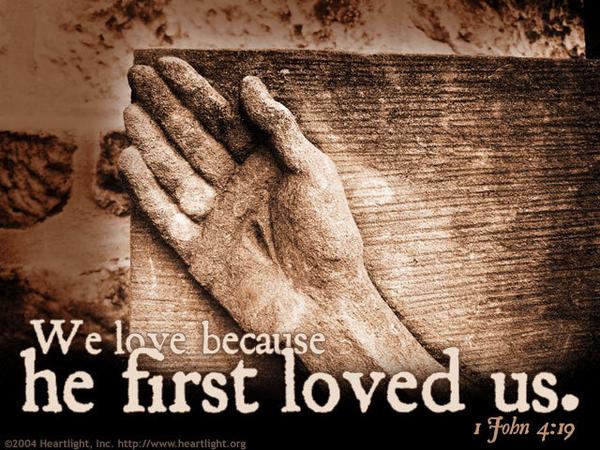
welove-christian-graphics1

If you live in the U.S. no doubt you have heard something about the scary bogeyman nebulously known as, “White Nationalism.” As a Christian, who is ethnically diverse, but appears white, I am just now hearing about this scary bogeyman. The left is even calling, “people of color” white nationalists. This really got me wondering. So, I decided to do some digging.

Depending on whose definition you want to accept, the term, “white nationalist” generally means one of two things. It can be a racist ideology that indicates a right of white people to live in their own country, and govern themselves, without any people of color. The other version is about the same but is worded a bit more to sound like they are separatists instead of supremacists.

What is also interesting is that there is the same ideology for people who would call themselves black. It is called, “Black Nationalism” of course. They define their ideology the same way only black instead of white.

Now, as a Christian first, these things are repulsive to me. As a thinking man, they are repugnant lies, told by evil people seeking to manipulate others with fear. The notion that any sinner is inherently better than another sinner solely based on the color of their skin, or ethnicity is a lie straight from the devil to incite hatred among men.

After reading several articles from leftist web sites, I’ve concluded that everyone who is a conservative and patriotic is deemed a white nationalist. This is also true of people of color. They are being called white nationalists, and white supremacists! This is either insanity on the part of the leftists, or a divisive lie used as a bogeyman to scare people into submission.

The leftists have presupposed that everyone who is Christian, conservative, patriotic, and traditional is a white supremacist and a white nationalist. Their evidence is your opposition to them, and their leftist agendas. Anyone who stands in their way is instantly vilified.

Since they are using these labels so broadly, people can see through their crazy lies. When you try to make Candace Owens, a black woman, appear to be like Hitler, and make her out to be a white supremacist, you will cause thinking people to see that you are either insane, or a liar.

We aren’t even free of their insanity in the Church. The, “Woke Movement” questions if white people can even really be Christians. They insist that we owe our brothers and sister in Christ, who happen to be people of color, an apology, and that we need to repent of being white.

Like I said, I look white. I have a white last name. My ancestry is from mostly Eastern, and Western Europe. Some of my ancestry is from Turkey, Iran, Israel, and Nigeria according to my DNA test. I’m guessing that would be true of many of you. There is no pure white race. There is not a homogenous, “white people.” This is also true of all the other perceived colors of people. My whiteness, your blackness, brownness, and all the other shades in between are all pointless. This is true whether you are in Christ or not, but for the Christian there is no excuse to be racially/ethnically divisive. The Bible is clear on this.

Galatians three is about how one is justified to God. There were some who were making it a matter of following the Law, and Paul was clearing this up. In the process he wanted the people of the circumcision, and the gentiles to put these notions of works out of their minds, and be unified in their acceptance of justification by faith in Christ. In verse 28 of Chapter 3 Paul says, “There is neither Jew nor Greek, there is neither slave nor free man, there is neither male nor female; for you are all one in Christ Jesus.” Christians have no excuse to be at odds due to skin color. The world might be falling for this nonsense, but we have no business following the world.

If you have been finding yourself falling into the temptation to think that you are better than someone due to your skin color, or that it is acceptable to hate someone because of theirs, or even if you have been hating yourself because of your whiteness, you need to repent, and trust Jesus.

gospel · Theology · Uncategorized

Justification by Faith and Galatians Chapter 3.


Are you having a difficult time with understanding justification?  Do you wonder if you have done enough to demonstrate that you are saved?  Do you question whether you are good enough, if there is enough evidence of your faith to be true?  Do you tend to be legalistic with yourself?  One of the dangers of, “navel gazing” (self-examination) is that we become self-absorbed, we lose proper perspective.  We begin to filter incoming information through a set of rules that constantly look at ourselves, and our performance, or lack thereof.

A filter is thing that removes particles from a stream, while allowing the rest of the particles to continue on to their destination.  This can be a data stream, electrical stream, light stream, basically anything that flows.  As we perceive information streaming in through our senses, we employ filters based on our cumulative view of the world (word view).  When that view is built on a solid foundation of objective truth, it will lead us to proper understandings of what has happened, is happening, and will happen.  We will filter out the untrue, and allow the truth to continue.  When our filtration system is built on a false worldview, we filter out some truth, and we look at the world and ourselves through a lie.

God has given us His word, and like Him it is truth.  We on the other hand, are fallible creatures, prone to accepting lies.  Even with the indwelling of the Holy Spirit, and His illumination of the Word of God for us, and to us, we still get things wrong.  This is yet another example of God’s grace towards His elect, we don’t have to get it all right, all the time, from the word go.  None of us die with all the answers in perfect comprehension.  In a sense, even the most spiritually mature Christian you know, will die with notions about God and His word that aren’t perfect.

Our works are tainted, our thoughts are tainted with sin and imperfection.  If you are relying on either of those to get some kind of assurance that you are in, then you are going to find your faith shaken on a regular basis.  Let’s look at Galatians 3 for a moment together.

Galatians 3 :: New American Standard Bible (NASB)

Faith Brings Righteousness

1 You foolish Galatians, who has bewitched you, before whose eyes Jesus Christ was publicly portrayed as crucified? 2 This is the only thing I want to find out from you: did you receive the Spirit by the works of the Law, or by hearing with faith? 3 Are you so foolish? Having begun by the Spirit, are you now being perfected by the flesh? 4 Did you suffer so many things in vain—if indeed it was in vain? 5 So then, does He who provides you with the Spirit and works miracles among you, do it by the works of the Law, or by hearing with faith?

6 Even so Abraham BELIEVED GOD, AND IT WAS RECKONED TO HIM AS RIGHTEOUSNESS. 7 Therefore, be sure that it is those who are of faith who are sons of Abraham. 8 The Scripture, foreseeing that God would justify the Gentiles by faith, preached the gospel beforehand to Abraham, saying, “ALL THE NATIONS WILL BE BLESSED IN YOU.” 9 So then those who are of faith are blessed with Abraham, the believer.

10 For as many as are of the works of the Law are under a curse; for it is written, “CURSED IS EVERYONE WHO DOES NOT ABIDE BY ALL THINGS WRITTEN IN THE BOOK OF THE LAW, TO PERFORM THEM.” 11 Now that no one is justified by the Law before God is evident; for, “THE RIGHTEOUS MAN SHALL LIVE BY FAITH.” 12 However, the Law is not of faith; on the contrary, “HE WHO PRACTICES THEM SHALL LIVE BY THEM.” 13 Christ redeemed us from the curse of the Law, having become a curse for us—for it is written, “CURSED IS EVERYONE WHO HANGS ON A TREE”— 14 in order that in Christ Jesus the blessing of Abraham might come to the Gentiles, so that we would receive the promise of the Spirit through faith.

Intent of the Law

15 Brethren, I speak in terms of human relations: even though it is only a man’s covenant, yet when it has been ratified, no one sets it aside or adds conditions to it. 16 Now the promises were spoken to Abraham and to his seed. He does not say, “And to seeds,” as referring to many, but rather to one, “And to your seed,” that is, Christ. 17 What I am saying is this: the Law, which came four hundred and thirty years later, does not invalidate a covenant previously ratified by God, so as to nullify the promise. 18 For if the inheritance is based on law, it is no longer based on a promise; but God has granted it to Abraham by means of a promise.

19 Why the Law then? It was added because of transgressions, having been ordained through angels by the agency of a mediator, until the seed would come to whom the promise had been made. 20 Now a mediator is not for one party only; whereas God is only one. 21 Is the Law then contrary to the promises of God? May it never be! For if a law had been given which was able to impart life, then righteousness would indeed have been based on law. 22 But the Scripture has shut up everyone under sin, so that the promise by faith in Jesus Christ might be given to those who believe.

23 But before faith came, we were kept in custody under the law, being shut up to the faith which was later to be revealed. 24 Therefore the Law has become our tutor to lead us to Christ, so that we may be justified by faith. 25 But now that faith has come, we are no longer under a tutor. 26 For you are all sons of God through faith in Christ Jesus. 27 For all of you who were baptized into Christ have clothed yourselves with Christ. 28 There is neither Jew nor Greek, there is neither slave nor free man, there is neither male nor female; for you are all one in Christ Jesus. 29 And if you belong to Christ, then you are Abraham’s descendants, heirs according to promise.

Galatians 3 makes it clear that it is not our obedience to the law that makes us just, but rather our faith in Christ.  Do you want some assurance?  Believe in Christ and His work.  Trust Jesus alone, and don’t mix in your ability to know more than someone else, or do more.  Because neither of those things actually satisfy the law.  The law is intended to be impossible to satisfy so that you are driven humbly to your knees before Jesus with no defense left but Him crucified, resurrected, and ruling for eternity.  Repent of sin, and trust the Savior.

Uncategorized

The Error of Pastoral Vision Casting.

visioncasting

You may have heard of, “vision casting.” Then again perhaps you haven’t. It has been around for a bit under two decades. In terms of the hip and relevant, it is pretty worn out already. The problem is that there are still Pastors using the lingo and practicing it. So, what is, “vision casting” you ask? In the best light, it simply is the practice of the Pastor/Preaching Elder coming up with a plan for the future of the local Church he shepherds and telling the Church about it. It gets more erroneous when the Pastor believes he has had some kind of extrabiblical personal revelation from God for the future of the Church and expects everyone to get on board. It reaches maximum insidiousness when the Pastor demands that all the Elders, and Church members submit to him and his plan claiming it to be from God, and if you don’t, then you are going against God!!!

Let’s start with the least problematic. This version of vision casting may just be a slight problem with terminology, and authority. The Preaching Elder might have gotten an idea of some direction he’d like to see the Church move in, and then employs the vision casting nomenclature unaware of how the rest of the world might interpret what he is saying. He might lack the contextual knowledge of Churches that practice vision casting, and not realize that he shouldn’t be talking like them. The Preaching Elder is not the boss Elder. His voice doesn’t trump the other Elders. The New Testament is pretty clear that the Church is to be led by the Elders. They discus, and eventually come to an agreement on any plans for future works they would like the Church to be involved with. The Preaching Elder is also held accountable by the other Elders, and the Church.

The Pastor who has heard from God… I always get a bit skeptical when someone tells me they heard from God unless they qualify that with a, “from His word.” Usually they don’t. Most of the time they go into how God spoke to them and laid it on their heart that (bruh, insert cool story here.) So, we are supposed to accept your extrabiblical personal revelation as originating with God and fall in line. This group of Pastors probably means well, and they truly believe they have heard from God somehow. The problem is, this sets up a condition where the Pastor can abuse his position and the flock. He could pretty much make up anything he wants and try to market it to the Church as long as he says it is from God. That is why there should be no room for extrabiblical personal revelations in the Church since we have the canon of scripture.

Finally, the next category is, “Who are you to touch the Lord’s anointed!?” If a Pastor were to have God speak to him, and reveal new words to him, we would be obligated to rewrite our Bibles and add what God said to the end of it. Since we are not ready to do that, and with good reason, we shouldn’t listen to these men, and (ahem cough) women pastors. They act as though they are wielding the authority of God because they had a vision from Him on how to grow the Church, and if you go against them, you are going against God. These guys are seriously angry when you don’t get behind them and their vision. They get vindictive because you are the bad guy questioning them, and doubting their vision, and their relationship with God. When you cross this guy, you’ll see the ugly come out. They can behave extremely unchristian in the name of Christ, very disturbing.

So, with these three types in mind, evaluate what you have heard from the pulpit. If the man is like the first kind, just consider what he has said and demonstrate some grace. If he is like the second, then it is appropriate to be concerned. You may sit, listen, and continue to examine what is coming from the pulpit for a while to determine when, and how to offer correction in love. Church discipline may even become necessary. If you are listening to the third example, call them to repent, and if you can, subject them to Church discipline. I doubt however that will be possible. In a Church like that they usually already have entrenched control. You will probably have to leave and find a new Church that believes and preaches the Bible.

The work of Christians is the great commission. We are to preach the gospel to all the world, and we are to make disciples of all men. We are to take offerings from the Church to accomplish this goal, as well as to support the Preaching Elder, and other Elders in the Church as they serve. We don’t need a vision from God to be cast from the pulpit down to us small, lesser, creatures to blindly obey. God has spoken in His word, and we have all the revelation we need 2 Timothy 3:16-17. The great commission isn’t about filling seats and the offering plate, it isn’t about a 16,000 square foot house, or $6000 sneakers. It is about Christ Jesus, the God-man, whose body was broken for us, and whose blood was shed for the forgiveness of sins.

Uncategorized

Atheist…

DSCN3335

If you say you are an atheist, and that it means you have no beliefs about god, do you believe the statement you just made? If so, that is a belief. Regardless of what you are insisting, you have made a statement about God. Guess what? That is a theological belief. So you have a religious belief. Which by the way is not what the word, “atheist” actually means. It does not mean to have no beliefs. The English word, “atheist” comes from the French, “athéiste” which comes from the Greek, “atheos.” Theos is Greek for god. Adding the prefix, “a” to the word, “theos” changes its meaning to, without god, or no god.

Book Reviews · Crossway · Uncategorized

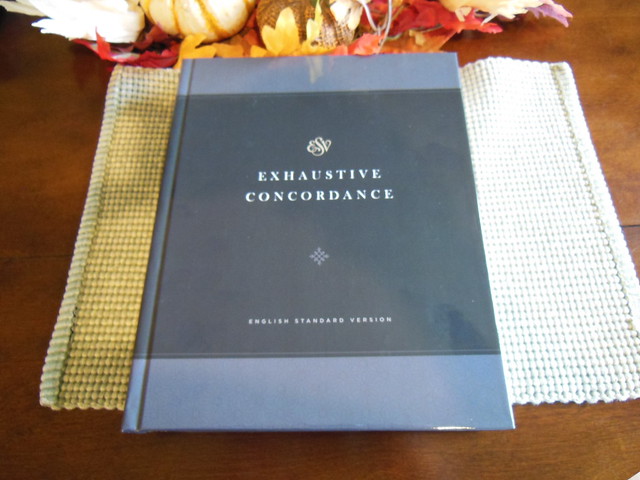
A Review of the E.S.V. Exhaustive Concordance of the Bible from Crossway.

DSCN7021

Crossway, for a long time now has been manufacturing terrific quality premium, and value Bibles, as well as helpful Christian books. Oft overlooked are the study resources they publish. Today we are going to look at the, ” ESV Exhaustive Concordance.” If you’ve been a Christian for a while you probably already know what a valuable aid a good concordance can prove to be.

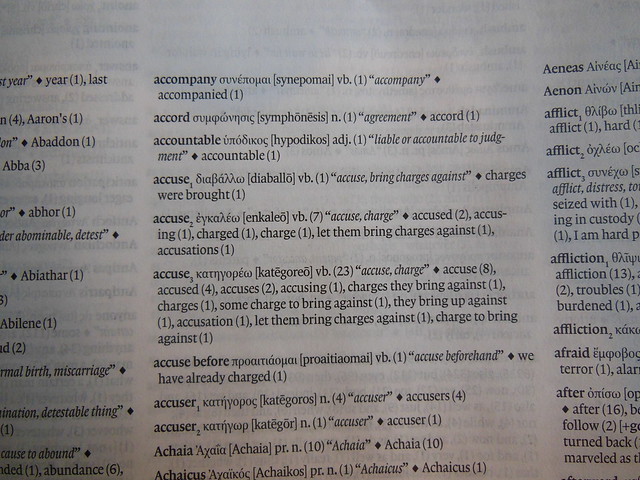
If you don’t know what one is, let me tell you. A concordance has every word in the Bible, no matter how small it is, listed in alphabetical order, along with every occurrence of that word, and where in the Bible it occurred. This one goes a bit further and includes Hebrew, Aramaic, and Greek glossaries, with entries for those words in the original languages. There is also a list of the words followed by their scripture references only, so you can find every occurrence quickly.

If you aren’t quite sure what to do with a concordance here are a few suggestions; Do a word study. Check to see if the English word being used is translated from one or more different Greek words. Verify the veracity of someone’s claim. Trust me, once you start using a full concordance instead of the very abridged on at the back of some Bibles, you never want to be without one.

This concordance is well made for many years of use. It is a hardback edition. The spine is sewn, and rounded for easy use, and durability. There are black head and tail bands. The paper is 36 g.s.m. and opaque. I think it was about as thin as they could go without sacrificing legibility, considering the 6.5 Lexicon font. It strikes the perfect balance for a book of this size. The paper is white, and the type is clearly, and uniformly printed. Concordances, as you can imagine are not small books. This one is a hair thinner than my Strong’s. In the front of this concordance in the introduction you’ll find helpful diagrams of how to use this tome properly, as well as a Preface by Drayton Brenner who compiled it.

DSCN7034
DSCN7041
DSCN7037
DSCN7044
DSCN7022

You should always have a hard copy of your most important books. Electronic copies, and apps, are nice, and convenient, but they can be changed in one update overnight. Some apps make it difficult to browse to the information you want. Sometimes, it is just easier to look it up in a book. To that end, I encourage you to go out and pick up this concordance for your ESV Bible. You can purchase it on Amazon, Christianbook, or Crossway’s page. To see more pictures of this concordance please see my flickr album.

Uncategorized

This is an article I was sent. It is about anti-Christian bias in the music industry.

https://scenesmedia.com/2018/12/is-christian-rock-as-lousy-as-the-new-yorker-says-it-is/

The views in the article may not reflect the views of Snyder’s Soapbox, then again they may. Who knows? It is a mystery lol.

Uncategorized

Can we repent after we die? No.

I don’t want to give anyone false hope. It is more damaging than the truth. I have had to work through this problem as well. Many of my family, and ancestors died as Roman Catholics, and are now condemned. They will experience the wrath of the holy, and just God for all eternity. This should be, and is a sobering notion. It should spur us on to boldly share the true good news with all of the lost people God brings into our lives.

The elect of God will hear the gospel, repent, and believe, in this life. There is no doubt of that. God does not try to save someone and fail. The lost who die outside of the true Christ, will not be in Heaven. They will not have an opportunity to repent once they are dead. Even if they did, they would not truly repent. They would only be sorrowful over their condition much as the rich man was when he begged Lazarus for water, and instead of asking to be forgiven of his sinful life, he wanted his brothers to be warned. There is no way out of hell.

Here are the sections of scripture that people usually use to support, what I, and approximately 2000 years of orthodoxy, consider the aberrant view of those who are dead repenting in Hell. Please note these verses are presented out of context by the proponents of the heterodox view.

1 Peter 3:18-20 NASB “18 For Christ also died for sins once for all, the just for the unjust, so that He might bring us to God, having been put to death in the flesh, but made alive in the spirit; 19 in which also He went and made proclamation to the spirits now in prison, 20 who once were disobedient, when the patience of God kept waiting in the days of Noah, during the construction of the ark, in which a few, that is, eight persons, were brought safely through the water.”

1 Peter 4:6 NASB “6 For the gospel has for this purpose been preached even to those who are dead, that though they are judged in the flesh as men, they may live in the spirit according to the will of God.”

Now I will present what I believe is the Biblical position on the topic. God extends every opportunity to those outside of Christ to repent of their sins. Every moment of every day is another chance. All the way until their death, when it is too late. First we have to understand that people who are in their sins, and are not elect. They don’t care about God one way or another, or they are outright hateful of Him. People who are in works righteousness religions are gods unto themselves. They trust in their own righteousness as earned in their particular system. The notion of being a wretched worm of a sinner so bad that he could never merit favor with God is reprehensible to them, because they don’t think they are bad people. They might see themselves in relation to other people as flawed perhaps, or an occasional sinner, but they don’t see how they look in God’s judgment. Someone who dies a lost sinner also has the testimony of the natural revelation against them. If their conscious telling them they are sinners, isn’t enough, and the testimony of creation isn’t enough, and the prophets, and the Bible aren’t enough to convince someone neither will the incarnation of God. People who lived during the time of Christ, who met Him, and listened to His teachings wanted Him dead. Those who are not among the elect will hate God even more in Hell, they will only be sorry for their state, but not for their crimes against God because they have never been born again. Their sinful nature is no longer restrained by the Holy Spirit from being as evil as it could be. Common grace is over at that point.

The thieves being crucified with Christ are a good example of this. One believed, and was promised by Christ to be with Him that day in paradise. The other had no promise, and did not repent, and mocked Christ as they all died.

God has ordained only one way for people to be justified to Him, and that is the good news of Jesus. A person goes to hell, not solely because they had never heard of Jesus, or His good news, but rather because they are sinners. All people born after Adam, are said to be in Adam. They are all born under the curse, and have a sin nature. We don’t become sinners by sinning, we sin because it is our nature. We all deserve death and hell. The good news is that God being rich in mercy saves some. Most will be in hell. Matthew 7:13-14 (NASB Strong’s) “Enter through the narrow gate; for the gate is wide and the way is broad that leads to destruction, and there are many who enter through it. For the gate is small and the way is narrow that leads to life, and there are few who find it. Romans 5:12-14 (NASB Strong’s) Therefore, just as through one man sin entered into the world, and death through sin, and so death spread to all men, because all sinned— for until the Law sin was in the world, but sin is not imputed when there is no law. Nevertheless death reigned from Adam until Moses, even over those who had not sinned in the likeness of the offense of Adam, who is a  type of Him who was to come.

1 Corinthians 15:20-22 (NASB Strong’s) But now Christ has been raised from the dead, the first fruits of those who are asleep. For since by a man came death, by a man also came the resurrection of the dead. For as in Adam all die, so also in Christ all will be made alive.

Let’s break down the scripture that people erroneously use to support the notion that God will give the dead an opportunity to repent. To do that we must read it in context, so I will be citing the entire chapters.

1 Peter Chapter 3, & 4:1-11
New American Standard Bible
Godly Living

      1In the same way, you wives, be submissive to your own husbands so that even if any of them are disobedient to the word, they may be won without a word by the behavior of their wives, 2as they observe your chaste and respectful behavior.3Your adornment must not be merely external—braiding the hair, and wearing gold jewelry, or putting on dresses; 4but let it be the hidden person of the heart, with the imperishable quality of a gentle and quiet spirit, which is precious in the sight of God. 5For in this way in former times the holy women also, who hoped in God, used to adorn themselves, being submissive to their own husbands; 6just as Sarah obeyed Abraham, calling him lord, and you have become her children if you do what is right without being frightened by any fear.       7You husbands in the same way, live with your wives in an understanding way, as with someone weaker, since she is a woman; and show her honor as a fellow heir of the grace of life, so that your prayers will not be hindered.       8To sum up, all of you be harmonious, sympathetic, brotherly, kindhearted, and humble in spirit; 9not returning evil for evil or insult for insult, but giving a blessing instead; for you were called for the very purpose that you might inherit a blessing. 10For,
            “THE ONE WHO DESIRES LIFE, TO LOVE AND SEE GOOD DAYS,
            MUST KEEP HIS TONGUE FROM EVIL AND HIS LIPS FROM SPEAKING DECEIT.       11“HE MUST TURN AWAY FROM EVIL AND DO GOOD;
            HE MUST SEEK PEACE AND PURSUE IT.       12“FOR THE EYES OF THE LORD ARE TOWARD THE RIGHTEOUS,
            AND HIS EARS ATTEND TO THEIR PRAYER,
            BUT THE FACE OF THE LORD IS AGAINST THOSE WHO DO EVIL.”       13Who is there to harm you if you prove zealous for what is good? 14But even if you should suffer for the sake of righteousness, you are blessed. AND DO NOT FEAR THEIR INTIMIDATION, AND DO NOT BE TROUBLED, 15but sanctify Christ as Lord in your hearts, always being ready to make a defense to everyone who asks you to give an account for the hope that is in you, yet with gentleness and reverence; 16and keep a good conscience so that in the thing in which you are slandered, those who revile your good behavior in Christ will be put to shame. 17For it is better, if God should will it so, that you suffer for doing what is right rather than for doing what is wrong. 18For Christ also died for sins once for all, the just for the unjust, so that He might bring us to God, having been put to death in the flesh, but made alive in the spirit; 19in which also He went and made proclamation to the spirits now in prison, 20who once were disobedient, when the patience of God kept waiting in the days of Noah, during the construction of the ark, in which a few, that is, eight persons, were brought safely through the water.21Corresponding to that, baptism now saves you—not the removal of dirt from the flesh, but an appeal to God for a good conscience—through the resurrection of Jesus Christ, 22who is at the right hand of God, having gone into heaven, after angels and authorities and powers had been subjected to Him. 1Therefore, since Christ has suffered in the flesh, arm yourselves also with the same purpose, because he who has suffered in the flesh has ceased from sin, 2so as to live the rest of the time in the flesh no longer for the lusts of men, but for the will of God. 3For the time already past is sufficient for you to have carried out the desire of the Gentiles, having pursued a course of sensuality, lusts, drunkenness, carousing, drinking parties and abominable idolatries. 4In all this, they are surprised that you do not run with them into the same excesses of dissipation, and they malign you; 5but they will give account to Him who is ready to judge the living and the dead. 6For the gospel has for this purpose been preached even to those who are dead, that though they are judged in the flesh as men, they may live in the spirit according to the will of God.       7The end of all things is near; therefore, be of sound judgment and sober spirit for the purpose of prayer. 8Above all, keep fervent in your love for one another, because love covers a multitude of sins. 9Be hospitable to one another without complaint. 10As each one has received a special gift, employ it in serving one another as good stewards of the manifold grace of God. 11Whoever speaks, is to do so as one who is speaking the utterances of God; whoever serves is to do so as one who is serving by the strength which God supplies; so that in all things God may be glorified through Jesus Christ, to whom belongs the glory and dominion forever and ever. Amen.

The first 12 verses are obviously about Christian praxia in holy living. Then in next few verses Peter is exhorting the Christians to persevere in holiness, in Christ, during slander and suffering for righteousness sake, and to be prepared to practice apologetics. That entails knowing God through His word, and what you believe, so that you can relay it to others. In v. 18 when Peter says that Christ died once and for all, he wasn’t saying that He died to expiate the sins of all people, he was saying that He accomplished the penal substitutionary atonement, and there is no more to do. This is in stark contrast to the sacrificial system of the Jews in the Old Testament. By His violent death on the cross, the flesh was put to death. He was dead for three days. Christ’s spirit (deity) was alive, not the Holy Spirit, but by His own inner life as God.

In v. 19 Christ in His spirit proclaimed to the demonic forces that were imprisoned in chains since the time of Noah His victory over them. These fallen were the ones that were most rebellious and evil, and needed to be restrained for the sake of mankind, and God’s plan of redemption. Lesser demons still remained on the Earth. The word prison in Greek is, “φυλακή” (phulake) which is more at prison, or under guard, but in no way is it, “ᾍδης” (Hades) the realm of the dead or the grave.

In v. 20 you see the direct statement that these were the rebellious demons that caused so much evil during the time of Noah. The demons were so evil convincing mankind to engage in all manners of sin, that none of them would listen to the preaching of Noah, and repent. God only saved Noah, and his family by bringing them through the flood in the ark.

In v. 21 some people may get confused and think that baptism justifies you to God, but it does not. All you need to do to know that it is actually by the work of Christ is to read the entire verse. The baptism is a symbolic appeal to the God by the atoning work of Christ and His resurrection.

In v. 22 Peter is demonstrating Christ’s triumph over the demonic by pointing our His ascension, and how everything has been placed under His authority.

This section of scripture doesn’t end with Chapter 3. You can tell by the first word of v. 1 of Chapter 4, “Therefor” and as always you must as what is it, “there for?” As Christ suffered on the cross and was victorious, we should be willing to suffer for our faith, and doing what is right, with the knowledge that we will be with Christ for eternity. There is an exhortation to not behave like they did before they were saved.

Here is what Pastor Dr. John MacArthur has to say about v. 6 in his notes, “ 1 Peter 4:6 (MacArthur Study Bible Notes (ESV)) 1 Pet. 4:6 to those who are dead. The preaching of the gospel not only offers a rich life (3:10), a ceasing from sin (4:1), and a good conscience (3:21), but also an escape from final judgment. Peter had in mind believers who had heard and accepted the gospel of Christ when they were still alive, but who had died by the time Peter wrote this letter. Some of them, perhaps, had been martyred for their faith. Though these were dead physically, they were triumphantly alive in their spirits (cf. Heb. 12:23). All their judgment had been fully accomplished while they were alive in this world (“in the flesh”), so they will live forever in God’s presence.”

Psalm 6:5 NASB “For there is no mention of You in death; In Sheol who will give You thanks?”

Augustine says, in regards to Psalm 6:5,

“For in death there is no one that is mindful of Thee. He knows too that now is the time for turning unto God: for when this life shall have passed away, there remaineth but a retribution of our deserts. “But in hell who shall confess to Thee?” That rich man, of whom the Lord speaks, who saw Lazarus in rest, but bewailed himself in torments, confessed in hell, yea so as to wish even to have his brethren warned, that they might keep themselves from sin, because of the punishment which is not believed to be in hell. Although therefore to no purpose, yet he confessed that those torments had deservedly lighted upon him; since he even wished his brethren to be instructed, lest they should fall into the same (Commentary on the Psalms 6:6).”

Here are some links to good articles on the topic;

God · Theology · Uncategorized

Have you read Psalm 103 lately?

psalm103

Psalms 103:1-2 (NASB Strong’s) Praise for the Lord’s Mercies.
A Psalm of David.
​  Bless the Lord, O my soul,
And all that is within me, bless His holy name.
Bless the Lord, O my soul,And forget none of His benefits;

As David exhorts his soul to bless the Lord, we have to ask ourselves what it means to bless God. When we think of blessing a person often ideas of gifts or deeds to benefit them come to mind. What can one give to God, the Creator of all things, who knows all things perfectly? The error with that notion is that God is a man to be blessed as a man, but He is not as we all know. To bless the Lord means to speak well of Him. To extol His attributes. We can see in the following verses that is exactly what David does. He also exhorts the angels and all of creation to do so as well.

In verses 3-5 the psalmist asks five rhetorical questions to motivate the hearer (his soul) to recognize the Lord God. The answer to all five questions is obviously God.

Psalms 103:3-5 (NASB Strong’s) Who pardons all your iniquities,
Who heals all your diseases;
Who redeems your life from the pit,
Who crowns you with lovingkindness and compassion;
Who satisfies your years with good things,
So that your youth is renewed like the eagle.

God pardons his iniquities. God heals his diseases. God redeems his live from the pit. God crowns him with lovingkindness and compassion. God satisfies his years with good things so that his youth is renewed like the eagle.

In verses 6-19 we see the psalmist bless the Lord. He lists ways God is in His attributes, and how He is towards man, His creation in light of those attributes. You see when God blesses us, it is for our benefit. He doesn’t speak well of us to bless us. He involves us in relation to Him.

Psalms 103:6-19 (NASB Strong’s) The Lord performs righteous deeds
And judgments for all who are oppressed.
He made known His ways to Moses,
His acts to the sons of Israel.
The Lord is compassionate and gracious,
Slow to anger and abounding in lovingkindness.
He will not always strive with us,
Nor will He keep His anger forever.
He has not dealt with us according to our sins,
Nor rewarded us according to our iniquities.
For as high as the heavens are above the earth,
So great is His lovingkindness toward those who fear Him.
As far as the east is from the west,
So far has He removed our transgressions from us.
Just as a father has compassion on his children,
So the Lord has compassion on those who fear Him.
For He Himself knows our frame;
He is mindful that we are but dust.
As for man, his days are like grass;
As a flower of the field, so he flourishes.
When the wind has passed over it, it is no more,
And its place acknowledges it no longer.
But the lovingkindness of the Lord is from everlasting to everlasting on those who fear Him,
And His righteousness to children’s children,
To those who keep His covenant
And remember His precepts to do them.
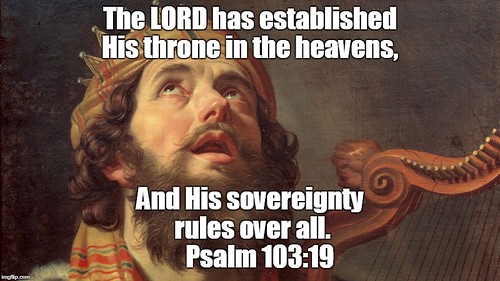
The Lord has established His throne in the heavens,
And His  sovereignty rules over all.

The closing verses not only exhorts the angels to bless God, but also all of creation, and is a restatement for conclusion of the exhortation at the beginning.

Psalms 103:20-22 (NASB Strong’s) Bless the Lord, you His angels,
Mighty in strength, who perform His word,
Obeying the voice of His word!
Bless the Lord, all you His hosts,
You who serve Him, doing His will.
Bless the Lord, all you works of His,
In all places of His dominion;
Bless the Lord, O my soul!

We should likewise bless the Lord from the depths of who we are in Him. Let us speak well of God in reverential awe of who He is, what He has done, and what He continues to do in space-time, and eternity.

Bible Reviews · Bibles · Crossway · Uncategorized

A Snyder’s Soapbox Review of the, “John MacArthur Study Bible in the E.S.V. Translation” with a Genuine black leather cover.

DSCN7019

     I know this Bible has been out for quite some time, but Crossway was kind enough to send one out for review. This is one of their Bibles I have not reviewed yet, and perhaps you haven’t looked into it yet either. I have two other John MacArthur Study Bibles. One is from Thomas Nelson, and it is a N.A.S.B. The other is the 25th Anniversary Edition in N.K.J.V. The things that struck me between the three different editions are the qualities of the papers, the printing, the spine/binding, and the cover options. In all of the qualities, except one, the Crossway comes out on top, and not just by a little.

     The genuine leather cover is more like a genuine calfskin leather, and not at all like the pigskin leather that came on the Thomas Nelson made N.A.S.B. The quality of the 25th Anniversary N.K.J.V. leather cover was slightly better than the Crossway edition’s. The 25th Anniversary edition’s cover was a bit thicker, perimeter stitched,and had an inner liner which moire silk. You would not expect a simple genuine leather edition to come anywhere near the quality of a premium Bible, but it does. The spine of the 25th anniversary edition has raised hubs, the other two do not. This is not a big deal. It is only decorative.

     The paper on the Crossway far exceeds the quality of the other two. The other two are less white, and have almost a newsprint color to them. They are also made of toothier paper. The Crossway is smooth, and white, but not too bright. It is just bright enough to offer the proper contrast between the uniformly, and sharply printed font.

     The spine of the N.A.S.B. from Thomas Nelson is not sewn, but glued. It is a case/perfect bound Bible. The Crossway, and the 25th Anniversary N.K.J.V. are both sewn. The Crossway is about the same thickness as the Thomas Nelson. Both are much thinner than the 25th Anniversary N.K.J.V. I’m not sure why it is so thick. I’m guessing it is due to the type of paper. They all have relatively the same amount of content. They could all use better ribbons. The Crossway has nicer maps, of course 🙂 If you are interested in it,hurry up and get it while it is on sale for Christmas!

DSCN6978

     The Crossway, English Standard Version, in genuine black leather comes in a two piece retail box. The box isn’t as sturdy as some other boxes, but I would still hold onto it to store your Bible in when not in use. The Bible itself is full of helpful features that will be of great value to you while you endeavor to learn more about the God who saves.  

Here is a list of the Bible’s features from Christianbook.com’s product page; 

Features

  • Complete ESV Bible text
  • Nearly 25,000 explanatory notes from Dr. John MacArthur
  • Bible text in 8.7 point type, 7.6 point study notes
  • More than 140 two-color maps, charts, timelines, and illustrations
  • Complete introductions to each Bible book
  • Concise articles on How We Got the BibleHow to Study the Bible, and Introduction to the Bible
  • 80,000 cross-references
  • An extensive concordance
  • Bible reading plans
  • Index to Key Bible Doctrines
  • Outline of Systematic Theology
  • Presentation Page & Family Record Section
  • Center-Column References
  • Timeline of Old Testament Kings and Prophets
  • Timeline of New Testament Chronology
  • Harmony of the Gospels
  • Durable smyth-sewn binding
  • Presentation page
  • Family record pages
  • Ribbon marker
  • Gold page edges
  • 8-point text size
  • 9.75″ x 7.00″ x 1.75″

Product Information

Format: Genuine Leather
Number of Pages: 2144
Vendor: Crossway
Publication Date: 2010
Dimensions: 9.50 X 7.00 X 1.75 (inches)
ISBN: 143352144X
ISBN-13: 9781433521447
References: Center Column|Cross References
Text Layout: Double Column
Text Color: Black Letter
Text Size: 8 Point
Note Size: 7 Point
Thumb Index: No
Ribbon Marker: Yes
Spine: Sewn
Page Gilding: Gold

You might have noticed there is a discrepancy between the two lists, one says the font is 8.7 pt. for the main text, and 7.6 pt. for the notes, the other list says it is 8, and 7 pt.  When I contacted Crossway they confirmed that the font is 8.5 pt. for the main text, and 7.5 pt. for the notes.  They also provided me with the font type, which is ITC Stone Serif.

DSCN6998

For people who are curious, this Bible is printed, and bound in China.  I know, I know, Chinese made stuff is junk…  Well Crossway has ensured that the quality is top notch.  I’m not sure how they do it, but I would like to find out.  Hopefully one day, I’ll get the chance. 

DSCN6993

 The cover has a nice grain to it, and a perimeter groove on the outside.  The inside liner looks like your typical vinyl.  There is a nice gold perimeter ornamentation hot-stamped on the inside of the cover as well.  The page edges are gold guilt, and there are head and tail bands too. 

DSCN6977
DSCN6982
DSCN6986
DSCN6983

 My biggest gripe about cheap Bibles is that they use glued spines, and all the pages fall out.  They are also notoriously difficult to keep open, or get to lay flat.  You won’t have that problem with a good sewn spine.  The Crossway MacArthur Study Bible has a nice sewn spine as you can tell from the following pictures.  It also has one ribbon marker.

DSCN7016
I really like the simple style of the spine.
DSCN7018
DSCN7008
DSCN7019

One of the things I like about this Bible is the use of the color blue for the chapter numbers and features.  

DSCN7010
DSCN7000
DSCN6996

This is a black letter edition, with double column, paragraph layout.  The cross references are in the center column, and the notes are on the bottom.  With the quality of paper, and printing this Bible is not hard on the eyes.

DSCN7012

After looking over this Bible, and comparing it to other editions, I can give it a thumbs up.  It is a great value, especially when it is on sale.  You can get your copy from Christianbook, or Amazon.  Make sure to check out all of the pictures of this Bible on the Flickr page.