Theology

God and Man, How does that work? The Hypostatic Union… Duh!

God and Man, How does that work? The Hypostatic Union… Duh!

I remember pondering how Jesus could be man and God without having being changed. I also used to wonder how Jesus could be God and die on the cross. After all, God can’t die. If He could He wouldn’t be God. Well, I’m glad to say that more brilliant men than I have studied long and hard to explain my problems away. So let’s take advantage of what these men, who have come before us had figured out. The doctrine of the hypostatic union is pretty simple to understand, but has some very profound implications.

ὑπόστασις hypostasis, is a Greek word that for our purposes means, substance or subsistence. When we speak of this in regards to Jesus, we are explaining how the God nature and the man nature are joined. I used to have an extremely basic understanding of Jesus. I thought that Jesus was God incarnate, and that’s where it ended. I didn’t understand past that idea. We know that Jesus was not always incarnate. We also know that He is not a demigod. For instance the mythical Hercules was believed to be a demigod. He was said to be the physical product of a carnal relation between Zeus and Alcmene. Zeus was a mythical god of the Greeks. Alcmene was his human mother, whom Zeus had relations with, according to Greek mythology. Thus, Hercules was understood to be the mingled half natures of god and man. That is what a demigod is. Jesus is not a demigod. He is 100% fully God and 100% fully human, perfectly joined, without mingling the two distinct natures. It is very important that we understand this.

Jesus was always God and will always be God. At the incarnation, some people make the false, heretical statement that God changed in nature via the incarnation. This error is because they don’t understand the immutable nature of God or they don’t affirm it. They struggle to justify Jesus being man and God. They lack the tools to see how both can be true. We know from God’s word that it is all true and if there is a seeming conflict between what we see as mutually exclusive statements, the problem has to be with our limited understanding and not God’s word. If we start with that as our presupposition we can approach the Bible in faith and accept what has been said. I accepted the trinity on faith for a long time, until it started making more sense to me. Now I affirm it with reason that has been reformed by God in addition to faith.

If Jesus always existed as the eternal Son, who had no human body, then by the power of God, a body was made for Him in the womb of Marry, and at that moment His God nature was forever joined to His human nature, being 100% God and 100% man, perfectly joined, without mixing, having two complete distinct natures, then He could fulfill the work that was ahead of Him. Only a man could represent other men. Only a man could die. It is impossible for God to die or be killed. Only a man could experience life and temptation as a man. Man had inherited death from Adam. Only Jesus broke that chain, by being born of the virgin and power of God via the Holy Spirit. Only God could live a sinless life. Only God could fulfill all righteousness. Only God could survive the punishment on the cross until it was paid for. All of the eternities of torment in Hell, owed by all the sinners who would be saved, was poured out on Jesus during the crucifixion. Think about it. We cannot conceive of eternity, let alone an eternity of punishment. He didn’t just survive for one person, but all that would be saved. A human could not have survived the punishment of his own sins, not to mention anyone else’s. It was necessary for Jesus to be God and man. Not only is it necessary, but it makes absolute sense when we think about it.

Apologetics · Theology

“…the LORD has put a deceiving spirit in the mouth of all these your prophets;…”

…the LORD has put a deceiving spirit in the mouth of all these your prophets;…”

Micaiah said, “Therefore, hear the word of the LORD. I saw the LORD sitting on His throne, and all the host of heaven standing by Him on His right and on His left. “The LORD said, ‘Who will entice Ahab to go up and fall at Ramoth-gilead?’ And one said this while another said that. “Then a spirit came forward and stood before the LORD and said, ‘I will entice him.’ “The LORD said to him, ‘How?’ And he said, ‘I will go out and be a deceiving spirit in the mouth of all his prophets.’ Then He said, ‘You are to entice him and also prevail. Go and do so.’ “Now therefore, behold, the LORD has put a deceiving spirit in the mouth of all these your prophets; and the LORD has proclaimed disaster against you.” “

(1 Kings 22:19-23 NASB)

In 1 Kings 22:19-23 we read some information that can initially be troubling to some. It is often quoted by atheists seeking to shake the faith of a believer. Properly understood, it is harmonious with the rest of God’s word. So don’t let it trouble you. Let’s see if we can shed some light on it.

We know that God is truth. We know that He is righteous and holy. Reading this passage, if not properly exegeted, could lead one to believe that God caused false prophets to lie. This would seem to conflict with what we know of the attributes of God displayed to us in the rest of His word. This seeming conflict is easily remedied when we read the scripture in context.

We understand that Satan, has to answer to God. We read this in the book of Job. Satan cannot do anything unless God allows him. This might be a tough concept, but think about it. Satan has to ask permission to do what he was doing to Job. Satan is a creature, created by God. Satan is not God’s equal, or opposite. God could destroy Satan at this very moment. God doesn’t because He is using Satan to accomplish His good will.

Ahab was one of the most wicked kings in all history. God had already pronounced judgment on him. All of Ahab’s prophets were telling him to go to war at Ramoth-Gilead, and that he would succeed.

…Three years passed without war between Aram and Israel. In the third year Jehoshaphat the king of Judah came down to the king of Israel. Now the king of Israel said to his servants, “Do you know that Ramoth-gilead belongs to us, and we are still doing nothing to take it out of the hand of the king of Aram?” And he said to Jehoshaphat, “Will you go with me to battle at Ramoth-gilead?” And Jehoshaphat said to the king of Israel, “I am as you are, my people as your people, my horses as your horses.” Moreover, Jehoshaphat said to the king of Israel, “Please inquire first for the word of the LORD.” Then the king of Israel gathered the prophets together, about four hundred men, and said to them, “Shall I go against Ramoth-gilead to battle or shall I refrain?” And they said, “Go up, for the Lord will give it into the hand of the king.” But Jehoshaphat said, “Is there not yet a prophet of the LORD here that we may inquire of him?” …”

(1 Kings 22:1-7 NASB)

Then, we see that Jehoshaphat asks Ahab to inquire of another prophet, a prophet of the LORD or (Yhvh) So Ahab sends for Micaiah.

…The king of Israel said to Jehoshaphat, “There is yet one man by whom we may inquire of the LORD, but I hate him, because he does not prophesy good concerning me, but evil. He is Micaiah son of Imlah.” But Jehoshaphat said, “Let not the king say so.” Then the king of Israel called an officer and said, “Bring quickly Micaiah son of Imlah.” Now the king of Israel and Jehoshaphat king of Judah were sitting each on his throne, arrayed in their robes, at the threshing floor at the entrance of the gate of Samaria; and all the prophets were prophesying before them. Then Zedekiah the son of Chenaanah made horns of iron for himself and said, “Thus says the LORD, ‘With these you will gore the Arameans until they are consumed.'” All the prophets were prophesying thus, saying, “Go up to Ramoth-gilead and prosper, for the LORD will give it into the hand of the king.” Then the messenger who went to summon Micaiah spoke to him saying, “Behold now, the words of the prophets are uniformly favorable to the king. Please let your word be like the word of one of them, and speak favorably.” But Micaiah said, “As the LORD lives, what the LORD says to me, that I shall speak.” When he came to the king, the king said to him, “Micaiah, shall we go to Ramoth-gilead to battle, or shall we refrain?” And he answered him, “Go up and succeed, and the LORD will give it into the hand of the king.” Then the king said to him, “How many times must I adjure you to speak to me nothing but the truth in the name of the LORD?” So he said, “I saw all Israel Scattered on the mountains, Like sheep which have no shepherd. And the LORD said, ‘These have no master. Let each of them return to his house in peace.'” Then the king of Israel said to Jehoshaphat, “Did I not tell you that he would not prophesy good concerning me, but evil?” …”

(1 Kings 22:8-18 NASB)

As you can see, by adding the context of the surrounding scripture we can easily understand what is happening here. God did not cause the prophets to lie. He allowed Satan to have the spirits controlling the false prophets to lie. God used their sins sinlessly to accomplish His righteous judgment against Ahab, a wicked king. The fact that God restrains evil every moment doesn’t seem to enter into our minds, but if he didn’t we would all be worse than Pharaoh or Hitler. When God allows evil spirits or men to act how they want, we get surprised, as if God is the bad guy. Our pitiful minds default to sinful criticism of the one truly good being. That is how messed up we are. I hope this helps. If you have questions, ask your Pastor and Elders, first. If they can’t answer you feel free to ask in the comments section. If I can’t answer, I’ll try to find someone who can. God bless you.

Theology

Something That Calvin Said…

Way back, long ago there was a reformer named John Calvin.  In a book that he wrote, “Institutes of the Christian Religion” he wrote many an interesting notions.  One of these notions I truly chuckled at due to its relevance today, albeit applied to a different group of people.  You see, back in the 1500’s the Roman Catholic Church had these pope guys who fancied themselves vicariously god on Earth.  As such, they came up with all kinds of new revelations that weren’t in the Bible, and when people expressed an interest in reading the Bible for themselves these, “popesicles” would actually tell people that it was dangerous and bad for them to try to read it, and that they were the only ones allowed.  Except, they didn’t care much for the Bible and would come up with all kinds of new spiritual heresies to teach everyone.  This is not unlike a problem we have today.  We see it with all of the liberal, “Christians” who tell us the Bible is allegorical, up to individual interpretation, or inaccurate.  They use a feeling, or cultural consensus to interpret the Bible through.  We know that God wrote the Bible, His Holy Spirit illumines it and His intent to us, if indeed we have the indwelling of the Holy Spirit.  I contest that liberals do not if they so demonstrate, by misinterpreting, twisting, and corrupting the Bible to coincide with their heretical beliefs.  Here is what Calvin said about it all of those years ago;

Chapter 9. All the principles of piety subverted by fanatics, who substitute revelations for Scripture.

Sections

1. The temper and error of the Libertines, who take to themselves the name of spiritual, briefly described. Their refutation. 1. The Apostles and all true Christians have embraced the written Word. This confirmed by a passage in Isaiah; also by the example and words of Paul. 2. The Spirit of Christ seals the doctrine of the written Word on the minds of the godly.
2. Refutation continued. 3. The impositions of Satan cannot be detected without the aid of the written Word. First Objection. The Answer to it.
3. Second Objection from the words of Paul as to the letter and spirit. The Answer, with an explanation of Paul’s meaning. How the Spirit and the written Word are indissolubly connected.

1. Those who, rejecting Scripture, imagine that they have some peculiar way of penetrating to God, are to be deemed not so much under the influence of error as madness. For certain giddy men have lately appeared, who, while they make a great display of the superiority of the Spirit, reject all reading of the Scriptures themselves, and deride the simplicity of those who only delight in what they call the dead and deadly letter.

But I wish they would tell me what spirit it is whose inspiration raises them to such a sublime height that they dare despise the doctrine of Scripture as mean and childish.

If they answer that it is the Spirit of Christ, their confidence is exceedingly ridiculous; since they will, I presume, admit that the apostles and other believers in the primitive Church were not illuminated by any other Spirit. None of these thereby learned to despise the word of God, but every one was imbued with greater reverence for it, as their writings most clearly testify. And, indeed, it had been so foretold by the mouth of Isaiah. For when he says, “My Spirit that is upon thee, and my words which I have put in thy mouth, shall not depart out of thy mouth, nor out of the mouth of thy seed, nor out of the mouth of thy seed’s seed, saith the Lord, from henceforth and for ever,” he does not tie down the ancient Church to external doctrine, as he were a mere teacher of elements; he rather shows that, under the reign of Christ, the true and full felicity of the new Church will consist in their being ruled not less by the Word than by the Spirit of God. Hence we infer that these miscreants are guilty of fearful sacrilege in tearing asunder what the prophet joins in indissoluble union. Add to this, that Paul, though carried up even to the third heaven, ceased not to profit by the doctrine of the law and the prophets, while, in like manner, he exhorts Timothy, a teacher of singular excellence, to give attention to reading (1Ti_4:13). And the eulogium which he pronounces on Scripture well deserves to be remembered, viz., that “it is profitable for doctrine, for reproof, for correction, and for instruction in righteousness, that the man of God may be perfect” (2Ti_3:16). What an infatuation of the devil, therefore, to fancy that Scripture, which conducts the sons of God to the final goal, is of transient and temporary use? Again, I should like those people to tell me whether they have imbibed any other Spirit than that which Christ promised to his disciples. Though their madness is extreme, it will scarcely carry them the length of making this their boast. But what kind of Spirit did our Saviour promise to send? One who should not speak of himself (Joh_16:13), but suggest and instil the truths which he himself had delivered through the word. Hence the office of the Spirit promised to us, is not to form new and unheard-of revelations, or to coin a new form of doctrine, by which we may be led away from the received doctrine of the gospel, but to seal on our minds the very doctrine which the gospel recommends.

2. Hence it is easy to understand that we must give diligent heed both to the reading and hearing of Scripture, if we would obtain any benefit from the Spirit of God (just as Peter praises those who attentively study the doctrine of the prophets (2Pe_1:19), though it might have been thought to be superseded after the gospel light arose), and, on the contrary, that any spirit which passes by the wisdom of God’s Word, and suggests any other doctrine, is deservedly suspected of vanity and falsehood.

Since Satan transforms himself into an angel of light, what authority can the Spirit have with us if he be not ascertained by an infallible mark?

And assuredly he is pointed out to us by the Lord with sufficient clearness; but these miserable men err as if bent on their own destruction, while they seek the Spirit from themselves rather than from Him. But they say that it is insulting to subject the Spirit, to whom all things are to be subject, to the Scripture: as if it were disgraceful to the Holy Spirit to maintain a perfect resemblance throughout, and be in all respects without variation consistent with himself. True, if he were subjected to a human, an angelical, or to any foreign standard, it might be thought that he was rendered subordinate, or, if you will, brought into bondage, but so long as he is compared with himself, and considered in himself, how can it be said that he is thereby injured? I admit that he is brought to a test, but the very test by which it has pleased him that his majesty should be confirmed. It ought to be enough for us when once we hear his voice; but lest Satan should insinuate himself under his name, he wishes us to recognise him by the image which he has stamped on the Scriptures. The author of the Scriptures cannot vary, and change his likeness. Such as he there appeared at first, such he will perpetually remain. There is nothing contumelious to him in this, unless we are to think it would be honourable for him to degenerate, and revolt against himself.

3. Their cavil about our cleaving to the dead letter carries with it the punishment which they deserve for despising Scripture. It is clear that Paul is there arguing against false apostles (2Co_3:6), who, by recommending the law without Christ, deprived the people of the benefit of the New Covenant, by which the Lord engages that he will write his law on the hearts of believers, and engrave it on their inward parts. The letter therefore is dead, and the law of the Lord kills its readers when it is dissevered from the grace of Christ, and only sounds in the ear without touching the heart. But if it is effectually impressed on the heart by the Spirit; if it exhibits Christ, it is the word of life converting the soul, and making wise the simple. Nay, in the very same passage, the apostle calls his own preaching the ministration of the Spirit (2Co_3:8), intimating that the Holy Spirit so cleaves to his own truth, as he has expressed it in Scripture, that he then only exerts and puts forth his strength when the word is received with due honour and respect.
There is nothing repugnant here to what was lately said (chap. 7) that we have no great certainty of the word itself, until it be confirmed by the testimony of the Spirit. For the Lord has so knit together the certainty of his word and his Spirit, that our minds are duly imbued with reverence for the word when the Spirit shining upon it enables us there to behold the face of God; and, on the other hand, we embrace the Spirit with no danger of delusion when we recognise him in his image, that is, in his word. Thus, indeed, it is. God did not produce his word before men for the sake of sudden display, intending to abolish it the moment the Spirit should arrive; but he employed the same Spirit, by whose agency he had administered the word, to complete his work by the efficacious confirmation of the word. In this way Christ explained to the two disciples (Luk_24:27), not that they were to reject the Scriptures and trust to their own wisdom, but that they were to understand the Scriptures. In like manner, when Paul says to the Thessalonians, “Quench not the Spirit,” he does not carry them aloft to empty speculation apart from the word; he immediately adds, “Despise not prophesying” (1Th_5:19, 1Th_5:20). By this, doubtless, he intimates that the light of the Spirit is quenched the moment prophesying fall into contempt. How is this answered by those swelling enthusiasts, in whose idea the only true illumination consists, in carelessly laying aside, and bidding adieu to the Word of God, while, with no less confidence than folly, they fasten upon any dreaming notion which may have casually sprung up in their minds? Surely a very different sobriety becomes the children of God. As they feel that without the Spirit of God they are utterly devoid of the light of truth, so they are not ignorant that the word is the instrument by which the illumination of the Spirit is dispensed. They know of no other Spirit than the one who dwelt and spake in the apostles–the Spirit by whose oracles they are daily invited to the hearing of the word.

evangelism · hate · sharing the gospel · Theology

Why do You Hate Me?

Is it because I give to the needy? Is it because I am compassionate to the undeserving? Is it because I help the sick at my own peril? Is it because I endure your ridicule? No, it is because of Jesus.
As a Christian who shares the gospel, I have experienced the hate of some. Don’t misunderstand me. There are some who will earnestly listen to the gospel. Out of those most don’t repent and believe, but at least they were genuinely interested in listening to what I had to say. There are others who feign interest. Some just walk away while they shake their heads and mumble. I’m not talking about any of these types. I am talking about the type who get outraged that you would even dare to mention the, “J” word to them! The people who get so angry that you are afraid they might punch you in the face. It is as if you burned their house down or something. These are the types I am talking about.

We all know that the Bible tells us we will be hated and mistreated, but until it happens to you it is difficult to grasp why. You might see yourself doing all kinds of benevolent things and loving on people like no bodies business, so it is a shock to you when someone hates you. Jesus said, “…32Jesus answered them, “I showed you many good works from the Father; for which of them are you stoning Me?” 33The Jews answered Him, “For a good work we do not stone You, but for blasphemy; and because You, being a man, make Yourself out to be God.”…” in John 10:32-33 (NASB) This often sticks in my head. Jesus’ biggest offense was to claim to be God. Some of the Pharisees hated Him for this. It was a good reason to stone Him to death according to them. We can see this same attitude today towards our brothers and sisters in Christ. Think about it for a moment. All of the kind loving things you have done in Christ’s name, poof! Vanish in a moment out of the memory of the hateful person who recoils at the mention of Jesus. It is all fine and dandy as long as you are being benevolent, but mention the reason why you are being loving and merciful and watch out. The next thing you might see could be a rock headed for your noggin. It just doesn’t compute to us right off why someone would respond like that, but we have to look at some truths to understand. If a person is not saved they are a friend of the world. James 4:4 says, “…You adulteresses, do you not know that friendship with the world is hostility toward God? Therefore whoever wishes to be a friend of the world makes himself an enemy of God. …” So if you are God’s child how do you suppose the enemy will desire to treat you? In John 15:18-20 Jesus says, “…18“If the world hates you, you know that it has hated Me before it hated you. 19“If you were of the world, the world would love its own; but because you are not of the world, but I chose you out of the world, because of this the world hates you. 20“Remember the word that I said to you, ‘A slave is not greater than his master.’ If they persecuted Me, they will also persecute you; if they kept My word, they will keep yours also.…” It makes me wonder if we aren’t too concerned with having easy or being well liked. I mean, nobody likes to get hurt or suffer right, but Jesus was pretty clear about capitulating and being a friend of the world. Cheer up though, if you are sharing the gospel in the face of this suffering Jesus also said this to His disciples, “… 21“Brother will betray brother to death, and a father his child; and children will rise up against parents and cause them to be put to death. 22“You will be hated by all because of My name, but it is the one who has endured to the end who will be saved.

23“But whenever they persecute you in one city, flee to the next; for truly I say to you, you will not finish going through the cities of Israel until the Son of Man comes. …” If we learn from their example, we can see that all, but John was martyred for their testimony of Christ crucified. They persevered all the way to the end. We can to with God’s grace.

Apologetics · Theology

Jesus speaks of Sovereign election in John 6

“All that the Father gives Me will come to Me, and the one who comes to Me I will certainly not cast out. “For I have come down from heaven, not to do My own will, but the will of Him who sent Me. “This is the will of Him who sent Me, that of all that He has given Me I lose nothing, but raise it up on the last day. “For this is the will of My Father, that everyone who beholds the Son and believes in Him will have eternal life, and I Myself will raise him up on the last day.”
(John 6:37-40 NASB)
“No one can come to Me unless the Father who sent Me draws him; and I will raise him up on the last day. “It is written in the prophets, ‘AND THEY SHALL ALL BE TAUGHT OF GOD.’ Everyone who has heard and learned from the Father, comes to Me.
(John 6:44-45 NASB)
“But there are some of you who do not believe.” For Jesus knew from the beginning who they were who did not believe, and who it was that would betray Him. And He was saying, “For this reason I have said to you, that no one can come to Me unless it has been granted him from the Father.”
(John 6:64-65 NASB)
So Jesus said to the twelve, “You do not want to go away also, do you?” Simon Peter answered Him, “Lord, to whom shall we go? You have words of eternal life. “We have believed and have come to know that You are the Holy One of God.” Jesus answered them, “Did I Myself not choose you, the twelve, and yet one of you is a devil?” Now He meant Judas the son of Simon Iscariot, for he, one of the twelve, was going to betray Him.
(John 6:67-71 NASB)

Apologetics · Theology

The Worship of the Pseudo-god Called Love.

There are many people who refer to themselves as Christians, who elevate love to the supreme arbiter of what is good and evil. Sure they confess belief in God, but they have made an all  permissive god to worship.  These people cast down all doctrines and theology that would threaten their pseudo-god. They do this in the name of love. The problem is that they themselves do not really know what true love is. They have never experienced it. If they had, they surely would not act and believe the way they do.

God is love that is for certain, but love is not God. Many of us have heard this axiom and concur with it. It is obvious to people who have truly experienced God’s love. People who haven’t, who argue for their type of love being imposed on their concept of God, can’t possibly wrap their minds around true love. They cannot, because they don’t understand their complete sinful corruption in contrast to the complete and perfect holiness of God.

God is love yes, but not at the exclusion of His holiness, righteousness, goodness, justice, knowledge, or any of His other many attributes which He is the perfection of. When these theologically liberal types come around espousing a loving benevolent god who has no requirements of man other than being vessels of His love, we need to remind them that they are wrong. They fail to see how bad their sin is compared to how good God is. They can’t fathom the gap. In their minds, they deserve a loving god who would condescend to save them, where they are at without repentance.  After all they, aren’t that bad compared to those orthodox bullies, who insist on adhering to the word of God.

It is true that God condescended, to leave majesty in the personage of Christ, with the purpose of making atonement for sin, to justify men to Himself. This work cost God greatly.  It came in the form of suffering.  Christ suffered the wrath that we had coming to us. He was also cut off from the Father at that moment on the cross. God’s grace is not free in that sense. He paid a great price to redeem His elect.

We, as the elect must count the cost of being born again. As the elect, we are the only ones who count the cost as worthwhile. The unrepentant sinner will count the cost as too steep. He won’t be able to put the proper value on it.  This is due to his high view of himself and his low view of God. This leads to a rejection.  They reject everything from God that requires them to be completely surrendered to His will as expressed in His word.

Some will lead people to a false faith, that has no cost for them. They don’t preach the personal cost of true repentance and submission in surrender to their Lord and Master. When one comes to a knowledge of their personal guilt before the one true and Holy God, they can see how utterly lacking they are in the ability to be good enough. They can’t measure up. It is impossible. Only God is or could be good enough to satisfy the requirements of God. This leaves the left crying, “That’s not fair! The god I worship would never make the requirements so very unattainable. They would be correct, because the true God is not the god that they worship.

They worship a god that is purported to love all people unconditionally, instead of a God who loves people to such a degree that He satisfies the conditions for them perfectly. The type of love that God has for us will not leave us in our sins, unrepentant. It changes a person. Those He has predestined, He will grant true faith and repentance that leads to salvation.

The liberal group sees no need to preach about sin and repentance. They just preach that we should love everyone and accept them just the way they are.  They preach that god does the same. Before I go on, God does love people who are not friends of the world. He does have a love for His creation, albeit not the same love He has for His elect. He loved us while we were yet sinners. The difference is, that the one who is truly loved by God, begins to understand how depraved they are. They begin to see how good He is. They see the price He paid on the cross for them. They feel true remorse and are humbled. They begin to hate their sin and love Him more than their own will. They pray for Him to do away with their will, for it only brings sorrow to them. They desire for His will to become their will. This means that all things that He hates, they begin to hate and all things He loves they begin to love. This is a product of His sanctifying work after He has justified them.

So a person, who rejects the will of God in favor of their fallen, sinful, concept of love, stays in their sins and under condemnation. They haven’t experienced true love that saves and sanctifies. To follow them seems right to men. So in the name of love and tolerance they accept abominations upon abominations. When those who have been justified by God’s amazing grace attempt to share the true good news with them they are decried as intolerant, bigots, haters, Pharisees, and homophobes.

Apologetics · Theology

You Can’t Sell What’s Not Yours!

Deal-Devil-Dude-e1383095467983

I’m sure you have all read a story, seen a movie, or television show, where the plot revolves around the main character selling his soul to the devil by signing some contract. Usually it is for fame, fortune, power over enemies, or to get the girl. Come to think of it, usually it is a combination of those things. Growing up in America during the 80’s, freedom was the centerpiece of what it meant to be an American. I never felt more free than when I was about 12 years old. I was old enough to go anywhere I wanted, as far as my bike could take me, and young enough to not have the responsibilities of taking care of myself or others. I would ride my bike to, “Black’s Bridge” and play by the river. I would take my BB gun and shoot dragon flies, or whatever else would sit still long enough. My cousin and I would catch snakes and keep them in a 5 gallon bucket, only to dump them in my mom’s bed while she slept. If I had to come up with a time in my life where I felt free, that would be it. If you wanted to be a patriotic little man, you needed freedom.

As I grew I started to feel the bands of oppression tighten around me. I needed a job. I had to pay my bills. I married a woman who had two small sons. I needed a better job. I had to be a good role model. I needed to teach the boys how to be good men. My wife and I had two daughters, so I had to be more tender and help my wife help them. I had to keep my marriage strong. No time for difficulties at work. Appliances wear out and break. Everything costs money. Unexpected surgeries send us into debt. Life starts choking the feeling of freedom away pretty quick.

I found out that the laws were overly restrictive as well.  I still don’t understand how property taxes can be legal.  I also don’t understand the legal requirement to have a concealed permit to carry a firearm.  Apparently we now aren’t free to practice our religion either.  Bake a cake or get shut down.  While babies are being denied their freedom by being aborted.  We really aren’t free in America.

Only when I started thinking spiritually about it did it start to make more sense. As a young man I was Arminian and slightly Pentecostal in my theology. I had no problem with thinking a person could sell their soul to the devil. It was theirs after all. Of course I thought it was wrong to do so, but theoretically, it could happen. I also had the sense that it was impossible, niggling at the recesses of my mind. Later in life, as God worked in my sanctification, He brought me into a fuller understanding of my sinfulness and His holiness. This in conjunction with learning more about soteriology lead me to understand that I am not my own. In fact, no human being owns themselves. We are all created by God for His glory.

Now the premise of selling your soul to the devil just seems ludicrous. You simply can’t sell what you have no rights to. God has the authority.  The problem here is that my pre-conversion soul is already a slave to sin nature, because of the fall. The devil doesn’t have to buy it. It is fallen from the start.  That doesn’t mean the devil owns it.  He is a fallen creature too.

Not to mention, the devil doesn’t have the means to purchase a single soul, nor does he have the authority to purchase one. He is a creature himself. He is under the same authority we are. Theoretically, his only purpose for purchasing a soul would be to rend it from the saving hands of Christ. Since it isn’t possible for God to lose even one of the elect, this is not a concern.

If souls could be bought and sold, we as fallen creatures would make a market out of it for sordid profit, to be sure. Ignoble and greedy, we would make slaves of souls. God in His sovereignty and providence has ensured that won’t happen. We do however; need to be rescued from the slavery that we are in before conversion, the bondage of the soul to sin. God in His sovereignty made man. He made him in full knowledge that he would fall when tempted. He made man, knowing who He would save from sin and who He would not. He made man, knowing that He would curse his progeny for the original sin, with death. All people born after the fall are born as slaves to sin because of the fall. We are all sinners and dead spiritually.

The Holy Spirit makes the elect alive according to the will of the Father, so that we can sense our sin and need. It becomes real to us. In this conviction, the elect seek reconciliation with God. In the newness of life they are driven, compelled, and ravenous, for relief of the condition of condemnation. The knowledge of our own personal sin is the impetus that drives us to the foot of the cross.

The same God who made us, who knew that we would be sinners, also made a way for us to glorify Him according to His sovereign decree. God in the second personage of the Trinity put on flesh at the incarnation, being born of a virgin, by the work of the Holy Spirit, according to the will of the Father, Christ Jesus, our Passover lamb became the vessel for the wrath of God that our sins warrant. He in obedience to the Father suffered the very wrath of God, that we deserve upon the cross, to justify us. The penalty being paid by the one who was innocent, paying the penalty for the guilty who justly deserve it. All of this was planned out from the very beginning.

I hope we can see that it is ludicrous to think for a moment that our souls are our own, and free to sell. The devil is just another creature and your soul is already a slave to sin. Our only hope is to recognize our need for a redeemer. Only God can fathom the depths of our debt. We cannot rightly perceive how sinful we are. He alone can justly account the measure of wrath we deserve and He alone can atone. So don’t delay. If God has convicted you of your sin, repent of it and believe upon Jesus’ work on the cross for your justification. Pray that God will redeem your soul from sin and you will be His for eternity.  Better to belong to God than be able to sell your soul for any worldly gain.

Apologetics · Book Reviews · Theology

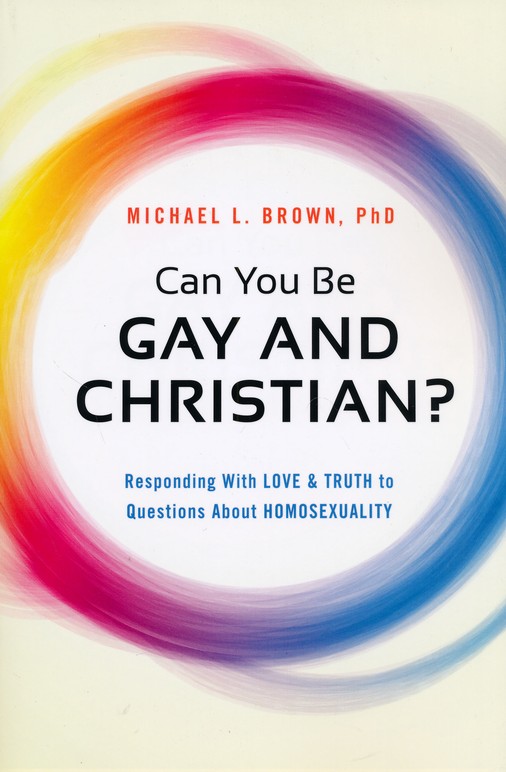
Straw Man or Valid Rebuttal, Dr. Michael L. Brown’s, “Gay and Christian?: Responding With Love and Truth to Questions About Homosexuality”

gc

I know this book has been out for a little while now.  I wanted to review it because of what I’ve been reading on the internet about it.  It is my opinion that people have been accusing Dr. Brown of using the weakest, most pathetic, arguments in support of the gay Christian stance, as targets to easily knock down.  In other words, they accuse him of using straw man arguments to oppose gay Christian affirmation.  After reading this book, I find those claims to be insulting, and untrue, or in stronger language, lies.  I have been involved with apologetics as a Christian.  I have also engaged in evangelism.  It has been my experience that the arguments cited in Brown’s book in support of the gay Christian perspective are the apex of the oppositions arguments.  Dr. Brown has done well directly, and honestly, addressing their best arguments.  The problem is that their best arguments are emotive and winsome, instead of reasonable or scriptural.  They have to pervert scripture to get to where they go, and it is almost more disgusting than the culmination of their arguments.

Dr. Brown is doing what any orthodox Christian, with a sound systematic theology would do.  He is using the totality of scripture to address the question, “Can you be gay and Christian?”  The people in support of gay Christianity can’t do that.  They have to use the fallacy of cherry picking, which is the bad eisegetical practice of proof-texting.  People who do this, lack a command of scripture.  They only superficially understand.  I believe most people who do this are false converts, cult members, or very immature in the faith.

Approaching scripture as a kit full of tools that you can manipulate into supporting or condoning your sin is a horrible hermeneutic.  That is what is wrong with their arguments.  Dr. Brown cites their work, presents their best arguments, and then shows them in the light of scripture to be in error.  Most Christians know that homosexuality is a sin.  Most of us know that adultery is a sin.  We know that all sex outside of Biblical marriage, between one man and one woman is sin.  All are sexual sins.  We preach, repent and believe!  The other side preaches, twist and deceive with a seductive hiss trailing from their mouths.  How can anyone be saved without repentance?  How can anyone repent if they are told they are not in sin?  I know it isn’t nice to tell people they are in sin, but it is necessary.  I am so glad people took the time to expose my sin to me.  It was the most loving thing the Holy Spirit did, besides regeneration, and sealing me for glory.  To be convicted of sin should not be removed from our faith, but utilized for its God honoring end.  To share the truth in love, that every man is a sinner in need of saving grace.  You see, if no one tells you, how can you experience God’s redeeming love?  Dr. Brown, in a spirit of truth and love, has written a book that is for the person who is asking this question.  Like I said, most of us already know these truths, but for the person who is questioning, “Can I be gay and Christian?”  This book is a must read.

To briefly tie this up, you can not be an unrepentant sinner and experience the saving grace of God.  You must repent and believe.  God grants us the saving faith and repentance.  He shows us our sin so that we will be humbled by it and repent.  A person with same sex attraction can get saved.  They might have to fight against their sin for a very long time, but I’ve got news for you, all… Christians… fight… against… sin…  If they don’t, then they don’t value the sacrifice of Christ and demonstrate false repentance.  Truly saved people are changed.  They take up their cross and follow Jesus.  Jesus went up on the cross, crucified to die, and victorious in resurrection.  We need to die to self and the flesh.  We recognize our sin and die to it.  We go up on the cross with Christ.  We die to ourselves.  We are symbolically buried in baptism, and resurrected to new life.  We live according to the Holy Spirit’s instruction in the Word, according to the will of the Father, enabled by the justifying work of the Son.  If we reject Jesus as our Lord and master, to live as we did before we heard the gospel, then we are producing fruit in keeping with death, not salvation.

Dr. Brown’s book addresses the issue.  He addresses the lies, and tells the truth in love.  If we all studied to know the truth, and then faithfully shared the truth, we could make a difference in lives, neighborhoods, and countries, God willing.


Excerpt from Charismahouse.com ” About the Author

Michael L. Brown holds a PhD from New York University in Near Eastern languages and literatures and is recognized as one of the leading Messianic Jewish scholars in the world today. He is the founder and president of FIRE School of Ministry, host of the nationally syndicated daily talk radio show The Line of Fire, and the author of more than twenty books. He is a contributor to The Oxford Dictionary of the Jewish Religion and other scholarly publications.”


You can purchase your copy from Christianbook.com Amazon.com

ISBN-13: 9781621365938

Apologetics · Bible Reviews · Theology

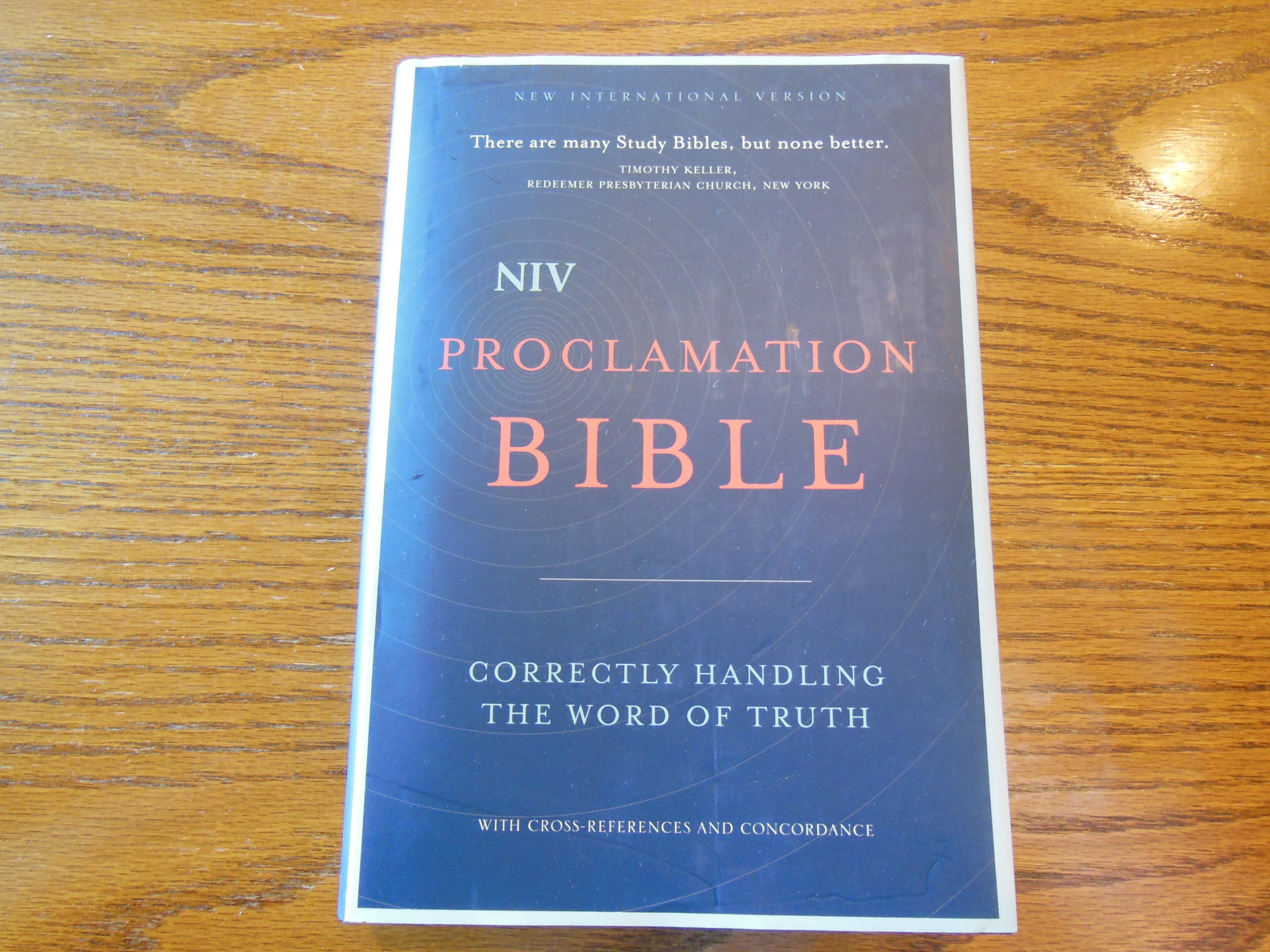
Not a Study Bible, Rather an NIV Reference Bible.

DSCN3113

On the front of the dust jacket of this Bible, the testimonial from Tim Keller is featured, “There are many Study Bibles, but none better.”  This is very misleading.  I have no idea why this quote is featured.  I would hope that there is some good reason why Zondervan did this.  Unfortunately, I can think of one and none has been provided.  This is most definitely not a Study Bible.  It is simply a Reference Bible with Book introductions, Concordance, and Maps.  In no twist of the imagination could this be considered a Study Bible.  If you are looking for a Study Bible, this is NOT one.

My guess, in my opinion, is that Zondervan knows the NIV has taken a serious hit, and as a result has a black eye.  It no longer has the credibility it once enjoyed.  It is not as popular as it once was.  Back in 2011 Zondervan released this gender inclusive mess of a dynamic equivalent in an attempt to sneak it by everyone.  They had the TNIV, and simply dropped the, “T” and changed a few more things to further comply with the translation agenda.  The Southern Baptist Convention caught on to what was happening and officially disavowed the translation.  Here is their resolution,

“WHEREAS, Many Southern Baptist pastors and laypeople have trusted and used the 1984 New International Version (NIV) translation to the great benefit of the Kingdom; and

WHEREAS, Biblica and Zondervan Publishing House are publishing an updated version of the New International Version (NIV) which incorporates gender neutral methods of translation; and

WHEREAS, Southern Baptists repeatedly have affirmed our commitment to the full inspiration and authority of Scripture (2 Timothy 3:15-16) and, in 1997, urged every Bible publisher and translation group to resist “gender-neutral” translation of Scripture; and

WHEREAS, This translation alters the meaning of hundreds of verses, most significantly by erasing gender-specific details which appear in the original language; and

WHEREAS, Although it is possible for Bible scholars to disagree about translation methods or which English words best translate the original languages, the 2011 NIV has gone beyond acceptable translation standards; and

WHEREAS, Seventy-five percent of the inaccurate gender language found in the TNIV is retained in the 2011 NIV; and

WHEREAS, The Southern Baptist Convention has passed a similar resolution concerning the TNIV in 2002; now, therefore, be it

RESOLVED, That the messengers of the Southern Baptist Convention meeting in Phoenix, Arizona, June 14-15, 2011 express profound disappointment with Biblica and Zondervan Publishing House for this inaccurate translation of God’s inspired Scripture; and be it further

RESOLVED, That we encourage pastors to make their congregations aware of the translation errors found in the 2011 NIV; and be it further

RESOLVED, That we respectfully request that LifeWay not make this inaccurate translation available for sale in their bookstores; and be it finally

RESOLVED, That we cannot commend the 2011 NIV to Southern Baptists or the larger Christian community.”

Shortly after the Lutheran Missouri Synod did the same.  Here is the most important part of their statement as I see it,

“We find the NIV’s Committee on Bible Translation decision to substitute plural nouns and pronouns for masculine singular nouns and pronouns to be a serious theological weakness and a misguided attempt to make the truth of God’s Word more easily understood. The use of inclusive language in NIV 2011 creates the potential for minimizing the particularity of biblical revelation and, more seriously, at times undermines the saving revelation of Christ as the promised Savior of humankind. Pastors and congregations of the LCMS should be aware of this serious weakness. In our judgment this makes it inappropriate for NIV 2011 to be used as a lectionary Bible or as a Bible to be generally recommended to the laity of our church. This is not a judgment on the entirety of NIV 2011 as a translation—a task that would require a much more extensive study of NIV 2011—but an opinion as to a specific editorial decision which has serious theological implications”  You can read the entire statement here.

Here is a link to an excellent paper in the Westminster Theological Journal.   The article was written by Dr. Vern Poythress of Westminster Theological Seminary.  Dr. Poythress was also part of the Translation Oversight Committee for the English Standard Version.  By prominently featuring Timothy Keller’s testimonial on the front of this Bible edition Zondervan is trying to do some damage control.  As most of you know Tim Keller also was faculty at Westminster Theological Seminary.  He and Poythress share much in the field of theology.  By getting his stamp of approval on this Bible I believe they were hoping to bring some of us back.  Admittedly, the only reason I requested this Bible for review, over the other ones offered is that his name was on the front.  I was curious if something had changed for the better.  I was disappointed.  Not only was this the same NIV, with all of the gender inclusive language, but it was NOT a Study Bible.

As far as the physical attributes of this Bible go, it is a pretty average to above average publication.  It is blue hard back.  It has a dust jacket.  It is printed in China.  It has two mediocre silver ribbon book markers.  It is a sewn, case bound book binding.  It is printed on good quality paper that is pretty opaque.  The type is clear and uniform.  It is 9 point font.  There is limited ghosting.  It is a double column, paragraph format, with references, concordance, and 14 color maps.  It is nothing special, nothing distinctive, just a good quality hardback.  If only they would revert back to the 1984 NIV and leave these other agendas behind.


ISBN-13: 9780310437956

Apologetics · Theology

The Problems With Open Theism.

In a nutshell open theists say, “God can’t know the future.”  Their argument is, “God knows everything that can be known.  But the future cannot be known.  Therefore, God does not know the future.”  Right off the bat, I mean out of the gate, there are a couple of glaring problems with their argument.  One is they have subjected God to His creation.  According to this argument, God is now limited in what He can know, by linear time.  God transcends time.  He is above time.  Sure we experience Him in time, because we are finite creatures existing in His creation.  In that creation He has given us a defining dimension called time.  This in no way limits His knowledge.  God exists in an ageless age we call eternity.  You can think of it as an infinite instance where all things exist and cease to exist at God’s sovereign will.

The next big problem with open theism is that it negates most of the Bible.  Think about it, if God cannot know the future as a finite reality, determined by His decreed or ordained will, how did the prophets speak God’s words, in such a way where the actual determined future, took place in accord with His will, to become historical narrative?  When they spoke, what He told them about the future.  It came about exactly as He told them.  What was given as prophecy did not simply become reality as it was fulfilled.  It was determined reality the moment God decreed or ordained it.  As they experienced it in linear time, it may have seemed like the prophecy was coming true experientially, but in fact it was known by God as He was the source of it.  The Bible is a progressive revelation of God’s word.  The actual realities that hadn’t occurred yet to the prophets were no less actual.  Prophecy once fulfilled and recorded is increased by the quality of becoming historical narrative.

Most open theists hold the view they do because they have reduced God to a man like creature.  They do this because they cannot justify the existence of evil.  They fail to study theodicy in a Biblically consistent, God centered, and God honoring way.  It honors God to be honest, and to glorify Him.  It does not honor Him to elevate mankind’s concepts of justice, good, and evil.

Here is another definition of open theism, “Open Theism is the thesis that, because God loves us and desires that we freely choose to reciprocate His love, He has made His knowledge of, and plans for, the future conditional upon our actions. Though omniscient, God does not know what we will freely do in the future.”

I would not disagree with most of the first part.  God does love the elect and does desire that they would choose Him.  Of course He does not love the ones who will reject Him unto their mortal ends.  They will die in their sins.  I would vehemently disagree with their assertion that, “God has made His knowledge, and plans for, the future conditional upon our actions.”  I believe that I have demonstrated through use of the example of Biblical prophecy how foolish this viewpoint is.  The next statement they make is, “Though omniscient, God does not know what we will freely do in the future.”  This defies logic.  The definition of omniscient is to know all things.  How could He not know, what is actual reality in the future, and still be said to know all things?  He would not be omniscient anymore.  Knowledge is a thing.  It is a created thing.  We only know things in a corrupt way.  We are finite creatures made by God.  We have a very limited ability to perceive reason, understand, recall, and communicate.  All of these attributes of ours are affected by sin and our finite existence as creatures.  We call this the noetic effect of sin.  God, as the creator of all things, knows perfectly everything about the things He created.  This being said, He is the source of all knowledge and knows it perfectly.  What can be known is known by Him in totality and perfection.  That is omniscience.  Not this convoluted notion of pseudo-omniscience the open theist proposes.  Again, they do this because they have a low view of God and cannot explain why evil exists without besmirching God.  Their reaction to this is to reduce God and His knowledge to something more akin to a creature rather than the sovereign Creator.

They start with some false presuppositions that necessitate and precipitate the heresy of open theism.  The presupposition, that God limits His knowledge, to what end, so that we can make a free choice?  It would be laughable if it weren’t so sad.  The presupposition, that it is necessary for God to limit His knowledge, so that we can choose Him is equally as offensive.  I exhort you all to flee from open theism.  If you don’t understand some things of God, like how there can be a good God who lets evil exist, or how He can be in control of everything and use sin sinlessly, just trust God and lean not on your own understanding.  One day you might mature to the point where you do understand these things.  There is no need to justify them wrongly and attribute to God attributes that are not true.