Church · Theology

Hebrews 6:1-8, eternal security, perseverance of the saints, justification, and sanctification.

     Hebrews 6:1-8 has been incorrectly used to support works righteousness, and legalism for years. This misunderstanding of scripture comes from eisegesis and poor hermeneutics. It, in fact, is an agreement for perseverance of the saints. We will look at just the section of scripture to begin. Then we will give it context within Hebrews and then within the entirety of the new covenant. I think it will be helpful to those who have been struggling with their own justification and soteriology.  Hebrews 6:1-8;
Therefore leaving the elementary teaching about the Christ, let us press on to maturity, not laying again a foundation of repentance from dead works and of faith toward God, of instruction about washings and laying on of hands, and the resurrection of the dead and eternal judgment. And this we will do, if God permits. For in the case of those who have once been enlightened and have tasted of the heavenly gift and have been made partakers of the Holy Spirit, and have tasted the good word of God and the powers of the age to come, and then have fallen away, it is impossible to renew them again to repentance, since they again crucify to themselves the Son of God and put Him to open shame. For ground that drinks the rain which often falls on it and brings forth vegetation useful to those for whose sake it is also tilled, receives a blessing from God; but if it yields thorns and thistles, it is worthless and close to being cursed, and it ends up being burned.
     Here is a link to a book introduction from Dr. John Macarthur that will give us the context I was mentioning earlier; Book introduction for Hebrews

     Many have been confused by this section of scripture. It has been used to argue against perseverance of the saints. Perseverance has been misunderstood by some as to mean eternal security. They claim that eternal security is a false teaching, and if wrongly understood, I would agree. We don’t believe that one will be saved, and remain saved, while practicing all sorts of ungodliness in unrepentance. It is as God said through Paul in Romans 6:1-2;
“…1What shall we say then? Are we to continue in sin so that grace may increase?2May it never be! How shall we who died to sin still live in it?…”
John 14:15; “…15“If you love Me, you will keep My commandments…” and James 2:14-17, “…14What use is it, my brethren, if someone says he has faith but he has no works? Can that faith save him?15If a brother or sister is without clothing and in need of daily food,16and one of you says to them, “Go in peace, be warmed and be filled,” and yet you do not give them what is necessary for their body, what use is that?17Even so faith, if it has no works, is dead, being by itself. …”
     Here is a link from Matt Slick of CARM.org about perseverance of the saints; http://carm.org/can-believer-lose-his-salvation
     Here is a great article from CARM.org also dealing with this issue; http://carm.org/about-can-person-lose-salvation
     And here is another from GotQuestions.org that will also help us to see the context in the new covenant; http://www.gotquestions.org/license-sin.html

     A person, who is truly justified by God, granted faith and repentance, who has been regenerated by God, simply does not choose to fall away, or become apostate. They did not save themselves. God did the saving to them. How many of you pray for person to be saved, when you know they want nothing of God, and claim to hate Him? You don’t seem to care about their alleged free will at that time do you? No, you want God to change their heart. So for all who truly believe, it is an act of the Sovereign God miraculously regenerating them to justification and on through the ordo salutis. If Christ did the work to justify us, then what work could we do to negate the perfection of His? None! In keeping with the spirit of salvation, we are changed, born again, a new creature with new desires, and affections. This new creature, loves the things of God, and hates the sin of his past existence, and bondage to his fallen nature. In this state of God granted repentance, and regeneration the new creature, of his new will and volition, derives his joy from doing that which is of the Father’s will, as our Lord and Savior Jesus Christ did upon the cross of His crucifixion. For this creature there is no ability in him to apostatize. Only for the religious person, who has not been freed from the old nature can fall away in any real sense, alas they were never really in Christ, so their falling away is even a false apostasy, thus the hyperbole of this scripture. For the one made to be resurrected unto eternal life, there are no sins of his account, to be tallied against him on the day of judgment. They had all been expiated, through the propitiation of Christ Jesus. Thus, for them there would be no grounds to repent, and believe again, or to crucify Christ, who once and for all died once, and was resurrected to never be crucified or die again. The absurdity of this concept should propagate the ideology of perseverance not the antithesis.
We fall into this heresy when we don’t understand justification and sanctification rightly.      When we think we had something to do with our justification we tend to believe we need to keep ourselves saved. This view is held by all works righteousness religions. The practitioner maintains their state of pseudo-grace by doing deeds and sacraments. Well, we all know this is a heresy, so why do we fall for it? Idolatry and pride, that’s why. We still want to earn it. We want to be better than others. Then there is guilt and pride. You are so bad, look at you, of course there isn’t enough grace for you, you must add something. These are powerful adversaries to fight against because they are stealthy. They sneak in to rob you of your security and joy. They take from you the delight you have in the Lord of your salvation. When these appear we need to crop off their ugly heads with repentance and prayerfully remember who it is that did the saving. It is the Almighty God, Lord of Lords, and Eternal Creator, who justifies you! Justification is solely the work of Jesus. He did the work on the cross of atoning for our sins and imputing His righteousness to us. That is how we are justified.
     Sanctification on the other hand involves our efforts in obedience. We try our best out of the provisions of God to affirm His will and be conformed to it. Notice we aren’t doing it out of our own provisions because we have none of any efficacy. Our pitiful temporary repentance and faithless intellectual understanding don’t do a thing for our sanctification. It is also the Lord who sanctifies us to Him through His provisions of all that is necessary. We through the true repentance of sins and the true faith are in concurrence with God and desire His will be done to us and by us.
     So the difference between the two doctrines should be clear. In justification God does the saving and keeping. In Sanctification we do the agreeing and growing. We are like a baby in a crib. We can think about growth and desire it. We can focus all of our efforts towards it, but we will grow according to His will. It is His design for a baby to grow to maturity. The immature believer will grow by design. Of course here is where the synergism comes in, like a child we must be fed good things and given work and exercise. We must be nurtured and disciplined. God being our Good Father sees to it. We are part of our sanctification for sure, but it is not what keeps us saved. I hope this has helped.

Theology

Grace is not an item to be doled out

Grace is not an item to be doled out, and issued to sinners like a communion wafer. Grace does not come down a procession of human authority. A man does not receive it, to then pass it on in some diminished way to those under his authority. So that they, then might allow others to partake of the ever diminishing portion. No! Grace is a state of existence, inside the unmerited favor of Christ our Lord. He, is our grace. In Him we abide and His grace is efficacious. He is our propitiation, amen.

Uncategorized

THE NATURAL MAN AND HIS DIRE STRUGGLE AGAINST THE REBORN SAINT.

The Natural Man and His Dire Struggle Against the Reborn Saint.


The Natural Man and His Dire Struggle Against the 
 
Reborn Saint.
 
 
     Before we were made alive by the rebirth wrought by Christ Jesus, we were solely the natural man. We were completely dead with only an ersatz construct of vitality. In carnality we pursued temptations ultimately to sinful ends. If left unaffected by the gospel of Christ our mortal selves would have remained until the carnal demise was consummate. Our unconverted hearts having not new affections but, old repenting not of sin but, reveling in its coils unto perfection of our damnation. Hence securing abidance of God’s holy and eternal wrath.
     In contrast to the condemned children of wrath, we who have been redeemed are reborn alive in Christ Jesus. His grace not in surplus or scarcity, entirely sufficient for our salvation ascribed to the end of our salvation. We to, have been crucified and resurrected in Him. The veil that dimmed our visage to the point of utter blindness, once and for all times being removed, our countenance that much more improved by Him, are awestruck by His glory. Being thus affected by His labors our flesh now is as a drowning man, who strives against the mire. Dreadfully gasping, and clawing at the world above in vain hopes that he might a respite find.
     We must take heed, and be cautioned not to afford him any quarter. He must be mortified so that his lusts for the debased, hedonistic pleasures of the flesh not assert ascendancy over us. If for only a moment our bulwarks are breached he that is drowning would drag us down to the depths of Hades. When he begs for our sympathies we must not be vitiated. Our resolve must not falter. Our outstretched foot must push him down into the depths where his calls will be muffled. His cries we can not attend, for we are called to be holy as our master is holy. No longer a subject to this abased imposter but, now enslaved by our majestic, sovereign LORD God. Justified to Him by the obeisance of His only begotten to His will and Word, we now and for always are free of condemnation.
Theology

Theology

Doing-theology1Theology

Theology is a Greek word that means, “The study of God.”  The first part of the word is, “Theo” from, “Theos” (Θεός) which is Greek for god.  The second part of the word is, “logy” from the Greek word, “logia” (λογία) which means, “The study of.”  So to the Christian the word, “theology” specifically is the study of God.  This is different for the lost person.  They look at theology as a study of some deity that may or may not exist.  In the secular world there are colleges and universities that have classes teaching this, dare I say, “Study of god.”  Their sources are like ours, as far as many of the texts go, but they don’t know the true God, and as such study Him with incorrect presuppositions.  It is imperative that Christians start with proper presuppositions.

First and foremost, is that God is the originator of all things, known and unknown to us.  This includes what can be learned.  All knowledge comes from the LORD.  Our ability to reason, use logic, remember, recall, convey, communicate and feel all comes from God.  We would not be able to know anything if He did not will it to be.  This seems basic, but there are books of theology that never assert this truth.  Think about this for a moment.  What does a tree know of God?  What does a child know of God?  What does a lost person know of God?  What do you know of God?  Read through those questions again and ponder the implications of each one of them, replace the, “what” with, “how.”  God is a communicative Creator.  We know this by His inclusion of the attributes essential to communication being integral to our faith and existence.  Without those attributes we could not know God the way He intended.  He planned to give us the progressive revelation of His word, in the form of the Bible.  He planned for us to be able to write, read, and relay the knowledge of Him and His good message.  We can know Christ the eternal God through what is written therein.   So it is supremely important that we ascribe God the Creator, primacy in originating all things, including theology.

We must not ascribe attributes to God that He Himself does not affirm in His word.  This would be a very dangerous endeavor.  We would be making a god for ourselves, which is not the same as the true God who reigns supreme over all creation.  Idolatry is, and has been, an insidious and cancerous evil.  It substitutes a counterfeit god who cannot save us.  The attributes or perfections of God that are taught in His word reveal to us the things that can be known by us of Him.  Let us study theology then, in true faith and repentance, humbly approaching the feet of God, giver of all things.

Theology

Justice is restorative to the victims, and punitive to the offender.

justice


Justice is restorative to the victims, and punitive to the offender.   All of us, before salvation are offenders. That is the part people skip. They think they are pretty good, and don’t deserve hell, like the Bible says they do. We deserve death and hell, every single one of us.  We are all sinners.  Those that God made, even knowing they would reject Him naturally will suppress the truth in unrighteousness.  (Romans 1:18-22) So if we all deserve hell, it is a miracle that God saves any.  God didn’t need to do anything.  He chose to create and demonstrate His loving kindness.   How can a fallen creature look upon its Creator, who perfectly defines all things by His very existence, and have the impudence to judge Him as evil? It is ludicrous.  Creations have no rights to their Creator.  He has all rights to what He has made.  God demonstrates His justice, by pouring out the rightfully deserved wrath, on the unrepentant sinners, in Hell for all eternity. This brings glory to God, because in punishing sin, He restores the victims. The victims are the people who have repented and put their faith in the grace of Jesus and His atoning work on the cross. The offense caused by sin would mar God if He did not punish it. The believers would be victims of this, if God did not punish the unbelievers.  They would be victims, because God would be unjust and unloving to not punish the unbelievers in Hell for all eternity.  So the wrath poured out on the offender restores that what would be done to the believer, by demonstrating that God is, in fact just, and will not let sin go unpunished. The fact that He is just, and restores those He has no need or obligation to restore, shows that He is also loving and merciful. God didn’t have to make anyone. He was perfect without creating a thing, but He did create, because He desired to do so. He is omniscient.  So in His all knowledge, if He creates people, knowing which ones will not repent, and knowing which ones will repent, and even still creating them all demonstrates that some vessels were made for wrath, and others honorable purposes.  Read Romans 9 for crying out loud people.  For those of you that claim to be Christian, READ YOUR BIBLE!!!  If He chose to do this then it is good because He defines good.  He is the creator.  We are the creatures.  Saying He is evil because He judges and punishes creatures He made, knowing they would be in rebellion demonstrates how little you actually know about your Bible and God.  You have believed the horrible Barney theology of, I love you, you love me nonsense.  Open theists and Universalists shouldn’t even call themselves Christian.  They are heretics.

So God is glorified in damnation by demonstrating His wrath for the purpose of His justice and He is glorified in salvation by demonstrating His grace for the purpose of His loving kindness.  This grace is not a violation of justice because He came down from majesty incarnate as Jesus to suffer the cross.  He had the wrath that you and I deserve poured out on Him on our behalf.  He paid the penalty and satisfied justice so that you could be saved if you would repent and put your faith in Him.  If you can’t then He didn’t die for you and you are not saved.  You are not one of the elect and will be in hell for all eternity.

Uncategorized

Proof-texting, its dangers, and benefits.

stephen-a-martyr-for-god_jpg_crop_display

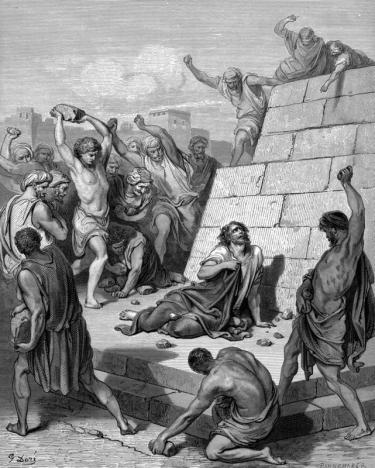
            Proof-texting is the practice of quoting a verse, or verses from the text of the Bible, to support, or refute a doctrine.  This practice has been used by the orthodox and the heretic.  The dangers of proof-texting are varied and manifold.  With proper presuppositions proof-texting can be a valuable tool for supporting orthodox doctrines. 

            First, we will go over the problems with proof-texting.  The biggest problem is when a person or group starts with a false presupposition.  For example, a Mormon starts with the presupposition that Jesus is a created being.  They hold this false presupposition because they believe the words of a false prophet, and teacher in authority over God’s very own word.  The Seventh Day Adventists, Jehovah’s Witnesses, and Muslims, do the same thing. 

With this presupposition when they run into texts like John 3:16 “…For God so loved the world, that He gave His only begotten Son, that whoever believes in Him shall not perish, but have eternal life…”  They wrongly understand the word, “begotten” to mean that Jesus was the progeny of the Father.  They then, in turn use this as a proof-text for their false doctrine that deny the eternal deity of Jesus, in stark disregard for His proclamation of being the, “I Am.”  This, in turn requires more eisegesis, and proof-texting, in an attempt to refute the true doctrines, in conflict with their false ones.  When apologetically engaged with a heretic or cult member they are usually more than thrilled to proof-text ad nauseum.  This can quickly become counterproductive.  If this is done in a public forum it can be disastrous.  The onlookers could be convinced of the heretical doctrines.

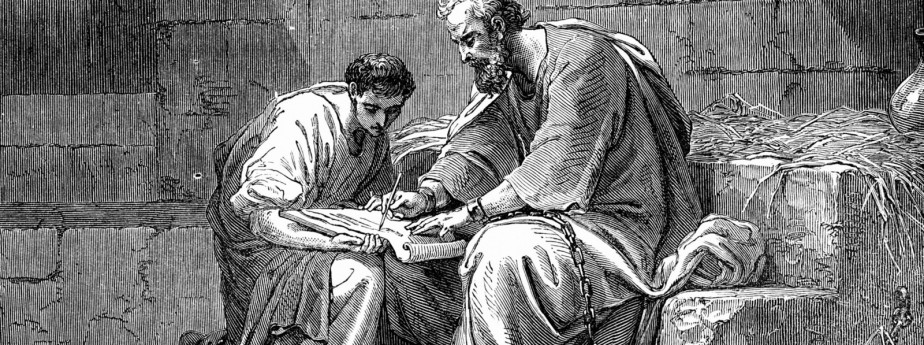
            Our apologetics should be from a capable well rounded understanding of the entire Bible in its own context.  It should be founded on the presupposition that the Bible is the truth, and the authority, on What God has to say to man.  When we start with a true presupposition, and are exegetical in our reading of the Bible, we can proof-text like Paul to the Jews in Hebrews.  When proof-texting is done correctly it can win people’s minds to the truths of the Bible.  There is nothing like a good section of scripture quoted in context at the right time to hammer home sound doctrine.  God’s word is authoritative and when we speak truthfully with the authority of scripture it is a powerful thing to witness.

marriage

Marriage, mutual submission or something else?

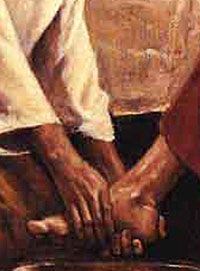
washing-feetMarriage, mutual submission or something else? I think it is something else. I think to say that, “you mutually submit to one another” misses the bigger picture. I think it is as the Bible says. The wife should submit to her husband, like the church submits to Christ’s authority. The husband should submit to God. Even if it means dying. This is like the submission of Jesus to the Father’s will. If we remember from scripture, Jesus washed the feet of the disciples. Jesus, who is God incarnate, left the majesty of His estate to dwell among us in mortal flesh. He bore the punishment of the sins of those who would be saved. He submitted to death on a cross. Wouldn’t you rather have a husband love you like that, than one that simply, mutually submits to your imperfect human will?

Uncategorized

Jesus Christ saves us by His grace according to His will not by our works or favor earned through deeds.

Titus 3:4-7 NASB But when the kindness of God our Savior and His love for mankind appeared, (5) He saved us, not on the basis of deeds which we have done in righteousness, but according to His mercy, by the washing of regeneration and renewing by the Holy Spirit, (6) whom He poured out upon us richly through Jesus Christ our Savior, (7) so that being justified by His grace we would be made heirs according to the hope of eternal life.Image