Bible Reviews · Bibles · Uncategorized

Legacy Standard Bible, 2 Column Verse by Verse, Faux Leather.

P1010046

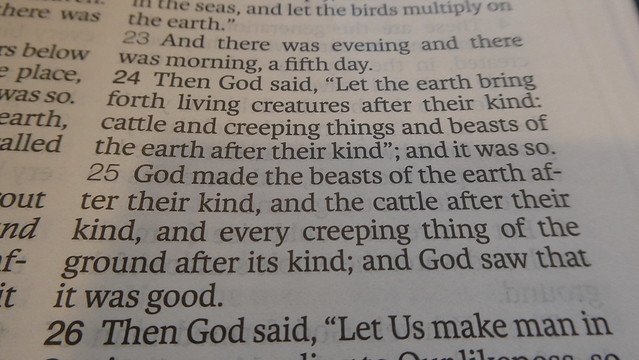
Instead of writing about a feature, and then having a photograph inline, I’m changing it up a bit. I’ll have the write-up of my impression of this edition, and all of the photographs will be after. So if you simply want to look at the pictures you can skip all the text… You weren’t really going to do that were you? I mean… Seriously? You want to just look at pictures… Okay, I tend to do that too, but if you do want to know what I think about this edition, continue reading.

The LSB is, in my opinion, the best modern English translation of the Bible to date. I’m purchasing all new resources to go along with this translation. The two column, verse format LSB, is the first edition of the LSB that is actually quite portable. The double column, verse format, is one of my favorite Bible layouts of all-time. This one lacks some of the fancier features, but for dragging around with me wherever I go, it is perfect. I’m also pretty jazzed that it isn’t made in China.

It is printed, and bound in South Korea. Not only do you get the great double column verse format layout, you also get 32 g.s.m. paper, 10 pt font, line-matching, double sided ribbon marker, perimeter stitching, head and tail bands, section headings, rounded page corners, and a rounded smyth-sewn spine. I know, you all wanted to see an edge-lined, goat skin leather edition, but we don’t always get what we want, nor should we. We get what we need… Now, for your reward for reading my opinion, some pictures of this Bible I drew using a camera…

P1010036
P1010039
P1010040
P1010043
P1010044
P1010045
P1010047
P1010048
P1010052
P1010062
P1010061
P1010060
P1010065
P1010067

As usual, for more pictures follow this link to my Flickr page to see more photographs of this Bible.

ISBN: 978-1-63664-168-3

Uncategorized

The Globalists at the W.E.F. are Enemies of Life.

Have you ever noticed that these sick people always see life as the problem. Their solution is always to kill life. This is anti-Christ. John 1:4-5 LSB “In Him was life, and the life was the Light of men. (5) And the Light shines in the darkness, and the darkness did not overtake it.”
The globalists want you to kill your pets to save the environment… These people are evil. We’ve known for a long time they love killing babies, old people, and sick people, but now we can see they even love killing pets. They are enemies of all life, and the author of life, who is God Himself. If they could, they would try to kill Him as well. Here is a link if the rumble video doesn’t work.

Uncategorized

Have you seen this?

There is a battle going on for the souls of the world. It is not a conventional warfare, but rather a spiritual one. It is being played out in the creation, as a 5th wave warfare of unconventional weaponizing of the institutions of our societies. The liberals used to be the people who were suspicious of government, and it’s agencies. Now, they clamor for their gifts, and worship at their feet. Unquestioning servants of satan, demanding that all the world worship as they do. One of their sacraments is the clot-shot, the alleged vaccine that would save them from the bogey-man created by their gods. In their zeal, they compelled their fellow man to accept the poison of the serpent into their own blood. The life is in the blood Afterall. Leviticus 17:11a “…Lev 17:11 LSB ‘For the life of the flesh is in the blood…” God owns us, and our blood. Genesis 4:8-11 LSB  “Then Cain spoke to Abel his brother; and it happened when they were in the field, that Cain rose up against Abel his brother and killed him.  (9)  Then Yahweh said to Cain, “Where is Abel your brother?” And he said, “I do not know. Am I my brother’s keeper?”  (10)  And He said, “What have you done? The voice of your brother’s blood is crying out to Me from the ground.  (11)  “And now, cursed are you from the ground, which has opened its mouth to receive your brother’s blood from your hand.”

It should be more obvious than ever that there is objective good in the world, and objective evil. We’ve seen the good for so long people have become accustomed to it in America, but in recent times, many of us have been awakened by witnessing the evil. Hopefully you have seen it, and are looking for answers. The gospel of Jesus Christ is the answer. We are sinners, and deserve death and hell. We’ve broken God’s good law, and spit in His face our entire lives. Repent, turn from your sins, and trust solely in the work of Jesus on the cross, who bore the wrath of God we justly deserve, to justify us to Him, so that we could have His righteousness, He took on our sin, and paid the price in His blood.

This documentary is a witness against the satanic servants, and their work for their master. They love, and enjoy, the suffering, and deaths, of their fellow man. They despise human flourishing because their master does. He hates the fact that humans are made in the image of God. The less of us, the better as far as satan and his minions are concerned. They preach the murder of people as a virtue. They worship the creation and creatures, rather than the Creator. If you have already succumbed to the lie, God help you. If you haven’t as yet allowed this injection, please, stay far away from it. It is murder on a scale we have never seen. It is a spiritual warfare played out in the temporal world with lies, and pseudo-vaccines. May God have mercy on us.

For some reason, WordPress won’t let me embed this video. I have a suspicion as to why. You’ll have to click the link to watch it. The documentary is called, “Died Suddenly” by Stew Peters. If for some reason you can’t view it, search for it on Rumble, or GabTV. I’ll put a link in for those video hosts, and hopefully they’ll work for you.

“Died Suddenly” on Rumble.

“Died Suddenly” on GabTV.

cultural · Uncategorized

Switch to Gab.com! Facebook is the devil Bobby!!!

I want you all to know, Gab.com is by far, the best, most free, social media platform in existence. It is far superior to Facebook, Twitter, Mewe, Gettr, Truth Social, and Parlor!!! Facebook restricts the reach of your posts if they don’t like what you post. Mewe is convoluted and difficult to use. It is not dedicated to free speech, and it is not owned by a Christian. Gettr, Truth Social, and Parlor have all conceded to the app store’s standards, and require them to censor their users. Gab however, has not conceded. This is why they are not allowed on the app stores. The mainstream media has waged a war against them. They have called them, “alt-right, racists, and bigots.” For sure there are people on Gab who fit those descriptions, but you don’t have to talk to them. (Don’t feed the trolls. There is a mute button, and a block button.) Since Gab is dedicated to free speech you will run into some knuckleheads, but it is a fair tradeoff because you can literally post anything you want, unless it is illegal, like threatening someone’s life, or inciting violence against a person, or group of people. I would love if you would all stop using facebook, and move to Gab.com already. I’m tired of having to start new profiles all the time because Facebook puts me in Facebook jail. Guess what, there is no such thing as Gab jail! They don’t even throttle your posts. Your reach is totally organic. If we would all leave Facebook, it would have no more power. It only has as much power over us that we allow it to have. Help me make you more free!!! Join Gab.com. I’ve been using it for a couple years, and it has really grown. Many of the bumps have been ironed out. Oh, and did I mention the news? Sick of seeing leftist, globalist, mainstream media satans fake news? Well, on Gab.com you do have to sort through actual news, and fake news, but they give you the freedom to decide for yourself! Go Gab.com!!!

Theology · Uncategorized

Baptism in Acts Chapter 8

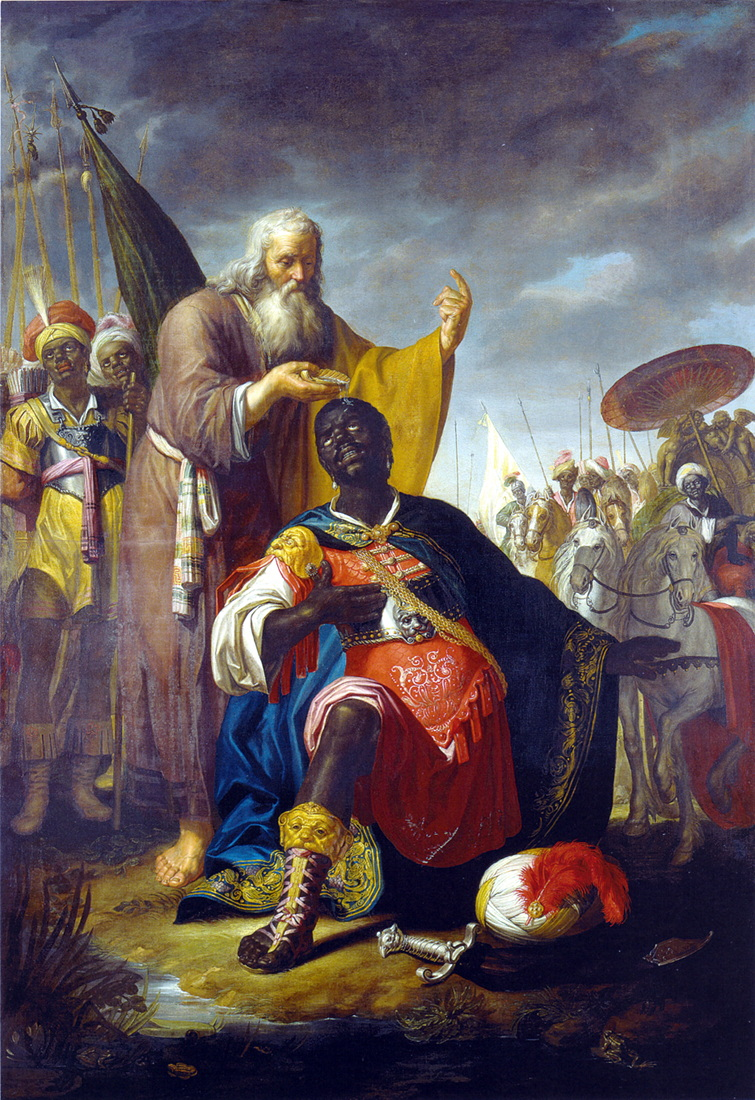
There are only about three sections in scripture that can be twisted into seemingly supporting the heresy of baptismal regeneration, but the tremendous weight of the entirety of scripture crushes the arguments based on those sections. I will go through the rest of the New Testament, as I have been doing, to demonstrate this. Keeping in mind the greater context of Acts chapter eight, please note the two instances of baptism here are preceded by faith in Jesus. The crowd of people in the first instance was comprised of men and women. The second instance was the individual Ethiopian eunuch of Candace, Queen of the Ethiopians.

In the first instance we read, “But when they believed Philip proclaiming the good news about the kingdom of God and the name of Jesus Christ, they were being baptized, both men and women.”

(Acts 8:12 Legacy Standard Bible)

https://accordance.bible/link/read/LSB#Acts_8:12

12 ὅτε δὲ ἐπίστευσαν τῷ Φιλίππῳ εὐαγγελιζομένῳ περὶ τῆς βασιλείας τοῦ θεοῦ καὶ τοῦ ὀνόματος Ἰησοῦ Χριστοῦ, ἐβαπτίζοντο ἄνδρες τε καὶ γυναῖκες. Acts 8:12

You can see that they believed the good news of what Jesus had accomplished on the cross, that Philip had preached. Then they were baptized. The Greek word is the same one translated as, “faith” in other sections of scripture. The word is, “ἐπίστευσαν.”(episteusan) It means; “to believe, put one’s faith in, trust, with an implication that actions based on that trust may follow; (pass.) entrust”

In Acts 8:25-40 we read about the Ethiopian eunuch coming to the true faith. The eunuch was returning to Ethiopia after visiting Jerusalem to worship. Implying he had believed in God in some fashion, probably in Judaism. It is interesting to note that as a eunuch he would not have been allowed access to the temple, or to become a full proselyte to Judaism. This eunuch was in service to the Queen of Ethiopia as her treasurer, or minister of finance in modern terms. The Bible mentions her as being called Candace. This could very well be a title like Caesar, and not truly her name.

As a wealthy, influential, and powerful convert to Judaism, the eunuch had access to the Jewish scriptures as evidenced by him reading from the scroll of Isaiah in the middle of nowhere on his way back to Ethiopia. One has to wonder what other texts he had access to due to his position. It is also interesting that he didn’t understand what he was reading until the appointed time of God intervening by sending Philip to him via the direction of one of His angels/messengers to preach the good news of Jesus.

The portion of the scroll of Isaiah that the eunuch was reading from was Isaiah chapter fifty three. This section is a prophecy about the coming Messiah, Jesus Christ. We read that God extended His grace to the eunuch by directing Philip to preach the Messiah to him. Consequentially, due to his conversion he desired baptism. Then returning to Ethiopia he would have been obedient to Jesus in sharing the same life giving good news to the people he had acquaintance with. Delivering the faith to the people of Ethiopia extended God’s grace to them likewise and providentially. Historically there has been a Christian presence in Ethiopia to this day, despite the influence of the evil Roman church in Europe, and the Antiochians in the east. The eunuch believing what Philip had preached to him about Jesus from the scroll was the impetus of his desire for baptism. God sovereignly arranged for the eunuch to be truly believing, and for him to return to Ethiopia, and spread the faith.

Uncategorized

Molinism

To affirm Molinism, I would think that one would have to assume other possible future realities other than the actual one that is already in eternity.

Uncategorized

What words are used for, “soul” and “spirit” in the Bible?

I see a lot of speculating among the Christians about soul and spirit. Some of us think a human is dichotomous. Some think a human is trichotomous. This article doesn’t answer the question, but rather shows the words the Bible uses that we translate into English as soul, and spirit. The text is quoted from Mounce’s Dictionary of Hebrew and Greek.

SOUL
Old Testament
Verb: נֶפֶשׂ (nepeš), GK 5883 (S 5315), 757x. nepeš has a wide range of meaning; the basic meaning is “breath,” but it can also mean “soul, life, entire being.”
(1) nepeš is not limited to human beings, for “breath” is something that all living creatures have. God gives life and breath to both humans and animals (Gen. 1:30). God formed “man from the dust of the ground, and breathed into his nostrils the breath of life; and the man became a living being” 2:7).
(2) As far as human beings are concerned, the Heb. understanding of nepeš encompasses the entire person, body and soul. It is not that a person has a soul; rather, a human being is a soul. Each individual is accountable for his or her sin, for which God may require that person’s nepeš (Gen. 9:5). Note Lev. 4:2 (“If a person sins”) and Ezek. 18:20 (“the person who sins shall die.” In Ps. 7:2, the psalmist cries out for deliverance lest his enemies “tear me [my nepeš] like a lion.” nepeš is so closely identified with the whole person that it can even mean a corpse (Lev. 21:11).
A human nepeš can have natural desires such as hunger (Deut. 12:15; 1 Sam. 2:16; Ps. 107:9; Mic. 7:1) and thirst (Isa. 29:8), as well as nonphysical desires. The psalmist pleads, “Do not give me up to the will of my adversaries, for false witnesses have risen against me, and they are breathing out violence” (Ps. 27:12, cf. Prov. 13:2). The nepeš is also the seat of emotions: Hannah has deep “bitterness of soul ” (1 Sam. 1:10 cf. also 30:6); Ezekiel has “anguish of soul ” (Ezek. 27:31).
(3) The relationship between humans and God is often expresses with nepeš. For example, “My soul yearns for you in the night, my spirit within me earnestly seeks you (Isa. 26:9). Elsewhere, “O God, you are my God, I seek you, my soul thirsts for you; my flesh faints for you” (Ps. 63:1). “As a deer longs for flowing streams, so my soul longs for you, O God.” 42:1). The soul can also be downcast 42:5, 11). Psalm 42 in particular captures the imagery of breath (the deer panting), hunger/thirst, and the living God, who alone can satisfy. Moreover, when the psalmist wants to sing in praise to God, he encourages himself out: “Praise the Lord, O my soul” 103:1-2, 22; 146,1). It is interesting that of all the occurrences of nepeš in Psalms (143x), only one does not have a personal possessive pronoun attached to it. Communion with God—from crying out to him to singing his praise—happens from the core of one’s being: life and breath, longing, emotions, the will. All of these are involved in the nepeš. See NIDOTTE, 3:133–34.
New Testament
Noun: ψυχή (psychē), GK 6034 (S 5590), 103x. psychē has a wide variety of meaning in the NT, being shaped by the Heb. word nepeš. Among other things, it means “life, soul, person, mind.” See life.

SPIRIT
Old Testament
Noun: רוּחַ (rûaḥ), GK 8120 (S 7307), 378x. While rûaḥ has a wide range of meanings in the OT, its basic sense is that of “wind” or “breath” (see wind). This latter sense naturally gave rise to “breath” as a sign of life, and hence rûaḥ also means “spirit” or “life.” This meaning of the term relates to several different ideas in the OT.
(1) Sometimes rûaḥ functions to describe the general character of an individual or group, and when used in this way closely resembles the meaning of nepes (“soul”), denoting the general personality or disposition of a person. Thus the “spirit of the Egyptians” will be demoralized when God punishes her for her idolatry (Isa. 19:3), so that she will have a “spirit of dizziness” 19:14, “perverse spirit,” KJV). In a similar fashion, rûaḥ can describe a state of mind or personal attribute: “bitter spirit” (Gen. 26:35, grief; Ezek. 3.14, anger), “sullen spirit” (1 Ki. 21:5, depression), “shortness of spirit” (Exod. 6:9, discouragement; Job 21:4, impatience), or “high spirit” (Prov. 16:18, pride) contrasted with “low spirit” 16:19, humility). We also find expressions such as “spirit of wisdom” (Exod. 28:3; Deut. 34:9) and “spirit of justice,” (Isa. 28:6).
(2) rûaḥ may also describe supernatural or angelic beings, such as the “spirit from God” that came on Saul, causing him mental torment (1 Sam. 16:15-16, 23; 18,10), or the “spirit” from the “host of heaven” sent to entice Ahab into battle by confounding the words of the prophets (1 Ki. 22:19f.). The angels are sent as “winds” or “spirits” (KJV) to accomplish God’s purposes (Ps. 104:4; cf. Heb. 1:7).
(3) The zenith of spiritual personality is God himself (Isa. 31:3). In the OT we find the expressions “Spirit of God” (11x), the “Spirit of the LORD” (25x), the “Holy Spirit,” (3x, Ps. 51:11; Isa. 63:10, 11), and “my Spirit” (13x, where the context shows the referent is to God’s Spirit). rûaḥ in these constructions may sometimes refer simply to the will or power of God (Isa. 40:13), but in the majority of cases it denotes the active presence of God via his Spirit. Thus, the Spirit is sent by the Lord 48:16), and he is placed on individuals (Num. 11:17, 29; Isa. 42:1) or within God’s people (Isa. 63:11). In all his activities, he assumes a distinct personality while at the same time being the very presence of God among those with whom he is pleased to dwell.
The opening verses of the Bible show the “Spirit” of God active in the process of creation (Gen. 1:2; cf. Job 33:4; Ps. 104:30). In the unfolding story of the Bible, the rûaḥ of God gives wisdom and endows people with abilities for leadership (Num. 11:17, 25) and for craftsmanship (in preparing items for the tabernacle, Exod. 31:2; 35,31), and his presence provides spiritual guidance (Neh. 9:20; Ps. 143:10; Hag. 2:5). God’s “Spirit” enables ordinary people to win military battles against formidable foes (Jdg. 6:34; 13,25; 14,6, 19; 15,14; 1 Sam. 11:6). He removes the rebellious heart and replaces it with one that responds in true obedience to God (Ezek. 11:19; 36,26-27). The “Spirit” is the “breath” that brings life to the dead (regeneration), as pictured in Ezekiel’s valley of dry bones (Ezek. 37).
The “Spirit” of God also gives divine revelation to prophets (Num. 11:25; 1 Sam. 10:10; Neh. 9:30; Ezek. 11:24; Joel 2:28; Zech. 7:12), and it is by the “Spirit” of God that the true prophet speaks (Ezek. 13:3). The promised Messiah accomplishes his work of redemption through the power of the “Spirit” of God (Isa. 11:2; 42,1; 61,1). The work of this “Spirit” is often pictured as a “filling” or “coming on” a person. Likewise, in the imagery of anointing, the “Spirit” of God is said to be “poured out” on those he endows with his redemptive presence (always of the restoration of Israel as God’s covenant nation, Isa. 32:15; 44,3-4; Ezek. 39:29; Joel 2:28). See NIDOTTE, 3:1073–78.
New Testament
Noun: πνεῦμα (pneuma), GK 4460 (S 4151), 379x. (1) Similar to rûaḥ in the OT, pneuma can mean “air in movement.” In Jn. 3:8 Jesus uses pneuma twice: once for “wind” or “air” and once for the “Spirit” (“the wind blows where it chooses … so it is with everyone born of the Spirit”).
(2) pneuma can also mean that which animates or gives life to the body (Mt. 27:50) or the human spirit in general (Jas. 2:26). It can also refer to the human person insofar as he or she belongs to and interacts with the spiritual realm. In this sense the human spirit is that aspect of a person through which God most immediately encounters him or her (Rom. 8:16; 1 Cor. 2:11; Gal. 6:18), where a person is most immediately open and responsive to God (Mt. 5:3; Rom. 1:9), or where most sensitive to matters of the spiritual realm reside (Mk. 2:8; Jn. 11:33; Acts 17:16).
(3) Beyond a human being, pneuma can refer to evil and good “spirits.” It was common in NT times for people to view the mysterious powers that afflicted people as evil spirits or demons. The Synoptic Gospels and Acts especially reveal this (Mt. 8:16; Lk. 4:36; Acts 19:12-16). These evil forces are considered to be “personal forces” from the spiritual realm. But the NT never claims that these “evil spirits” are as strong as God; all evil spirits are inferior to God and subject to the power of his “Spirit,” often operating through his agents: Christ and the apostles (Lk. 10:17-19; 11,19-20).
(4) Finally, pneuma in the NT can refer to the “Holy Spirit.” The Holy Spirit first of all filled Jesus and directed him throughout his earthly ministry (Lk. 1:35; 4,1, 14, 18). Then through his supernatural power, the Spirit worked through and directed the apostles (Acts 1:8; 4,8; 13,2, 4, 9; 16,6-7). The Spirit is presented as a powerful force with visible effects (Acts 2-5). In the early church the Holy Spirit was the “Spirit of prophecy” 1:16; 4,25), a transforming power in conversion 9:17), and the director of its mission 9:10; 20,28). In Jewish writings the “Spirit of God” often meant the spiritual reality that performed God’s work on earth, most notably in creation (Wis. 1:7; 12:1) and prophecy (Sir. 48:12).
The OT stress laid on Isaiah’s promise of a Messiah who would have a special endowment of the Spirit (Isa. 61:1-3) and on Joel’s prophecy about the pouring out of the Spirit on the godly in the last days (Joel 2:28-29). In the NT that understanding was fulfilled in the arrival of the Holy Spirit on Pentecost (Acts 2:1-36), who gave each believer various spiritual gifts (Rom. 12:6-8; 1 Cor. 12:8-11; 14,26; Eph. 4:11). Yet as Paul makes clear, though there are different kinds of gifts of the Spirit, there is still only one Spirit and one God (1 Cor. 12:4). Even more important, the Holy Spirit also wants to work his “fruit” in our daily lives and enable us to fight against the sins of the flesh (Gal. 5:22-23).
(5) Just as John baptized with water, the one coming after him would baptize with the Holy Spirit (Mt. 3:11; 16). Such imagery describes the type of “Spirit baptism” the believer receives—a baptism of the Spirit prophesied in the OT and fulfilled in the ministry of Jesus. See NIDNTT-A, 473-479.


Uncategorized

Demonic possession, and Christians.

Demonic possession, and Christians.

The Bible is clear that the Holy Spirit indwells a Christian. Since this is the case, a Christian cannot be possessed by a demon. God, and demons will not share a person. If you did cast a demon out of a lost person, their problem would persist, and be worse than it was before. After becoming free from the demon, it is possible that it would come back with more, so that the person’s condition would be even worse. The best solution for demoniacs, is to preach the gospel to them. If they repent, and believe, and are born again, then they are indwelt by the Holy Spirit. Their demonic possession will have ended, and God will put their mind in order. This isn’t to say a Christian cannot be tempted by demonic influence. It simply means they cannot be possessed by demons. As someone has already made clear, Satan is one created being. He is not omnipresent, omniscient, nor omnipotent. He does not possess aseity. He is bound by God in what he can do. After all, he is a creature, not the Creator. He is not God’s equal. He had to be permitted by God to do what he did to Job.

“In Him, you also, after listening to the word of truth, the gospel of your salvation—having also believed, you were sealed in Him with the Holy Spirit of promise, who is given as a pledge of our inheritance, unto the redemption of God’s own possession, to the praise of His glory.”
(Ephesians 1:13–14 Legacy Standard Bible)

““Now when the unclean spirit goes out of a man, it passes through waterless places seeking rest, and does not find it. “Then it says, ‘I will return to my house from which I came’; and when it comes, it finds it unoccupied, swept, and put in order. “Then it goes and takes along with it seven other spirits more wicked than itself, and they go in and live there; and the last state of that man becomes worse than the first. That is the way it will also be with this evil generation.””
(Matthew 12:43–45 Legacy Standard Bible)

“We know that no one who has been born of God sins; but He who was begotten of God keeps him, and the evil one does not touch him.”
(1 John 5:18 Legacy Standard Bible)

““And I will ask the Father, and He will give you another Advocate, that He may be with you forever; the Spirit of truth, whom the world cannot receive, because it does not see Him or know Him. You know Him because He abides with you and will be in you.”
(John 14:16–17 Legacy Standard Bible)

“You are from God, little children, and have overcome them; because greater is He who is in you than he who is in the world.”
(1 John 4:4 Legacy Standard Bible)

Uncategorized

2 Timothy 2:20-21

Paul, from prison, to Timothy on elders, and the Church.

“20 Now in a large house there are not only gold and silver vessels, but also vessels of wood and of clay, and some to honor and some to dishonor. 21 Therefore, if anyone cleanses himself from these things, he will be a vessel for honor, sanctified, useful to the Master, having been prepared for every good work.”

2 Timothy 2:20-21 Legacy Standard Bible

John Calvin’s Commentary

20. In a great house. He now goes farther, and demonstrates by a comparison, that when we see some who, for a time, made a show of distinguished piety and zeal, fall back shamefully, so far from being troubled on account of it, we ought rather to acknowledge that this arrangement is seemly and adapted to the providence of God. Who will find fault with a large house, in which there is abundance of every kind of furniture, and which accordingly contains not only those articles which are fitted for purposes of display, but likewise those which. are of a meaner sort? This diversity is even ornamental, if, while the side-board and the table glitter with gold and silver, the kitchen is furnished with vessels of wood and of earthenware. Why then should we wonder if God, the head of the family, so rich and so abundantly supplied with everything, has in this world, as in a large house, various kinds of men, as so many parts of furniture?
Commentators are not agreed, however, whether the “great house” means the Church alone, or the whole world. And, indeed, the context rather leads us to understand it as denoting the Church; for Paul is not now reasoning about strangers, but about God’s own family. Yet what he says is true generally, and in another passage the same Apostle extends it to the whole world; that is, at Romans 9:21, where he includes all the reprobate under the same word that is here used. We need not greatly dispute, therefore, if any person shall apply it simply to the world. Yet there can be no doubt that Paul’s object is to shew that we ought not to think it strange, that bad men are mixed with the good, which happens chiefly in the Church.
21. If any man shall cleanse himself from these. If the reprobate are “vessels for dishonor,” they have that dishonor confined to themselves, but they do not disfigure the house, or bring any disgrace on the head of the family, who, while he has a variety of articles of furniture, appropriates each vessel to its proper use. But let us learn, by their example, to apply them to better and worthier uses; for in the reprobate, as in mirrors, we perceive how detestable is the condition of man, if he do not sincerely promote the glory of God. Such examples, therefore, afford to us good ground for exhortation to devote ourselves to a holy and blameless life.
There are many who misapply this passage, for the sake of proving that what Paul elsewhere (Romans 9:16) declares to belong “to God that sheweth mercy,” is actually within the power of “him that willeth and him that runneth.” This is exceedingly frivolous; for Paul does not here argue about the election of men, in order to shew what is the cause of it, as he does in the ninth chapter of the Epistle to the Romans (Romans 9); but only means that we are unlike wicked men, whom we perceive to have been born to their perdition. It is consequently foolish to draw an inference from these words, about the question whether it is in a man’s power to place himself in the number of the children of God, and to be the author of his own adoption. That is not the present question. Let this short warning suffice against those who bid a man cause himself to be predestinated; as if Paul enjoined men to do what they must have done before they were born, and even before the foundations of the world were laid.
Others, who infer from these words that free-will is sufficient for preparing a man, that he may be fit and qualified for obeying God, do not at first sight appear to be so absurd as the former, yet there is no solidity in what they advance. The Apostle enjoins that men who desire to consecrate themselves to the Lord cleanse themselves from the pollution of wicked men; and throughout the Scriptures God gives the same injunction; for we find nothing here but what we have seen in many passages of Paul’s writings, and especially in the Second Epistle to the Corinthians,
“Be ye clean, that bear the vessels of the Lord.”
Beyond all controversy, we are called to holiness. But the question about the calling and duty of Christians is totally different from the question about their power or ability. We do not deny that it is demanded from believers that they purify themselves; but elsewhere the Lord declares that this is their duty, while he promises by Ezekiel that he will send
  “clean waters, that we may be cleansed.”, (Ezekiel 36:25.)
Wherefore we ought to supplicate the Lord to cleanse us, instead of vainly trying our strength in this matter without his assistance.
A vessel sanctified for honor means, set apart for honorable and magnificent purposes. In like manner, what is useful to the head of the family is put for that which is applied to agreeable purposes. He afterwards explains the metaphor, when he adds, that we must be prepared for every good work. Away within the wild language of fanatics, “I will contribute to the glory of God, as Pharaoh did; for is it not all one, provided that God be glorified?” For here God explicitly states in what manner he wishes us to serve him, that is, by a religious and holy life. 2 Timothy 2:20-21

John Calvin’s Commentaries.

John MacArthur Study Bible Notes

2 Tim. 2:20 vessels. The Greek word is very general and was used to describe various tools, utensils, and furniture found in the home. In this “great house” analogy, Paul contrasts two kinds of utensils or serving dishes. some for honorable. In a wealthy home, the ones made of precious “gold and silver” were used for honorable purposes such as serving food to the family and guests. some for dishonorable. Those made of “wood and clay” were not for any honorable use, but rather those uses which were repulsive—disposing of garbage and the filthy waste of the household. See notes on 2 Cor. 4:7.
2 Tim. 2:21 anyone. Whoever wants to be useful to the Lord for noble purposes. Even a common wood bucket or clay pot becomes useful when purged and made holy. cleanses himself. See note on v. 19. The Greek word means “to thoroughly clean out,” or “to completely purge.” For any wastebucket in the house to be used for a noble purpose, it would have had to be vigorously scoured, cleansed, and purged of all vestiges of its former filth. what is dishonorable. The vessels of dishonor (v. 20). Associating with anyone who teaches error and lives in sin is corrupting (Prov. 1:10–19 13:20; 1 Cor. 5:6 11 15:33; Titus 1:16)—all the more so when they are leaders in the church. This is clearly a call to separate from all who claim to serve God, but do so as filthy implements useful only for the most dishonorable duties. 2 Timothy 2:20-21

John MacArthur Study Bible Notes on 2 Timothy 2:20-21

Matthew Henry’s Complete Commentary

Here we see what we may comfort ourselves with, in reference to this, and the little errors and heresies that both infect and infest the church, and do mischief.
I. It may be a great comfort to us that the unbelief of men cannot make the promise of God of no effect. Though the faith of some particular persons be overthrown, yet the foundation of God standeth sure (v. 19); it is not possible that they should deceive the elect. Or it may be meant of the truth itself, which they impugn. All the attacks which the powers of darkness have made upon the doctrine of Christ cannot shake it; it stands firm, and weathers all the storms which have been raised against it. The prophets and apostles, that is, the doctrines of the Old and New Testament, are still firm; and they have a seal with two mottoes upon it, one on the one side, and the other on the other, as is usual in a broad seal. 1. One expresses our comfort – that the Lord knows those that are his, and those that are not; knows them, that is, he owns them, so knows them that he will never lose them. Though the faith of some be overthrown, yet the Lord is said to know the ways of the righteous, Ps. 1:6. None can overthrow the faith of any whom God hath chosen. 2. Another declares our duty – that every one who names the name of Christ must depart from iniquity. Those who would have the comfort of the privilege must make conscience of the duty. If the name of Christ be called upon us, we must depart from iniquity, else he will not own us; he will say in the great day (Mt. 7:23), Depart from me, I never knew you, you workers of iniquity. Observe, (1.) Whatever errors are introduced into the church, the foundation of God standeth sure, his purpose can never be defeated. (2.) God hath some in the church who are his and whom he knows to be his. (3.) Professing Christians name the name of Christ, are called by his name, and therefore are bound to depart from iniquity; for Christ gave himself for us, that he might redeem us from all iniquity, Tit. 2:14.
II. Another thing that may comfort us is that though there are some whose faith is overthrown, yet there are others who keep their integrity, and hold it fast (v. 20): In a great house there are not only vessels of gold, etc. The church of Christ is a great house, a well-furnished house: now some of the furniture of this house is of great value, as the plate in a house; some of small value, and put to mean uses, as the vessels of wood and earth; so it is in the church of God. There are some professors of religion that are like the vessels of wood and earth, they are vessels of dishonour. But at the same time all are not vessels of dishonour; there are vessels of gold and silver, vessels of honour, that are sanctified and meet for the Masterʾs use. When we are discouraged by the badness of some, we must encourage ourselves by the consideration of the goodness of others. Now we should see to it that we be vessels of honour: we must purge ourselves from these corrupt opinions, that we may be sanctified for our Masterʾs use. Observe, 1. In the church there are some vessels of honour and some of dishonour; there are some vessels of mercy and other vessels of wrath, Rom. 9:22, 23. Some dishonour the church by their corrupt opinions and wicked lives; and others honour and credit it by their exemplary conversation. 2. A man must purge himself from these before he can be a vessel of honour, or meet for his Masterʾs use. 3. Every vessel must be fit for its Masterʾs use; every one in the church whom God approves must be devoted to his Masterʾs service and meet for his use. 4. Sanctification in the heart is our preparation for every good work. The tree must be made good, and then the fruit will be good. 2 Timothy 2:19

Matthew Henry’s Complete Commentary