evangelism

Our Weapons Are The Best!

With the assassination of Charlie Kirk, we saw the enemy use his minions to end the earthly life of a man. He shot a bullet that took Kirk’s life. It failed to stop him. It galvanized support for him, and his work. Murder, death, lies, and perversion are some of the weapons our enemy wields. Our weapons are the truth of God’s word, love, and the truth of the gospel of Jesus Christ. When we take our shot, it brings a dead man to life. He is crucified with Christ, and becomes our brother. The elect man, at the appointed time, will by no means, fail to come into the kingdom of God. God does not attempt to save a man, and fail. We see that demons, and angels, wield human armies like we wield swords in the book of Daniel.

We read in Ephesians 6, “For our struggle is not against flesh and blood, but against the rulers, against the authorities, against the world forces of this darkness, against the spiritual forces of wickedness in the heavenly places.” If we want to fight, let it be with the gospel, and the word of God. “For the word of God is living and active and sharper than any two-edged sword, and piercing as far as the division of soul and spirit, of both joints and marrow, and able to judge the thoughts and intentions of the heart. And there is no creature hidden from His sight, but all things are open and laid bare to the eyes of Him with whom we have to do.”
(Hebrews 4:12-13 [NASB])

We are victorious in Christ!
Now I say this, brethren, that flesh and blood cannot inherit the kingdom of God; nor does the perishable inherit the imperishable. Behold, I tell you a mystery; we will not all sleep, but we will all be changed, in a moment, in the twinkling of an eye, at the last trumpet; for the trumpet will sound, and the dead will be raised imperishable, and we will be changed. For this perishable must put on the imperishable, and this mortal must put on immortality. But when this perishable will have put on the imperishable, and this mortal will have put on immortality, then will come about the saying that is written, “Death is swallowed up in victory.
O death, where is your victory? O death, where is your sting?” The sting of death is sin, and the power of sin is the law; but thanks be to God, who gives us the victory through our Lord Jesus Christ. Therefore, my beloved brethren, be steadfast, immovable, always abounding in the work of the Lord, knowing that your toil is not in vain in the Lord.
(I Corinthians 15:50-58 [NASB])

The Armor of God

Finally, be strong in the Lord and in the strength of His might. Put on the full armor of God, so that you will be able to stand firm against the schemes of the devil. For our struggle is not against flesh and blood, but against the rulers, against the powers, against the world forces of this darkness, against the spiritual forces of wickedness in the heavenly places. Therefore, take up the full armor of God, so that you will be able to resist in the evil day, and having done everything, to stand firm. Stand firm therefore, having girded your loins with truth, and having put on the breastplate of righteousness, and having shod your feet with the preparation of the gospel of peace; in addition to all, taking up the shield of faith with which you will be able to extinguish all the flaming arrows of the evil one. And take the helmet of salvation, and the sword of the Spirit, which is the word of God. With all prayer and petition pray at all times in the Spirit, and with this in view, be on the alert with all perseverance and petition for all the saints, and pray on my behalf, that utterance may be given to me in the opening of my mouth, to make known with boldness the mystery of the gospel, for which I am an ambassador in chains; that in proclaiming it I may speak boldly, as I ought to speak. But that you also may know about my circumstances, how I am doing, Tychicus, the beloved brother and faithful minister in the Lord, will make everything known to you. I have sent him to you for this very purpose, so that you may know about us, and that he may comfort your hearts. Peace be to the brethren, and love with faith, from God the Father and the Lord Jesus Christ. Grace be with all those who love our Lord Jesus Christ with incorruptible love.(Ephesians 6:10-24 [NASB])

Uncategorized

Given Over To Strong Delusion?

I think the following citations from God’s word can help us understand what is going on in the world today, yesterday, and tomorrow. There are times when God judiciously gives people over to delusion. This compounds their guilt. In 2 Thessalonians 2:11 the Greek words used are ἐνέργειαν πλάνης energeian planēs. Energeian is a noun, that is accusative, feminine, and singular. It usually means working, effectual working, power, and energy. Planēs is a noun, that is genitive, feminine, and singular. It usually means error, delusion, or deception. According to Webster’s Dictionary online, in English the word, delusional means;

“a
: something that is falsely or delusively believed or propagated
under the delusion that they will finish on schedule
delusions of grandeur
b
psychology : a persistent false psychotic belief regarding the self or persons or objects outside the self that is maintained despite indisputable evidence to the contrary
the delusion that someone was out to hurt him
also : the abnormal state marked by such beliefs”

Think along the lines of a spirit that makes them delusional. Keep in mind that spirit/mind are alike. Your spirit is how you as an individual understands things, and reasons. God the Father is spirit, and must be worshipped in spirit, and truth. The task of understanding this is impossible for us to correctly apprehend in scope, and scale. We can, however, understand it in a way that is sufficient for God’s requirements in the faith. Imagine an unimaginably vast intellect that does not have a physical body. This description falls far short of God the Father. Angels are spiritual beings. Lying ones are demonic. Satan is the father of lies. It makes sense that the demons would also be liars/deceivers. So, the English translation is quite accurate. God, Himself is not lying, nor is He deceiving them. Rather, He sends an influence that causes them to believe what is not true. It is a judicial punishment. Since people behave in accord with what they believe, you will see them acting the way they are acting now, and have acted, and will continue to act.

Have you asked yourself how a person given over to trans ideology can believe what they say believe in light of the objective truth of their sex? This is how. It is the same in the first chapter of Romans. God punishes sin, by giving them over to more sin. Imagine continuing in sin, and then greater sin, and then dying, and going to hell. Their guilt before God has been increased. It would have been more merciful for them to have died sooner, but instead, they live their life, sinning more. Some people will repent. These people are of the eternally elect. This isn’t just a New Testament occurrence. I included a couple references from the Old Testament as well.

And for this reason God sends upon them a deluding influence so that they will believe what is false, 2 Thessalonians 2:11 (LSB)

24 Therefore God gave them over in the lusts of their hearts to impurity, so that their bodies would be dishonored among them. Romans 1:24 (LSB)

9 He said, “Go, and tell this people:
‘Keep on hearing, but do not understand;
Keep on seeing, but do not know.’
10 Render the hearts of this people insensitive,
Their ears dull,
And their eyes dim,
Lest they see with their eyes,
And hear with their ears,
And understand with their hearts,
And return and be healed.” Isaiah 6:9-10 (LSB)

12 And Yahweh hardened Pharaoh’s heart with strength, and he did not listen to them, just as Yahweh had spoken to Moses. Exodus 9:12 (LSB)

39 For this reason they could not believe, for Isaiah said again, 40 “HE HAS BLINDED THEIR EYES AND HE HARDENED THEIR HEART, LEST THEY SEE WITH THEIR EYES AND UNDERSTAND WITH THEIR HEART, AND RETURN AND I HEAL THEM.” John 12:39-40 (LSB)

10 And the disciples came and said to Him, “Why do You speak to them in parables?” 11 And Jesus answered and said to them, “To you it has been given to know the mysteries of the kingdom of heaven, but to them it has not been given. 12 For whoever has, to him more shall be given, and he will have an abundance; but whoever does not have, even what he has shall be taken away from him. 13 Therefore I speak to them in parables; because while seeing they do not see, and while hearing they do not hear, nor do they understand. 14 And in them the prophecy of Isaiah is being fulfilled, which says,
‘YOU WILL KEEP ON HEARING, BUT WILL NOT UNDERSTAND;
YOU WILL KEEP ON SEEING, BUT WILL NOT PERCEIVE;
15 FOR THE HEART OF THIS PEOPLE HAS BECOME DULL,
AND WITH THEIR EARS THEY SCARCELY HEAR,
AND THEY HAVE CLOSED THEIR EYES,
LEST THEY WOULD SEE WITH THEIR EYES,
HEAR WITH THEIR EARS,
AND UNDERSTAND WITH THEIR HEART AND RETURN,
AND I WOULD HEAL THEM.’
16 But blessed are your eyes, because they see; and your ears, because they hear. 17 For truly I say to you that many prophets and righteous men desired to see what you see, and did not see it, and to hear what you hear, and did not hear it. Matthew 13:10-17 (LSB)

Don’t give up on trying to reach the lost, and deluded. Some of them are of the eternally elect. They may not have reached the point in their lives yet where they will have their eyes opened by God, and respond with God granted repentance, and faith, to the good news of Jesus’ atoning suffering on the cross.

Not to make you hopeless, I want to remind you that God’s word also says, “And such were some of you; but you were washed, but you were sanctified, but you were justified in the name of the Lord Jesus Christ and in the Spirit of our God. 1 Corinthians 6:11 (LSB)” This was in reference to “9 Or do you not know that the unrighteous will not inherit the kingdom of God? Do not be deceived; neither the sexually immoral, nor idolaters, nor adulterers, nor effeminate, nor homosexuals, 10 nor thieves, nor the greedy, nor drunkards, nor revilers, nor swindlers, will inherit the kingdom of God. 1 Corinthians 6:9-10 (LSB)” You can see that this list includes some of the same sins that people are given over to. So, keep preaching the gospel, praying, and helping your lost friends, and family, to understand the truth. You never know. One day they might get it. It is only too late once the person has died. While they are alive, keep trying. Keep telling them the truth in love. Keep coming to God in prayer for them. Keep telling them that they need to repent of their sins, and trust solely in the work of Jesus.

Uncategorized

Calvin on Idolatry: Citations from, “The Institutes of the Christian Religion.”

References to Idolatry and Idols in Calvin’s Institutes of the Christian Religion

John Calvin’s Institutes of the Christian Religion remains one of the most influential works in Protestant theology. Across its four books, Calvin addresses the knowledge of God, salvation in Christ, the life of faith, and the nature of the Church.

Among these themes, Calvin frequently warns against idolatry — the worship of created things instead of the Creator. His discussions span biblical prohibitions, theological arguments, and critiques of both ancient paganism and medieval church practices.

The following is a curated reference guide highlighting where Calvin speaks about idolatry, idols, and related practices in the Institutes. Each citation is organized by Book, Chapter, and Section, and includes a brief quotation for context.

This guide is designed for students, pastors, researchers, or anyone interested in tracing Calvin’s thoughts on one of the central theological concerns of the Reformation.


Table of Contents


Book 1: Of the Knowledge of God the Creator

Chapter 10: In Scripture, the True God Opposed, Exclusively, to All the Gods of the Heathen

Chapter 11: Impiety of Attributing a Visible Form to God—The Setting Up of Idols a Defection from the True God

Chapter 12: God Distinguished from Idols, That He May Be the Exclusive Object of Worship

Book 2: Of the Knowledge of God the Redeemer

Chapter 8: Exposition of the Moral Law

Book 3: The Mode of Obtaining the Grace of Christ

Chapter 14: The Beginning of Justification

Chapter 20: Of Prayer

Book 4: Of the Holy Catholic Church

Chapter 2: Comparison Between the False Church and the True

Chapter 7: Of the Beginning and Rise of the Romish Papacy

Chapter 16: Paedobaptism

Chapter 17: Of the Lord’s Supper


Source: John Calvin, Institutes of the Christian Religion, available at CCEL.org.

Uncategorized

Scripture Citations on God’s Sovereignty, Election, Aseity, and Omniscience.


This document compiles key Bible passages from the 1995 New American Standard Bible (NASB), English Standard Version (ESV), and Legacy Standard Bible (LSB) that address God’s sovereignty in election and predestination (of nations and individuals), His use of people for His purposes (including non-believers like Pharaoh), and His attributes of aseity and omniscience.

  1. God’s Sovereignty in Election and Predestination
    God’s sovereignty in election refers to His divine choice of nations (e.g., Israel) and individuals for salvation or specific purposes, rooted in His will, not human merit. Predestination describes His foreordaining of events or people’s destinies.
    Romans 9:10-18 (Election of Individuals and Nations)
    Context: Paul explains God’s sovereign choice in electing Jacob over Esau and Israel as His chosen nation, emphasizing that election depends on God’s purpose, not human works.

ESV (quoted): “And not only so, but also when Rebekah had conceived children by one man, our forefather Isaac, though they were not yet born and had done nothing either good or bad—in order that God’s purpose of election might continue, not because of works but because of him who calls—she was told, ‘The older will serve the younger.’ As it is written, ‘Jacob I loved, but Esau I hated.’ What shall we say then? Is there injustice on God’s part? By no means! For he says to Moses, ‘I will have mercy on whom I have mercy, and I will have compassion on whom I have compassion.’ So then it depends not on human will or exertion, but on God, who has mercy. For the Scripture says to Pharaoh, ‘For this very purpose I have raised you up, that I might show my power in you, and that my name might be proclaimed in all the earth.’ So then he has mercy on whomever he wills, and he hardens whomever he wills.” (Romans 9:10-18)
NASB 1995: Similar, uses “loved”/“hated” for Jacob/Esau; “running” instead of “exertion” in v.15.
LSB: Uses “Yahweh” in quotes (e.g., v.15, citing Moses); “slave” for “servant” in some contexts.
Note: This passage links election (Jacob, Israel) with God’s use of Pharaoh (see section 2).

Ephesians 1:4-5 (Predestination of Individuals)
Context: Paul describes believers as chosen by God before creation for salvation.

LSB (quoted): “Just as He chose us in Him before the foundation of the world, that we would be holy and blameless before Him. In love He predestined us to adoption as sons through Jesus Christ to Himself, according to the good pleasure of His will.” (Ephesians 1:4-5)
NASB 1995/ESV: Nearly identical; ESV uses “predestined” consistently, NASB capitalizes “Him.”
Note: Emphasizes predestination as God’s initiative, not human action.

Deuteronomy 7:6-8 (Election of Israel)
Context: God chooses Israel as His covenant people, not due to their merit but His love and promise.

NASB 1995 (quoted): “For you are a holy people to the LORD your God; the LORD your God has chosen you to be a people for His own possession out of all the peoples who are on the face of the earth. The LORD did not set His love on you nor choose you because you were more in number than any of the peoples, for you were the fewest of all peoples, but because the LORD loved you and kept the oath which He swore to your forefathers…” (Deuteronomy 7:6-8)
ESV: Similar, uses “treasured possession” for “own possession.”
LSB: Uses “Yahweh” for “LORD”; otherwise aligned.
Note: Highlights national election based on God’s covenant, not Israel’s qualities.

Additional Citations

John 15:16 (NASB/ESV/LSB): Jesus says, “You did not choose Me, but I chose you” (individual election of disciples).
Acts 13:48 (NASB/ESV/LSB): Gentiles believe as “appointed to eternal life,” showing divine appointment.
Romans 8:29-30 (NASB/ESV/LSB): Describes the “golden chain” of predestination, calling, justification, and glorification.
2 Thessalonians 2:13 (NASB/ESV/LSB): Believers chosen “from the beginning” for salvation.

  1. God’s Use of People for His Purposes (Including Non-Believers)
    God sovereignly uses both believers and non-believers to accomplish His will, as seen in Pharaoh’s hardening or Cyrus’s role in Israel’s restoration.
    Exodus 7:3-4; 9:16 (Hardening of Pharaoh’s Heart)
    Context: God hardens Pharaoh’s heart to demonstrate His power and glory through the Exodus.

ESV (quoted): “But I will harden Pharaoh’s heart, and though I multiply my signs and wonders in the land of Egypt, Pharaoh will not listen to you…” (Exodus 7:3-4); “But for this purpose I have raised you up, to show you my power, so that my name may be proclaimed in all the earth.” (Exodus 9:16)
NASB 1995: Uses “make Pharaoh’s heart stubborn” for “harden”; similar in 9:16.
LSB: Uses “Yahweh” and “make stubborn” in 7:3; identical in 9:16.
Note: Pharaoh, a non-believer, is used to magnify God’s name, showing His control over human will.

Isaiah 45:1-5 (Cyrus as God’s Instrument)
Context: God anoints Cyrus, a pagan king, to deliver Israel, despite Cyrus not knowing Him.

LSB (quoted): “Thus says Yahweh to His anointed, to Cyrus, whose right hand I have strengthened… ‘I will go before you… that you may know that I am Yahweh, the God of Israel, who calls you by your name. For the sake of My servant Jacob and Israel My chosen one, I have also called you by your name… though you have not known Me.’” (Isaiah 45:1, 4-5)
NASB 1995/ESV: Use “LORD” instead of “Yahweh”; ESV has “grasped” for “strengthened.”
Note: God uses a non-believer for His redemptive plan, showing sovereignty over nations.

Additional Citations

Habakkuk 1:6 (NASB/ESV/LSB): God raises the Chaldeans (Babylonians) to judge Judah, using a pagan nation.
John 19:10-11 (NASB/ESV/LSB): Jesus tells Pilate his authority comes from God, despite Pilate’s unbelief.
Romans 9:17 (NASB/ESV/LSB): Reiterates Exodus 9:16 about Pharaoh’s role.

  1. God’s Aseity and Omniscience
    Aseity: God’s self-existence, independent of creation, needing nothing outside Himself. Omniscience: God’s perfect, complete knowledge of all things, past, present, and future.
    Isaiah 46:9-10 (God’s Omniscience and Sovereignty)
    Context: God declares His unique knowledge and control over history.

NASB 1995 (quoted): “Remember the former things long past, for I am God, and there is no other; I am God, and there is no one like Me, declaring the end from the beginning, and from ancient times things which have not been done, saying, ‘My purpose will be established, and I will accomplish all My good pleasure.’” (Isaiah 46:9-10)
ESV: Uses “counsel” for “purpose”; otherwise similar.
LSB: Uses “Yahweh” and “counsel”; aligns closely.
Note: Shows God’s omniscience (knowing the end from the beginning) and aseity (unique, self-existent).

John 1:1-3 (God’s Aseity)
Context: The Word (Christ) is eternal, uncreated, and the source of all creation.

ESV (quoted): “In the beginning was the Word, and the Word was with God, and the Word was God. He was in the beginning with God. All things were made through him, and without him was not any thing made that was made.” (John 1:1-3)
NASB 1995/LSB: Nearly identical; LSB capitalizes “Him” consistently.
Note: Establishes God’s self-existence, as He preexists and creates all things.

Psalm 139:1-4, 16 (God’s Omniscience)
Context: David marvels at God’s complete knowledge of him, including future events.

LSB (quoted): “O Yahweh, You have searched me and known me. You know when I sit down and when I rise up; You understand my thought from afar… Even before there is a word on my tongue, behold, O Yahweh, You know it all… Your eyes have seen my unformed substance; and in Your book all were written the days that were ordained for me, when as yet there was not one of them.” (Psalm 139:1-2, 4, 16)
NASB 1995/ESV: Use “LORD” for “Yahweh”; ESV has “discern” for “understand.”
Note: Highlights God’s omniscience in knowing all actions, thoughts, and preordained days.

Additional Citations

Acts 17:24-25 (NASB/ESV/LSB): God, as Creator, “does not dwell in temples made with hands” and needs nothing (aseity).
Hebrews 4:13 (NASB/ESV/LSB): “All things are open and laid bare” to God, showing omniscience.
1 John 3:20 (NASB/ESV/LSB): God “knows all things,” affirming His complete knowledge.

Uncategorized

God’s Sovereign Election: The Early Church and the Timeless God

Hey there, folks! Grab your coffee, your Bible, and a comfy chair. We’re diving into a topic that sets my heart on fire: God’s sovereign election. I’m no ivory-tower theologian. I’ve been digging into Scripture and the early church fathers. Let me tell you. The idea that God picked His people before the world was spoken into existence isn’t just some Calvinist flex. It’s rooted deep in the Bible, echoed by the early Christians before Nicaea (A.D. 325), and flows straight from God’s awesome nature as the trans-temporal, omnipresent, spacetime-transcending King. I’m pulling from the 10-volume Ante-Nicene Fathers (ANF) collection, free for all you theology nerds at www.ccel.org, to show how those old-school Christians talked about God’s eternal choice. Big thanks to Reformed champs like Monergism.com, Grace to You, Ligonier.org, DesiringGod.org, The Gospel Coalition, and A Puritan’s Mind for the pointers. Let’s unpack this, crack a few smiles, and marvel at a God who’s bigger than time itself.

God isn’t stuck in our timeline, ticking off days like we do. He’s trans-temporal, existing outside and above time, omnipresent in every moment, and transcending the spacetime we’re locked in. This means His choice of the elect happened in eternity past, before “In the beginning,” because He sees all history at once. His sovereign election had to happen that way—He’s not waiting around to see who picks Him. But here’s the kicker: you and I, stuck in our Monday-to-Friday grind, don’t have to wrap our heads around this eternal act to be saved. It’s true forever in God’s realm, whether we get it or not. More on that later. For now, know that the early Christians weren’t writing Westminster Confession drafts over chariot races. They were battling heresies like Gnosticism, defending the faith, and explaining why Jesus isn’t another pagan deity. Their words aren’t always systematic. When you read them with Ephesians 1:4-5 in mind, “he chose us in him before the foundation of the world… having predestined us,” you see glimmers of a God who’s timelessly sovereign. I’ll define election, walk through the ANF quotes, tie in God’s timelessness, and wrap up with why this matters for us time-bound creatures.

What’s Sovereign Election, and Why Does God’s Timelessness Matter?

Let’s break it down. Sovereign election is God, in His infinite wisdom, love, and power, choosing His people for salvation before time even started. It’s not because we were holy, prayerful, or had a stellar testimony. Nope, it’s His call, His grace, and His plan. Predestination seals the deal. God didn’t just pick His people. He set their eternal destiny, think golden tickets to glory, before He kicked off creation. John Piper at DesiringGod.org calls it “unconditional grace from eternity past.” R.C. Sproul’s crew at Ligonier.org says it’s God’s “eternal decree.” He’s the boss, no debate.

Here’s where it gets wild. God isn’t bound by clocks or calendars. He’s trans-temporal, meaning He exists outside time’s flow, seeing past, present, and future all at once. He’s omnipresent, everywhere and everywhen, and He transcends spacetime, the fabric we’re stuck in. This isn’t just cool theology. It’s why election happens in eternity past. God doesn’t choose based on what we do in time—He’s already planned it from His eternal now, where every moment is present to Him. Picture it like God’s got the whole movie of history playing at once, and He wrote the script before the opening credits. That’s why Ephesians 1:4 says “before the foundation of the world.” His timeless nature demands a sovereign choice that’s not reacting to our temporal choices.

But here’s the comfort for us time-trapped folks: we don’t have to see or understand this eternal act to be saved. God’s eternal choice is true in His realm, where time doesn’t limit Him. In our temporal existence, we experience faith, repentance, and growth step by step. We don’t need to peek behind the eternal curtain to trust Jesus. His timeless decree holds firm, even if we’re just trying to survive Monday. Reformed sites, like Monergism.com, Grace to You, and A Puritan’s Mind, show the early fathers were picking up this notion. Irenaeus, for instance, links predestination to God’s love-driven choice, not a sneak peek at our decisions. Arminians or Orthodox folks might argue the fathers meant foreseen faith. This is just silly. It would violate God’s omniscience. He would be looking forward to learn who would choose Him. When you read these texts, God’s “foreknowledge” looks like Him setting the stage, not watching our audition. Let’s see what the early Church thought.

The Early Church Fathers: Echoes of a Timeless God’s Election

The Ante-Nicene Fathers collection is a theological treasure chest, packed with writings from guys like Clement of Rome, Ignatius, and Tertullian, who were preaching, teaching, and fighting for the faith. You won’t find “predestination” on every page. Greek terms like proorizo (“determine beforehand”) are rare. Words like “foreknown,” “ordained,” “chosen,” and “elect” show up in ways that point to a God who’s above time, choosing His people in His eternal now. I’ve scoured the ANF, with help from Reformed sites, and organized the gems by volume, grouping them into three themes: (1) God’s foreknowledge as His timeless blueprint, (2) Predestination to adoption, glory, and sonship, and (3) The elect picked before time existed.

Volume 1: Clement, Ignatius, Justin Martyr, and Irenaeus

Starting with Volume 1, we’ve got the heavy hitters. Clement of Rome, in 1 Clement (Ch. 32:4), says, “We, therefore, who have been called by His will in Christ Jesus, are not justified by ourselves… but by that faith through which Almighty God has justified all men from the beginning.” Plain and simple? God’s been calling His people forever. It’s His work, not ours. No gold stars for effort.

Clement keeps it going in Ch. 46:7-8; 49:5-6; 59:2; 64:1: “Let us cleave unto those to whom grace is given from God… By love are all the elect of God made perfect… For He foreknowing all things, He knoweth the thoughts of our hearts… [God] has predestinated us from the beginning unto adoption as sons by Jesus Christ unto Himself, according to the good pleasure of His will.” A Puritan’s Mind loves this. God’s foreknowledge isn’t Him checking our future box score. It’s His timeless, eternal choice, made outside our calendar, picking His people before the world was a sketch, all by His grace, love, and will.

Ignatius, in his Epistle to the Ephesians (Introduction), calls the church “predestined before the ages… that is, to the eternal and unchangeable glory.” In Magnesians (Ch. 8), he adds, “The elect are those who are united to Him… predestined in the counsel of God.” DesiringGod.org sees this as election before the Big Bang, rooted in God’s trans-temporal counsel, where “before the ages” is His eternal now. I’m like, “That’s my God!”

Justin Martyr, in First Apology (Ch. 43), writes, “We have been formed after His likeness, predestinated according to the prescience of the Father, that we, who had as yet no existence, might come into being.” Grace to You says this is God’s sovereign plan, made outside time’s limits. His prescience isn’t a prediction but a timeless decree.

Irenaeus, taking on Gnostic cultists in Against Heresies (Bk. 4, Ch. 37:5), says, “God hath completed the number which He before determined with Himself, all those who are written, or ordained unto eternal life… Being predestined indeed according to the love of the Father.” In Bk. 3, Ch. 16:6: “Those whom God foreknew He also predestined… God foreknowing all things, prepared fit habitations for both.” Monergism.com agrees with this. God’s eternal headcount of the elect, set by His love before time existed, shows His trans-temporal nature calling the shots.

Volumes 2 to 4: Apologetic All-Stars: Clement of Alexandria, Tertullian, and Origen

In Volume 2, Clement of Alexandria in Stromata (Bk. 5, Ch. 14) says, “The elect of God are saved… those who before the foundation of the world are known intimately by God unto faith; that is, are appointed by Him to faith.” In Instructor (Bk. 1, Ch. 7), he adds, “The Lord… predestined us to adoption as children.” Monergism.com notes this is God handpicking folks for faith in His eternal now, before the universe got its building permit.

Tertullian, in Against Marcion (Bk. 5, Ch. 6), declares, “Predestined by God before the world was… to be conformed to the image of His Son.” Ligonier.org loves how this ties God’s timeless plan to shaping us like Jesus, outside the bounds of spacetime.

Origen, a bit of a wild card, says in De Principiis (Bk. 1, Ch. 6), “The elect are those foreordained by God… from the beginning.” In commentaries, he adds, “Chosen before the world.” The Gospel Coalition points out this reflects a God who transcends time, choosing His elect in eternity. Origen’s theology can get wonky, but this part works with God’s timeless sovereignty.

Volumes 5 to 10: The Later Crew: Hippolytus, Novatian, Methodius, and Lactantius

In Volume 5, Hippolytus in Refutation of All Heresies (Bk. 1, Preface) says, “The elect are called according to His purpose… predestined unto glory.” Novatian, in Treatise on the Trinity (Ch. 1), adds, “God… foreknowing and predestining the faithful.”

Methodius, in Banquet of the Ten Virgins (Disc. 8), writes, “Predestined to be conformed to the image… from the foundation.” Lactantius, in Divine Institutions (Bk. 7, Ch. 4), says, “God has foreordained the elect to eternal life.” These all point to a God whose eternal, trans-temporal will sets the elect’s destiny before time began.

Volumes 8 to 10 are like bonus tracks. They include apocryphal stuff and indices that don’t add much new but echo God’s timeless choice.

Why This Matters for Us Time-Bound Folks

So, what’s the takeaway? These early Christians, writing 1,800 years ago, show that God’s sovereign election isn’t a Reformation invention. It’s a golden thread through Christian history, woven by a God who’s trans-temporal, omnipresent, and above spacetime. He chose His people, set their course for glory, and locked it in before the stars lit up, all because His eternal perspective sees every moment at once. The Gospel Coalition says this aligns with Reformed truth. I’ll be fair. Some Arminians or Orthodox folks see more room for free will or foreseen faith in these texts. When I read Clement, Irenaeus, and their contemporaries, I hear a God whose timeless sovereignty rules, especially when they’re shutting down heretics trying to steal His glory.

Here’s the beauty for us time-bound creatures. We don’t have to grasp God’s eternal, trans-temporal decree to be saved. His choice in eternity past is true in His realm, where time doesn’t bind Him. In our temporal lives, we experience faith, repentance, and growth one day at a time. We don’t need to see the eternal blueprint to trust Jesus. It’s like trusting the architect while living in the house. Life’s messy: bills, kids, and that neighbor who mows at 7 a.m. Knowing God chose us before time began, in His eternal now? That’s a spiritual hug from the Creator. It humbles me, fuels my gratitude, and gives me confidence that He’s got this. Check out the ANF at ccel.org yourself. Dive into the old-school wisdom. What stirs your soul? How does God’s timeless grace shape your walk? Drop a comment below. Let’s chew on this together!

communism · cultural · God · gospel · government

The Satanic Roots of Ideological Subversion

The Satanic Roots of Ideological Subversion: How Demoralization Plays Right Into Total Depravity

Folks, if you’ve been paying attention to the world around us, you’ve probably noticed how everything seems upside down these days. Truth gets twisted, right is called wrong, and wrong gets paraded as some kind of victim. Yuri Bezmenov, that former KGB defector, nailed it back in the 80s when he spilled the beans on how the Soviets planned to take down societies like ours without firing a shot. He called it “ideological subversion,” and the first step, demoralization, sounds an awful lot like the Devil’s playbook. As a Christian who’s spent years digging into God’s Word, I see this not just as sneaky politics, but as a straight-up satanic attack that exploits the sin-enslaved nature of the lost. The doctrine of Total Depravity explains how this works. Let’s break it down, because if we don’t call this out with biblical truth, we’re just playing into the enemy’s hands.

Bezmenov laid it out plain: Demoralization takes 15-20 years to brainwash a generation through schools, media, and even churches. He said it’s about eroding moral standards so people can’t tell right from wrong anymore. “A person who was demoralized is unable to assess true information,” he warned in his lectures. Facts, proofs, even pictures—none of it sinks in. In law and order, it’s especially nasty: Criminals get painted as poor victims of society, while cops and real victims are treated like the bad guys. “A criminal is not a criminal, actually. He’s a defendant… Nice fellow,” Bezmenov quipped. Meanwhile, the justice system gets mocked as oppressive.

His KGB buddies like Anatoliy Golitsyn, Ion Mihai Pacepa, and Stanislav Levchenko backed this up with their own stories. Golitsyn talked about long-term deceptions to make the West doubt its own foundations. Pacepa exposed how they used “disinformation” to frame the innocent and hype up the guilty, stirring up chaos in the name of liberation. Levchenko showed how they infiltrated media to divide people, turning protectors into villains. It’s all connected, a calculated inversion of morality that leaves societies ripe for collapse.

We can see the media doing this. They’ve been at it for a long time now. We can see the corrupt leftist Prosecutors punishing 70 year old grandmothers for praying outside of abortion clinics while letting thugs kill grandmothers in the streets. We can see the media glorifying the criminal, and demonizing the victims. If you’ve ever asked yourself, “How can this be? How can anyone see this as good, and just? This is madness!” Here is the answer. It is intentional. The satanic left uses communism to increase human death, and suffering. They are anti-human, because they are anti-Christ. If you can get under this idea, and grab onto it, you can finally open your eyes to the evil that is corrupting our world.

Now, let’s get into the Bible here. This isn’t just human cunning; it’s satanic to the core because it preys on total depravity. Romans 3:10-18 spells it out: “None is righteous, no, not one; no one understands; no one seeks for God. All have turned aside; together they have become worthless; no one does good, not even one.” We’re all corrupted mind, heart, and sin-enslaved from the start. Demoralization doesn’t invent that; it fans the flames, making us even more blind to God’s truth. Jeremiah 17:9 calls the heart “deceitful above all things, and desperately sick.” Without the Holy Spirit opening our eyes, we’re suckers for these lies.

Satan’s the master inverter. Jesus pegged him in John 8:44 as “a liar and the father of lies,” with zero truth in him. He flips God’s order: Isaiah 5:20 woes those who “call evil good and good evil.” Sound familiar? Not prosecuting criminals while treating victims like suspects? That’s perverting justice, which Deuteronomy 16:19 flat-out forbids. Proverbs 17:15 says justifying the wicked and condemning the righteous is “an abomination to the Lord.” This fake mercy Bezmenov described sympathizing with crooks while slamming the law, it’s void of any real goodness. It’s demonic, straight from the “prince of the power of the air” in Ephesians 2:2, working through “sons of disobedience.”

I’ve seen this play out in my own life and in the church. Back when I was younger, I bought into some cultural lies until the Word of God me straight. Just like Bezmenov’s “useful idiots” who help their own downfall, we Christians can get duped if we’re not vigilant. History shows it too. Think of how false prophets like Joseph Smith twisted truth, as I’ve written before. The early Church fathers like Augustine warned against letting sin slide, tying back to God’s command in Genesis to be fruitful, not fearful.

In the end, this demoralization is satanic because it rejects God’s absolute standards for a mushy relativism where everyone does “what was right in his own eyes” (Judges 21:25). But praise God, there’s hope in the Gospel. Though we’re totally depraved, Christ regenerates us (John 3:3), giving us power to resist. Put on that armor of God from Ephesians 6:11, folks. Discern the lies, proclaim biblical justice, and repent if you’ve been swayed. Trust Him over the world’s schemes—because in Christ, the light crushes the darkness every time.

What do you think? Spotting this in today’s headlines? Drop a comment and let’s discuss. And if this hits home, share it—time to wake up the Church.

Christian Nationalism

They Hate Christianity

abortion · cultural · marriage

Christian Procreation


Fruitful Obedience: Why Christian Couples Should Welcome as Many Children as God Permits

I want to talk plainly today about a conviction that’s rooted in Scripture, and the early Church. It’s this: Christian couples should joyfully embrace as many children as God permits, not out of legalism, but as faithful gratitude for His design and gifts.


Why Children Are Blessings (Not Burdens)

Go back to Genesis 1:28, God’s command to “be fruitful and multiply, and fill the earth.” That wasn’t a cultural suggestion—it came straight from the Maker of heaven and earth. Children aren’t a burden. They are blessings, wrapped in promise.

And again, Psalm 127:3–5: “Children are a heritage from the Lord… blessed is the man whose quiver is full of them.” David saw children as spiritual arrows—heirs of the faith, contributors to God’s mission. That’s how we ought to view them.

Jesus said in Matthew 6 not to worry over daily needs. Our calling to obey, trust, and walk by faith comes first. Stewardship is biblical—but faith in God’s provision must shape our decisions.


What the Early Church Told Us

The early Christians didn’t think twice about rejecting contraception, abortion, and the like. They believed marriage existed to produce life.

  • Athenagoras, writing around 177 AD, bluntly rejected birth control methods and argued Christians “marry only to produce children.”
  • The Didache (c. 1st/2nd century) commands: “You shall not kill the child by abortion, nor kill that which is born.” It underlines sanctity, conviction, and openness to life.
  • Clement of Alexandria warns against marrying merely for pleasure, apart from procreation.

These voices remind us that early Church letters saw procreation as inseparable from Christian marriage—not optional, not incidental, and not merely biological.


Augustine: Children, Marriage, and the Gospel

Augustine (354–430 AD) is crystal clear: in De Bono Coniugali, he holds up three goods of marriage—offspring, fidelity, and sacrament. Yet “offspring” is first among equals. Marriage without openness to life, he argued, is a distortion.

He wrote in On Marriage and Concupiscence: “Intercourse even with a lawful wife is unlawful… where the conception of the offspring is prevented.” Augustine isn’t just talking biology—he’s affirming childbearing as divine involvement, vocation, and gospel stewardship.

Raising children isn’t optional. It’s participatory discipleship—shaping souls in the faith, training them in the Lord (Ephesians 6:4), and building up the City of God.


John Calvin: Covenant, Providence, and Children

Jump forward to the Reformation. Calvin picks up these themes—in his Genesis Commentary, he reiterates that God intended marriage as the means to multiply humankind.

In Institutes 2.8.41, he offers a pointed critique: those who “refuse to receive the children that God gives them” are smothering grace, resisting providence, and placing self above God’s wisdom. For Calvin, rejecting children is often rooted in fear, pride, or comfort—not trust in God.

He frames children covenantally. God’s promise to Abraham—“I will be your God, and the God of your descendants” (Genesis 17:7)—is foundational. To refuse children is, in a sense, to shrink back from the continuation of God’s promise and blessing.


On Trust, Not Obligation

Some might say: “But what about modern concerns—world overpopulation, financial strain, or environmental issues?” In many ways the world is different, but in the most important ways, it is still the same. Truth is true, whether we like it or not. The world doesn’t need less people. It needs more! The principle holds: God calls us to fruitfulness, and then to trust His provision.

Perhaps you struggle with infertility—that grief is real. Maybe your health, age, or resources are limited. I’m not saying Christian couples owe the world a big family at all costs, but if God opens the door, we shouldn’t slam it shut out of fear, pride, or a desire for personal comfort.

Paul said, “God will supply your every need according to His riches in Christ Jesus” (Philippians 4:19). Obedience is rarely convenient, but more often, it is faithful.


How This Plays Out in Marriage

To live this out is to shift mindset:

  • Children cease being inconveniences, becoming arrows in your quiver.
  • Every baby is a covenant heir—a soul to nurture in Christ.
  • Your marriage rejoices in faith over fear, depending on God more than calculators.

This isn’t a glib “more is always better” bumper sticker. It is a gospel call to trust Him, take Him at His Word, and see children as gifts, not burdens.


Final Word

So church-families, listen up: from Genesis, through Athenagoras, Clement, Augustine, and Calvin, the tradition is clear. Openness to life is part of loving God, trusting His plan, and obeying His Word. Children are not obstacles. They are opportunities.

If God grants you life, welcome it. If God has withheld, trust His sovereignty. And if you’re struggling in that in-between, know the Lord sees, hears, and cares.

May Christian marriages, energized by the gospel, be marked by joyful fruitfulness. May our quivers be full. May our trust be firm. And may our families echo His faithfulness, generation after generation.


Key Biblical Anchors

  • Genesis 1:28; Psalm 127:3–5; Matthew 6:25–33; Ephesians 6:4

Early Church Witness

  • Athenagoras, A Plea for the Christians (~177 AD); Didache 2:2; Clement of Alexandria, Paedagogus

Augustine

  • De Bono Coniugali; On Marriage and Concupiscence

John Calvin

  • Commentary on Genesis; Institutes 2.8.41

Bible study · Christology · Deity of Christ · God · Theology · Uncategorized

Jesus Is Yahweh.


Cults · false teachers · mormonism

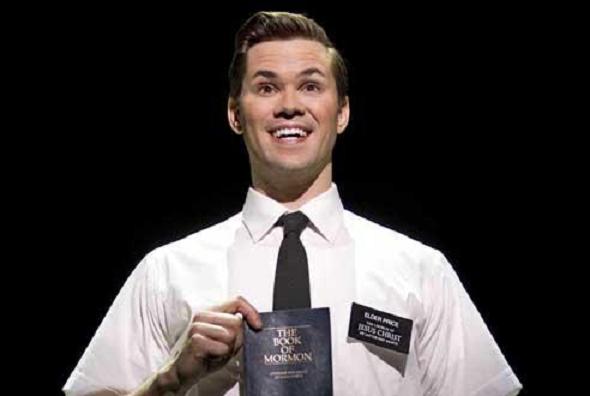
Here Is Proof That Joseph Smith Was A Liar, And False Prophet.

Many people are not aware that Joseph Smith, the founder of the cult known as, “The Church of Jesus Christ of Latter-Day Saints” a.k.a. Mormons, or L.D.S. made his own, “translation” of the Bible. I put translation in quotes, because anyone who knows anything about the collections of ancient Biblical texts, knows that the Joseph Smith Translation is not an actual translation of the those texts. Joseph Smith simply added things to the Bible to support his lies, and consequent false doctrines, and he took things out that contradicted his lies, and false doctrines. You don’t have to take my word for it. I will provide proof from his false translation, and compare what he wrote to the ancient texts.

My favorite place to start when looking at a Bible translation is John, chapter 1. This is one of the most significant sections of scripture that support the deity of Christ, and His aseity as the eternal Son, and Word of God. Here is what Joseph Smith claims is a proper translation of the this section of scripture.

“In the beginning was the gospel preached through the Son. And the gospel was the word, and the word was with the Son, and the Son was with God, and the Son was of God.” (John 1:1 [JST])

Here is the same verse from the Legacy Standard Bible. (LSB)

“In the beginning was the Word, and the Word was with God, and the Word was God.” (John 1:1 LSB)

In case you didn’t know, the New Testament was written in Koine Greek. We have over 5000 pieces of textual evidence from the Bible, as well as quotes contained in the writings of the early Church. Here is the same verse in the Koine Greek.

“ΕΝ ΑΡΧΗ ἦν ὁ λόγος, καὶ ὁ λόγος ἦν πρὸς τὸν θεόν, καὶ θεὸς ἦν ὁ λόγος.” (NA 27)

Here is a transliteration of the Greek text, and a translation of it immediately following.

Ēn archē ēn hō logos, kai hō logos ēn pros ton theon, kai theos ēn hō logos.

“ēn” is a preposition. It can mean, in, with, through, on, under, during, while, at. “hō” is a definite article. “Logos” means word. “kai” is a conjunction, and can mean, but, and, also, even. “pros” is primarily a preposition that can mean to, toward, for, among. “ton” is another form of the definite article. “theon” is a form of theos, which means god. You put it all together, and it would look like this before cleaning up the word order for English.

In beginning was the word and the word was with god and god was the word.

In Koine Greek everything pivots off of the definite article. There are 24 ways of saying, “the” in Greek. It can be nominative, genitive, dative, accusative, singular, plural, masculine, neutered, and feminine. It has a different spelling/form in each one of these cases. The subject, and object in a sentence don’t obey our English word order because the definite article tells you which ones are the subject, and object by the word endings.

.

If Joseph Smith knew anything about the Biblical languages, he’d have known that his, “translation” was wrong. Don’t get me wrong. He knew he was lying, and making it up. He was a con-man, a liar, and a crook.

The word, “gospel” in Greek is εὐαγγέλιον or euangelion. When there is a doubling of gamma the first one becomes a nu. This word means good message, or good news. It is a compound word. Joseph Smith inserts it in the first verse to get away from the obvious truth that the Word of God is the Creator of all things. Mormonism insists that Jesus preexisted instead of recognizing Him as the incarnation of the eternal Son, the 2nd Person of the Triune God. In mormonism they deny the trinity, and that Jesus is God. They teach that Jesus was the brother of Satan, and that he is the product of intercourse between the mother god, and the father god. They mistakenly call the father Elohim, which is a transliteration of the Hebrew word for god, power, judge. Elohim is a plural form of El. When the Bible is talking about The One true God, this plural form is used with a singular verb. This is one of the ways, along with context, that we can know what is being said. If Smith knew that, and truly wanted to do a translation, he never would have used evangelion, or Elohim the way that he did. You can also see that the word, “son” is not in the original text either. “υἱός” huios is son. It isn’t in the text people.

So to sum up, Joseph Smith lied about his translation of the Bible. I just proved that to you. Since he lied about that, what makes you think he wouldn’t have lied about everything else he said, and wrote? People didn’t have access to the information back then that we do now. Even so, they had educated Pastors, who warned them, and they chose to follow this liar. We have all this access to information now. You can read the texts for yourself if you care to learn the languages. I encourage you to repent of your cult membership, repent of your sins, and trust solely in the justifying work of Jesus, the one true, and living God.