Apologetics · Theology

Faith or Works, Why Do People Keep Arguing About This? It Is So Obvious!

A Quick look at Romans 4


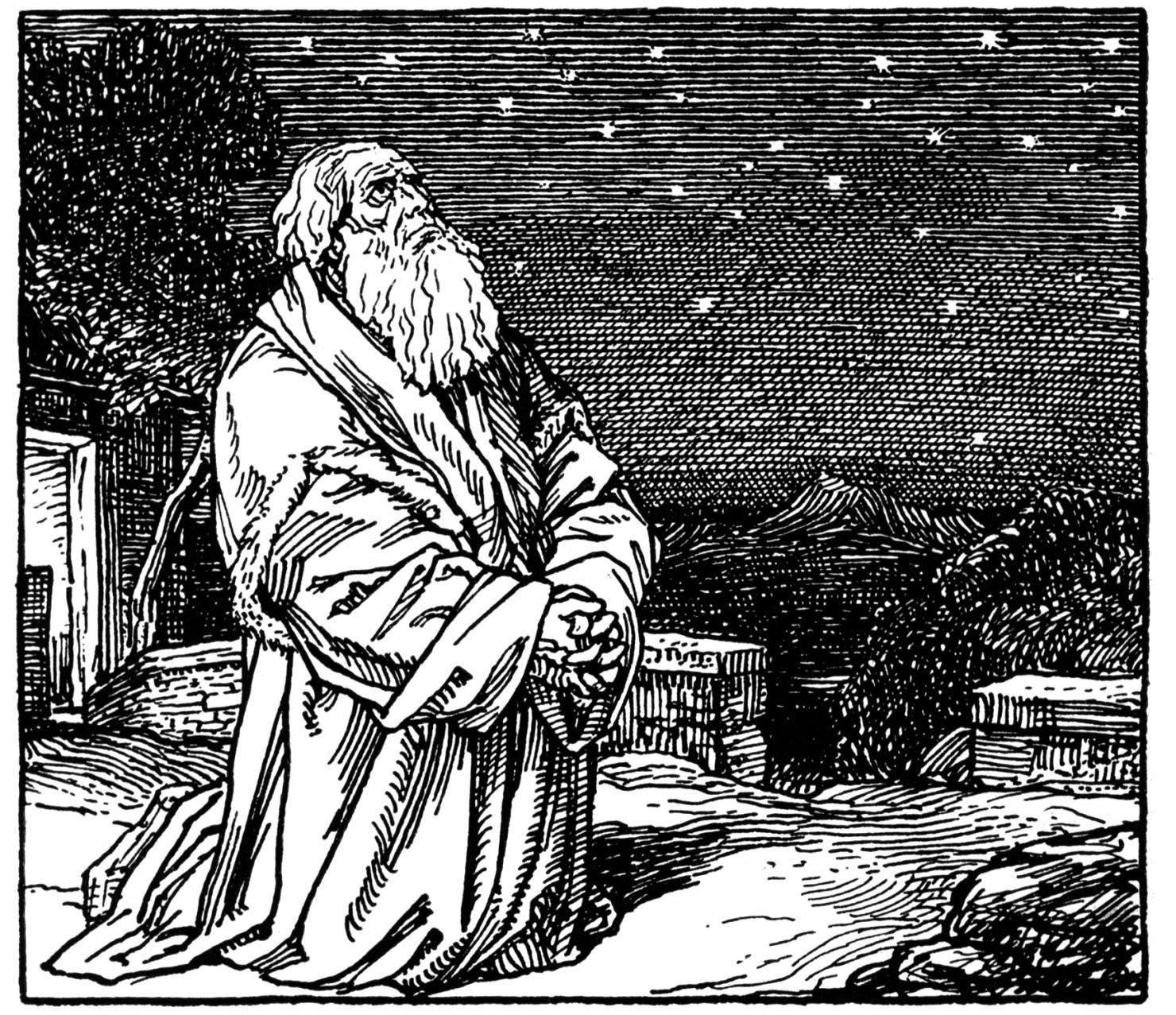
Abraham-looks-at-stars1

So let’s look at Romans 4:4 out of context first and see what it says, “…Now to the one who works, his wage is not credited as a favor, but as what is due.…”  Out of context we see that this verse is talking about receiving what one has earned for himself.  This seems pretty obvious.  When we add context we can infer so much more than a vague sense of getting what you deserve.  So let’s add some context now.  Here is Romans Chapter 4;

“  1What then shall we say that Abraham, our forefather according to the flesh, has found? 2For if Abraham was justified by works, he has something to boast about, but not before God. 3For what does the Scripture say? “ABRAHAM BELIEVED GOD, AND IT WAS CREDITED TO HIM AS RIGHTEOUSNESS.” 4Now to the one who works, his wage is not credited as a favor, but as what is due. 5But to the one who does not work, but believes in Him who justifies the ungodly, his faith is credited as righteousness, 6just as David also speaks of the blessing on the man to whom God credits righteousness apart from works:

7“BLESSED ARE THOSE WHOSE LAWLESS DEEDS HAVE BEEN FORGIVEN,             AND WHOSE SINS HAVE BEEN COVERED.

8“BLESSED IS THE MAN WHOSE SIN THE LORD WILL NOT TAKE INTO ACCOUNT.”

9Is this blessing then on the circumcised, or on the uncircumcised also? For we say, “FAITH WAS CREDITED TO ABRAHAM AS RIGHTEOUSNESS.” 10How then was it credited? While he was circumcised, or uncircumcised? Not while circumcised, but while uncircumcised; 11and he received the sign of circumcision, a seal of the righteousness of the faith which he had while uncircumcised, so that he might be the father of all who believe without being circumcised, that righteousness might be credited to them, 12and the father of circumcision to those who not only are of the circumcision, but who also follow in the steps of the faith of our father Abraham which he had while uncircumcised.

13For the promise to Abraham or to his descendants that he would be heir of the world was not through the Law, but through the righteousness of faith. 14For if those who are of the Law are heirs, faith is made void and the promise is nullified; 15for the Law brings about wrath, but where there is no law, there also is no violation.

16For this reason it is by faith, in order that it may be in accordance with grace, so that the promise will be guaranteed to all the descendants, not only to those who are of the Law, but also to those who are of the faith of Abraham, who is the father of us all, 17(as it is written, “A FATHER OF MANY NATIONS HAVE I MADE YOU”) in the presence of Him whom he believed, even God, who gives life to the dead and calls into being that which does not exist. 18In hope against hope he believed, so that he might become a father of many nations according to that which had been spoken, “SO SHALL YOUR DESCENDANTS BE.” 19Without becoming weak in faith he contemplated his own body, now as good as dead since he was about a hundred years old, and the deadness of Sarah’s womb; 20yet, with respect to the promise of God, he did not waver in unbelief but grew strong in faith, giving glory to God, 21and being fully assured that what God had promised, He was able also to perform. 22Therefore IT WAS ALSO CREDITED TO HIM AS RIGHTEOUSNESS. 23Now not for his sake only was it written that it was credited to him, 24but for our sake also, to whom it will be credited, as those who believe in Him who raised Jesus our Lord from the dead, 25He who was delivered over because of our transgressions, and was raised because of our justification.”

In the first two verses we read,

““  1What then shall we say that Abraham, our forefather according to the flesh, has found? 2For if Abraham was justified by works, he has something to boast about, but not before God.”

This tells us that we cannot be justified by our works and that trying to cite them as justification before God is not.  To back this up Paul quotes scripture in verse 3,

3For what does the Scripture say? “ABRAHAM BELIEVED GOD, AND IT WAS CREDITED TO HIM AS RIGHTEOUSNESS.””

And then in verses 4 and 5,

4Now to the one who works, his wage is not credited as a favor, but as what is due. 5But to the one who does not work, but believes in Him who justifies the ungodly, his faith is credited as righteousness,”

Now we have Paul explaining that the sinner who does works to attain righteousness can never do enough to remove their guilt and that they have earned for themselves condemnation.  This is in response to the Jews at the time who were attempting to put the gentile believers under their same yoke.  Then he explains that the ungodly sinner who puts his faith in Jesus for the fulfillment of righteousness has that righteousness from Christ.  In the next few verses Paul backs up what he said by quoting scripture again,

6just as David also speaks of the blessing on the man to whom God credits righteousness apart from works:

7“BLESSED ARE THOSE WHOSE LAWLESS DEEDS HAVE BEEN FORGIVEN,             AND WHOSE SINS HAVE BEEN COVERED.

8“BLESSED IS THE MAN WHOSE SIN THE LORD WILL NOT TAKE INTO ACCOUNT.””

In verses 9 through 12 we see that the circumcision was the outward working and seal of the righteousness credited to him by faith before he was circumcised.  This is how we can know that saving faith that justifies and imputes righteousness can be for the gentiles as well, because it was done to Abraham before he was circumcised.

9Is this blessing then on the circumcised, or on the uncircumcised also? For we say, “FAITH WAS CREDITED TO ABRAHAM AS RIGHTEOUSNESS.” 10How then was it credited? While he was circumcised, or uncircumcised? Not while circumcised, but while uncircumcised; 11and he received the sign of circumcision, a seal of the righteousness of the faith which he had while uncircumcised, so that he might be the father of all who believe without being circumcised, that righteousness might be credited to them, 12and the father of circumcision to those who not only are of the circumcision, but who also follow in the steps of the faith of our father Abraham which he had while uncircumcised.”

“      13For the promise to Abraham or to his descendants that he would be heir of the world was not through the Law, but through the righteousness of faith. 14For if those who are of the Law are heirs, faith is made void and the promise is nullified; 15for the Law brings about wrath, but where there is no law, there also is no violation.”

In 15 people have used this inappropriately to justify not sharing the gospel, but this is not what this is about at all.  This is about someone who by faith has been justified and is no longer subject to the condemnation the law brings.  That is the point being made and is supported in context by the rest of the scriptures.

Verse 16 says quite a bit so we will look at it by itself for a moment,

“      16For this reason it is by faith, in order that it may be in accordance with grace, so that the promise will be guaranteed to all the descendants, not only to those who are of the Law, but also to those who are of the faith of Abraham, who is the father of us all,”

This verse unpacks the doctrine that elect people of the Jews and gentiles alike are part of the true faith that Abraham had from God Abraham and that through faith in the work of Jesus and by His grace to us all who believe and repent are part of the covenant of the true justifying faith.

In the following verses Paul sums up the doctrine of saving faith verse works righteousness,

17(as it is written, “A FATHER OF MANY NATIONS HAVE I MADE YOU”) in the presence of Him whom he believed, even God, who gives life to the dead and calls into being that which does not exist. 18In hope against hope he believed, so that he might become a father of many nations according to that which had been spoken, “SO SHALL YOUR DESCENDANTS BE.” 19Without becoming weak in faith he contemplated his own body, now as good as dead since he was about a hundred years old, and the deadness of Sarah’s womb; 20yet, with respect to the promise of God, he did not waver in unbelief but grew strong in faith, giving glory to God, 21and being fully assured that what God had promised, He was able also to perform. 22Therefore IT WAS ALSO CREDITED TO HIM AS RIGHTEOUSNESS. 23Now not for his sake only was it written that it was credited to him, 24but for our sake also, to whom it will be credited, as those who believe in Him who raised Jesus our Lord from the dead, 25He who was delivered over because of our transgressions, and was raised because of our justification.””

Abraham’s faith that God would make him a father of many nations even at his old age was credited to him as righteousness and then we can see how it is extrapolated out to his descendants who include the Jews and the gentiles.  This is made clear in verses 24 and 25 as those who have faith in the work of Jesus Christ on the cross and His resurrection to save us from our sins.

Church · Theology · Uncategorized

Joel Osteen, “WHERE’S THE GOSPEL?”

jo


Some of us are old enough to remember the funny Wendy’s commercial with the, “where’s the beef?” lady.


Just like how most fast food chains can leave you unsatisfied and wondering just, “Where is, the beef?”  The prosperity gospel and life enhancement version of Christianity leaves people unsatisfied and lacking the appropriate knowledge.  They are spiritually malnutritioned and existing as the walking dead.  They drone on through life never getting it.  One can only wonder how long people will continue to pay this man to hear his silky smooth distracting messages delivered through his 10,000 watt smile.

Many folks get angry when you mention any wrong doing of Joel and his ilk.  I have been surprised at how many Christian brothers and sisters have gotten down right perturbed at me for besmirching their golden cow.  Joel is not any better than any of us.  He certainly is not educated and rooted in the word, like many genuine theologians and Pastors.  Joel is firmly in the, “Word of Faith” movement.  He teaches that your words have power and if you have faith when you speak you can declare prosperity for yourself and God will provide it.  How messed up is that?  “Say, I think I’ll twist the arm of the sovereign Creator of everything into giving me a better house and car with my, “less than a mustard seed of faith.”  It is men like him who give good unsung Pastors a bad name.

Think about all of the times you have listened to him on television or the books of his you have read.  Can you recall anything that he has done that looks anything like, “You were once a vile sinner.  You were under the condemnation of sin.  You were going to be cast into Hell for eternity, but you repented of your sins and believed in the atoning work of Christ Jesus on the cross.  He paid the price of your sin debt.  He satisfied the justice of God through His propitiation.  Now go and be holy for God is holy.”

Joel isn’t a Pastor, he is a self-help guru with a Christianesque guile.  He is the burger with fillers and washed in ammonia.  He is not the real deal.  Don’t get me wrong, I am not saying he is not saved.  I don’t know that.  I am saying he isn’t qualified to be a Preacher of God’s word.  He is not a Preacher of the gospel.  He has this humungous platform to do something really great for the kingdom of God, but instead he backs away from boldly proclaiming the gospel and preaching the word.  Why is that?  What sort of Preacher does that?  I haven’t even really addressed his teachings here.  That wasn’t my goal for today.  I simply wanted to draw attention to the lack of good, God centered, gospel proclaiming, life giving, preaching of God’s word.  Now I declare, go read your Bible Joel and repent.  Use that television platform, and mega-church for the right use.

If you love Joel ask him to preach the gospel every Sunday.  Ask him for clear and correct teaching instead of the prosperity life enhancement fluff.  Who knows, maybe he’ll listen.


Apologetics · Church · Theology

Two Types of Faith.

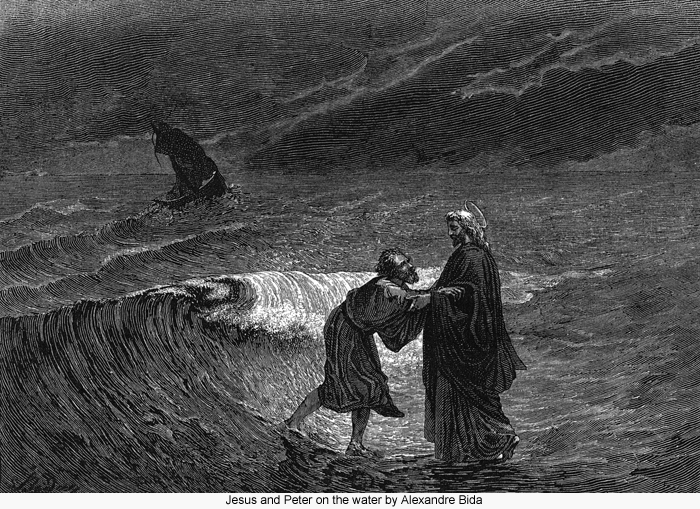
Alexandre_Bida_Jesus_and_Peter_on_the_water_700There are two types of faith. One type of faith is willingness to believe in something, which isn’t proved, or a hope in something that may be. Then there is a saving faith, which is granted by God to those who He has elected, and predestined.
The first type you might have had in a person. For instance, perhaps they told you that they would do something for you, and you believe that they will. Then you act on that faith in hopes that they will fulfill their promise to you. Some people have that type of faith in God, in a general sense. They believe there is a God, and they hope He is merciful. They might even believe He is merciful. They might even believe they are saved. Have you talked with someone who has many heretical beliefs, bad fruit, and still insists that they are a Christian? I’m sure you probably have. This person doesn’t have the second type of faith.
The second type of faith is the saving kind. It isn’t something we can come to without God. It must be granted to the person by God. You can want to believe, but without God granting it, you could never have it. Have you ever been talking with someone, sharing the gospel with them, and had them say, “Wow! That really sounds like a great gift, I just can’t believe in a God that would_______.” They can understand the gospel intellectually, they might even like it as a philosophy, but they just can’t believe it.
The second type of faith, when God grants it to a person, allows them to believe in Him rightly. It allows them to believe in the work of Jesus on the cross. Without it the cross is just another mythology. The true believer has the faith to do things that doesn’t make sense to the world. We have the faith to put into practice the doctrines of the Bible. God fulfills His promises and makes effectual that which He has willed. The believer will produce fruit in keeping with the spirit of salvation. The believer will persevere until the end. The believer will operate with the presupposition that the Bible is true. The believer will love Jesus. The believer will love others. You get the idea. They don’t do the things they do because they want to believe, they do them because they actually believe. This is a gift from God. It is coupled with true repentance when a person is justified by Christ.

Apologetics · Church

Christian oppression and persecution around the world and in America.

Christian oppression and persecution around the world and in America.

pesecuted

Persecution – a program or campaign to exterminate, drive away, or subjugate a people because of their religion, race, or beliefs: the persecutions of Christians by the Romans.
Oppression – the exercise of authority or power in a burdensome, cruel, or unjust manner.

These are the two concepts we are going to be dealing with today. I want you to note that oppression is a way to persecute people. It is persecutions ugly little sister. When oppression is fully grown she becomes open persecution. In America today we are beginning to see oppression of the Christian world view. The post-Christian, secular, world is now beginning to openly and brazenly display their hatred, intolerance, and bigotry, towards anyone espousing a Christian world view. If it isn’t evident to you it is because you aren’t a Christian, ipso facto you are part of the oppressive secular world. Of course you wouldn’t want to consider yourself an oppressor, but you are complicit. My favorite intolerant hate mongering comes from the people, who claim to be its biggest victims, the gay community. “Tim Tebow prayed to God! Shut him up!!! Another athlete came out of the closet! Hooray!!! He/she is such a brave hero to come out in the face of such oppression!!!” Wow! Seriously? What is wrong with your mind? Can’t you see the blatant double standard?
I also love it how secularists will criticize Christianity, but they won’t touch Islam for fear of getting their heads chopped off, being hung, or having their buildings blown up. When is the last time you saw a Presbyterian burn down a newspaper building for printing an article criticizing them? When is the last time you saw Christians chop off someone’s head for saying derogatory blasphemous things about Jesus? It’s ok though. We are told that the world will hate us for loving Jesus. That is how we know we are doing it right. If the world loved us we would be just like them.
If they hated Christ so much they wanted to kill Him, hated His Apostles so much they brutally killed them all as well, hated the early Church Fathers so much they did the same to them, what makes us think we will get treated any differently? Let’s see, Jesus was savagely beaten, cursed, spat upon, and crucified. Peter was crucified upside down on a cross because he didn’t think himself worthy to be crucified like Jesus, whom he loved. James was decapitated with a sword. His unfailing faith in Jesus and the resurrection affected his executioner so much that he himself was martyred. Stephen, the first Apostle to be martyred was stoned to death by Paul who would later become a Christian as well. Andrew was crucified as well just like his brother Peter. Doubting Thomas, we all remember him right? He had so much faith in Christ he continued to preach of Him until he was finally killed. They made it a party, they burned him with hot metal plates, and they stabbed him through with spears of pine, and then finally burned him alive. How’s that for a good time? Do you feel it yet secularists? Phillip was tortured and crucified. Matthew was beheaded, in other words they chopped off his head… Noticing a trend here? That’s not even all of them. That is but a few.

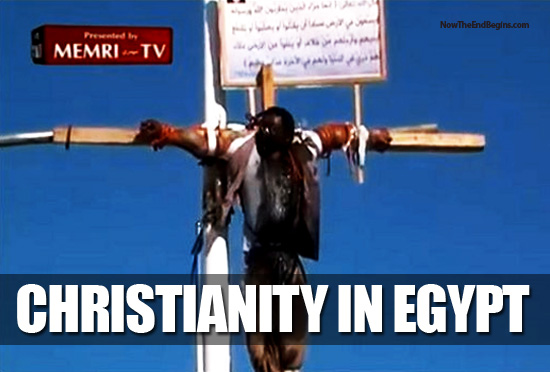
We aren’t seeing that in America… yet. We are seeing it all over the world. It hasn’t stopped. It won’t stop. As long as there are Christians in the world the world will hate them, torture them, and kill them. The secularists don’t even ask why. They don’t care. They are like the communists in Poland during the communist takeover. They think the world will be better without them. Just do a search on the internet for images with the words, “persecuted Christian” You will find people that have been hung, stabbed, had acid poured on their faces, been cut with machetes, even crucified.  christians-suffer-persecution-in-egypt-copts Somehow this goes right under the secularist’s radar. They turn a blind eye while screaming about gay marriage. They scream for women’s rights and how this Christian society is so oppressive, but they don’t look twice or even once for that matter at how Islam treats women. It is ludicrous!!!
We are being oppressed now. The secularists are shouting us down. They won’t listen to reason, and they won’t be swayed away from their own hateful hearts. They believe they are justified in hating Christians. Why is that you might ask? It is because we say that all men and women are born sinners and are evil. This is at the root of it. They hate it when they have to look into the mirror and see their own sin as contrasted to the righteousness of Christ. They know they are sinners, but have repressed that knowledge in unrighteousness. They seek to elevate man, and eliminate God. When they see someone or something that reminds them of how evil they are they have two options, repent, or kill it. Guess which option they are choosing more and more today? My friends it is imperative that we preach the good news of Jesus Christ even under the duress of persecution and death. When John Hus the Reformer was burned alive for opposing the Roman Catholic Church and staying true to Christ he was singing hymns in the flames and praying. We must finish our race strong for Christ. Pray that He grants us the grace to be faithful under oppression and for us to finish strong when martyred.

Apologetics · Theology

Should we, as Christians be ready to defend ourselves and others with lethal force?

killer
This evil man happens to be a muslim carrying out the commands of the Quran. If the Brits could carry guns someone could have stopped him from beheading a man in broad daylight in the middle of the street.


Luke 22:36, “…And He said to them, “But now, whoever has a money belt is to take it along, likewise also a bag, and whoever has no sword is to sell his coat and buy one…” This verse has long been asserted to be allegorical. Theologians have said that this verse tells us to be prepared to fight the spiritual enemy in spiritual places. That it doesn’t mean physical fighting. They say that we must be ready to fight temptations. Here is a quote from Calvin’s Commentary for verse 36,

But now let him who hath a purse take it. In metaphorical language he threatens that they will soon meet with great troubles and fierce attacks; just as when a general, intending to lead the soldiers into the field of battle, calls them to arms, and orders them to lay aside every other care, and think of nothing else than fighting, not even to take any thought about procuring food. For he shows them–as is usually done in cases of extreme danger–that every thing must be sold, even to the scrip and the purse, in order to supply them with arms. And yet he does not call them to an outward conflict, but only, under the comparison of fighting, he warns them of the severe struggles of temptations which they must undergo, and of the fierce attacks which they must sustain in spiritual contests. That they might more willingly throw themselves on the providence of God, he first reminded them, as I have said, that God took care to supply them with what was necessary, even when they carried with them no supplies of food and raiment. Having experienced so large and seasonable supplies from God, they ought not, for the future, to entertain any doubt that he would provide for every one of their necessities.

Here is a quote from the Geneva Study Bible notes, “{m} Then said he unto them, But now, he that hath a purse, let him take it, and likewise his scrip: and he that hath no sword, let him sell his garment, and buy one.

(m) He says all this using an allegory, as if he said, O my friends and fellow soldiers, you have lived until now in relative peace: but now there is at hand a most severe battle to be fought, and you must therefore lay all other things aside and think about dressing yourselves in armour. And what this armour is, is shown by his own example, when he prayed afterward in the garden and reproved Peter for striking with the sword.”

Here is John Wesley’s notes on the verse, “22:36 But now – You will be quite in another situation. You will want every thing. He that hath no sword, let him sell his garment and buy one – It is plain, this is not to be taken literally. It only means, This will be a time of extreme danger.”

They site Luke 22:50-51 as support for this assertion. Luke 22:50-51, “…And one of them struck the slave of the high priest and cut off his right ear. But Jesus answered and said, “Stop! No more of this.” And He touched his ear and healed him…”


I tend to agree with John Gill’s understanding of the verse. Here is a quote from his exposition of the Bible,

“Then said he unto them,…. That is, Jesus said unto them, as the Persic version expresses it:

but now he that hath a purse let him take it, and likewise his scrip; signifying hereby, that from this time forward, immediately after his departure from them, after his death, resurrection, and ascension, when they should be sent into all the world to preach the Gospel, it would be otherwise with them than before; that they should be reduced to great penury and distress, should neither have food, nor money to buy any with; and that they should suffer hunger, and thirst, and nakedness, and have no certain dwellingplace, as was their case; see 1 Corinthians 4:11 and that they would not be received, and entertained in the manner they had been; and therefore it would be advisable, if they had any provisions, to take them with them in their scrips; or if they had any money, to carry it with them in their purses; for glad would they be to provide themselves with necessaries at any rate:

and he that hath no sword; the word “sword” is not in this clause, but in the next; it is only in the original, “he that hath not”; which, at first sight; looks as if the sense was, he that hath not a purse, or a scrip, to sell, and buy a sword with, let him sell his garment, and buy one: but, as De Dieu observes, the phrase, “he that hath not”, is the same with “he that has nothing”; who is a poor man, and has no money to buy a sword with, let him part with his garment, which rich men, who had money, had no need to do; though the Syriac, Persic, and Arabic versions put the word sword, in both clauses;

he that hath no sword, let him sell his garment and buy a sword; that is, if he could get one no other way. Christ here uses the common dialect of the nation, as Dr. Lightfoot observes. So on the feast of dedication of the temple,

“if a man had not any thing to eat, but what he had by alms, he must beg, or , “sell his garment”, and take oil, and lamps, and light them (u).”

These words of Christ are not to be understood literally, that he would have his disciples furnish themselves with swords at any rate, since he would never have said, as he afterwards does, that two were sufficient; which could not be enough for eleven men; or have forbid Peter the use of one, as he did in a very little time after this: but his meaning is, that wherever they came, and a door was opened for the preaching of the Gospel, they would have many adversaries, and these powerful, and would be used with great violence, and be followed with rage and persecution; so that they might seem to stand in need of swords to defend them: the phrase is expressive of the danger they would be exposed to, and of their need of protection; and therefore it was wrong in them to be disputing and quarrelling about superiority, or looking out for, and expecting temporal pomp and grandeur, when this would be their forlorn, destitute, and afflicted condition; and they would quickly see the affliction and distress begin in himself. In “seven” ancient copies of Beza’s, it is read in the future tense, “he shall take, he shall sell, he shall buy”.”

(u) Maimon. Hilch. Megilla Uchanucha, c. 4. sect. 12.

There clarification we need is clear when we add context. The first assertion stops at the rebuke by Christ when one of the disciples used a sword to attack the slave of the high priest. This is to support the notion of physical pacifism today. The fact that Christ rebuked him for using force against an aggressor is misunderstood to mean that the use of force against an aggressor is wrong in all circumstances. We all agree that our true enemies are of the spiritual world and they are not of flesh and blood, but we must acknowledge that these enemies use flesh and blood as fodder for their war against God and His servants.

We must also look at all of the text. If we read verses 52-52, “…Then Jesus said to the chief priests and officers of the temple and elders who had come against Him, “Have you come out with swords and clubs as you would against a robber? “While I was with you daily in the temple, you did not lay hands on Me; but this hour and the power of darkness are yours.”…” We see that Jesus is explaining to the chief priests and officers of the temple and elders that He has never given them cause to come with weapons against Him. He wasn’t saying that there is never a time to use force. He was saying that that moment wasn’t the time for it.

We can also see from the entirety of the New Testament that Christ came to fulfill a purpose that was from the Father. For the time that He was here and through the time of His ministry He would not be stopped until that time which was decreed. When His kingdom was established and He would ascend then the disciples would be open for persecution much as He was.

They would be hated for His namesake. There would be all sorts of dangers and hardships. They were to spread the gospel and establish the Church in opposition to the world, Contra Mundum. Provisions would be required. While Christ was with them, they didn’t need anything and were sent out with the provision of God to show them that He would care for them. They were now being sent out. They would be providing for others out of God’s provision for them, both spiritually and materially. When we see someone being oppressed unjustly, assaulted or abused, we have an obligation out of love to assist them. Certainly while the disciples were waging spiritual warfare they at times must do physical battle with the enemy’s forces as well.

I’m not suggesting that they were like the crusaders. They weren’t running around fighting great battles. I think it is reasonable to assume they were to defend themselves and others from thieves, murderers, and other such offenders. We know that if a man lives by the sword he shall die by the sword, but that isn’t what they are being told to do. They aren’t being told to go out as murderous killers or warriors like the Muslims. They are simply being warned that things are going to get bad once Jesus is no longer bodily with them. They are being told to be wise as serpents and gentle as doves. I personally have no problem owning firearms and protecting myself and others when prudent. I won’t tell you to violate your conscience either.

I believe it is much more loving to live in an ordered society with laws, but when the police aren’t around to help you must stand up and deal with evil men. Love for people will move us to defend them from the enemy’s minions. Love for Christ will make us prudent in our use of force. If we don’t love Christ, our use of force will surely turn into cruel tyranny. This is what we see going on all around the world today.

We must first and foremost be Christians. We must be people who have repented of sin and put our faith in the Lord Jesus for our salvation. We must seek His kingdom first and make Him preeminent in our minds, and lives. When His will is Lord over ours we won’t take a life without great cause and deliberation.


Church · Theology

If you could see all of your sin it would be unbearable.

lamb


If you could see all of your sin it would be unbearable. As Christians we see a sin that we committed and lament over it. Sometimes we spend way too much time beating ourselves up over it. Believe it or not, this comes from idolatry. We punish ourselves for sin as self-righteous idolaters. How dare we rob Jesus of the glory He is rightfully due? He paid for our sin debt on the cross of His crucifixion. He had the wrath of the Father poured out on Him unto completion, yet we dare to bemoan our lowly estate as victims! For those who are in Christ Jesus there is no condemnation of sin! Get up off your pity-pot and stand for Christ! See what He has done for you, not what you must do for yourself!

When we punish ourselves for failing it moves us away from Christ. Our shame and guilt stop us, or delay us from repenting. We languor in our own guilt and shame, powerless to do anything for God. We have put ourselves on the cross and on the throne of our lives. “I messed up so I must pay the price.” How ridiculous are we? How could we ever hope to pay the price for our own sin? It is this kind of narrow, short sighted view of sin that keeps us in bondage to the guilt and shame that separate us from our assurance.

What we need, is to see our sins as manifold as they are. We need to see them as God sees them. He is infinite in His authority. He is perfect in His righteousness. We can not fathom these things. Our finite minds see our occasional sin in part, never the way God sees them. He sees every… single… last… one… in… perfect… entirety… Think about this for a moment. Sinners! Don’t waste time whipping yourselves! By His stripes are we healed! It was Him upon the cross not you! Now that you see things in the proper light, don’t delay, REPENT! Go and serve your King with joy in your heart, knowing the Good God forgave you the bad sinner. All glory to God in the highest!


Theology

2 Peter 2:1-3 False Prophets and Teachers then and now.

1But false prophets also arose among the people, just as there will also be false teachers among you, who will secretly introduce destructive heresies, even denying the Master who bought them, bringing swift destruction upon themselves.2Many will follow their sensuality, and because of them the way of the truth will be maligned;3and in their greed they will exploit you with false words; their judgment from long ago is not idle, and their destruction is not asleep. 2 Peter 2:1-3 NASB

Here Peter is warning that there will men who deceive people into believing they are speaking the words of God to them, and that these men will be among them. (The believers) These false prophets will teach false doctrines that are destructive in intent towards the church and towards the personage of Christ. The Gnostics were the main group that was being warned against here. They taught that all flesh material things are evil and a hindrance to the spiritual things which are good. They also taught that Christ was either a purely spiritual being who only appeared to have a body or that the body he had was just a shell to be shed at the crucifixion. Gnostic teachers would come to town and claim to be prophets. They would stay in a home and teach for the time they stayed. Usually they would find the home of a woman whose husband was away or a widow’s home. They would seduce them with lies about some deeper knowledge that could only be gained by them through sex or money. The Gnostics had no problem teaching that Christ was God, but denied His human nature. On the other had we had the Judaizers who were teaching to keep obeying the laws for righteousness instead of teaching the appropriate doctrine of grace through faith, in Christ’s work and righteousness.

Because of these false teachers, good teachers and the truth would get a bad reputation. People then didn’t know the difference just like many people now. We always hear about some Christian doing something or teaching something that is bad. When this happens people tend to lump everything with the words, “Jesus” or “Church” together, and throw the baby out with the bathwater. So the way of truth was maligned. These same teachers would stay in the household where they were guests, eat the food, do no work, and lead people down the wrong path towards mysticism or legalism much like what happens today except ours are on television, going door to door, or selling books marketed to all of the undiscerning.

The warning was needed then and it is needed now. We must be vigilant and be on the alert for false teachers and lying men (and women) who say they are speaking the words God gave them. There is some comfort in verse 3. “…Their judgment from long ago is not idle, and their destruction is not asleep…” We know that our God is true and all knowing. Nothing escapes His notice or knowledge. All of the deeds of these abusers are weighed against them and they shall surely be punished for their crimes. God is just and will punish the wicked and restore the victims. We can trust Him.

Church · Theology

Saudi Arabia: MERS cases reach more than 400, more than 100 dead

Saudi Arabia: MERS cases reach more than 400, more than 100 dead

This was one of the headlines from one of the articles on Reuters site for today 05/05/14. A particularly nasty virus from Saudi Arabia is killing one out of four people that get it. When some tragedy strikes Islamic countries and people some of us respond with joy. How is that Biblical? How is that at all different from the world? It isn’t. God says, “You have heard that it was said, ‘YOU SHALL LOVE YOUR NEIGHBOR and hate your enemy.’ “But I say to you, love your enemies and pray for those who persecute you, so that you may be sons of your Father who is in heaven; for He causes His sun to rise on the evil and the good, and sends rain on the righteous and the unrighteous. “For if you love those who love you, what reward do you have? Do not even the tax collectors do the same? “If you greet only your brothers, what more are you doing than others? Do not even the Gentiles do the same? “Therefore you are to be perfect, as your heavenly Father is perfect.” (Matthew 5:43-48)

As Christians we might err and say among ourselves, “See, I knew that God would punish those Muslims for their evil ways!” I know I have heard people speak this way, but how are they behaving any differently than the Muslims they hate? It seems to me that we shouldn’t hate anyone. We can hate what they do, we can hate who their master is, and we can hate their satanic doctrines, but we mustn’t hate them. God said in His word, “Bless those who persecute you; bless and do not curse. Rejoice with those who rejoice, and weep with those who weep. Be of the same mind toward one another; do not be haughty in mind, but associate with the lowly. Do not be wise in your own estimation. Never pay back evil for evil to anyone. Respect what is right in the sight of all men. If possible, so far as it depends on you, be at peace with all men. Never take your own revenge, beloved, but leave room for the wrath of God, for it is written, “VENGEANCE IS MINE, I WILL REPAY,” says the Lord. “BUT IF YOUR ENEMY IS HUNGRY, FEED HIM, AND IF HE IS THIRSTY, GIVE HIM A DRINK; FOR IN SO DOING YOU WILL HEAP BURNING COALS ON HIS HEAD.” Do not be overcome by evil, but overcome evil with good.” (Romans 12:14-21)

Hate proves we are not in the will of God and our hearts are hardened. We must consider ourselves the servants of all. We need to esteem ourselves as lower than others. Our sins put Christ on the cross. We know Jesus, they don’t. We don’t have any excuse for behaving like the world. We can’t be pragmatic like the Muslims of the communists. We operate on faith. We don’t solely rely on what we can see and prove. We have the word of God, and we must apply it to our lives. Faith is in stark contrast to pragmatism. It operates in direct conflict. We do things that don’t make sense to them. We need to be obedient to God. This is worship, to truly apply His word to our lives. So let us pray for them to be converted by God. Let them become our brothers and sisters in Christ. This world is suffering and the lost are a multitude of peoples. What hope have they, Except for the faithful to share the gospel and for Christ to save them.

Church · marriage · Theology

Marriage, as a Typological Representation of Christ and the Church.

I-DO-Marriage-Series

In today’s culture, many people are embracing the doctrine of egalitarianism, as it is applied in theology. They go so far as to ignore what scripture says. For them, it is more important to conform scripture to the corrupted and sinful judgments of humans, then to be sanctified in obedience, and humility to the standard of scripture.

Egalitarianism, as it is applied to human equality is noble. In so much as it is not improperly applied. It is true that God is no respecter of persons. In His perfect and holy sight we are all justly damnable. Every man, woman, child, from every race, religion, and creed, are all sinners. In Christ we love and treat all with humility. We should consider ourselves as the worst sinners, while considering others better than ourselves. So does this notion of considering others as better than ourselves fit with egalitarianism? A noble idea is not noble at all when seen in the light of true humility and mercy. Christ left majesty and dwelt among His creations in the flesh. He washed the lowly, sinner’s feet, bore our scorn, made propitiation for the expiation of our sins, by enduring the wrath of God until He declared, “It is finished.” Philippians 2:6-11(NASB)

who, although He existed in the form of God, did not regard equality with God a thing to be grasped, but emptied Himself, taking the form of a bond-servant, and being made in the likeness of men. Being found in appearance as a man, He humbled Himself by becoming obedient to the point of death, even death on a cross. For this reason also, God highly exalted Him, and bestowed on Him the name which is above every name, so that at the name of Jesus EVERY KNEE WILL BOW, of those who are in heaven and on earth and under the earth, and that every tongue will confess that Jesus Christ is Lord, to the glory of God the Father.

In the true faith we are all equally adopted and justified by Christ, but we mustn’t err by taking egalitarianism so far as it offends the word of God. “How far is that?” you may ask. Scripture, I believe is very clear. It is so clear, in fact that I am not going to list every single verse that refutes it. A plain reading of the scriptures, from beginning to end is an overwhelming avalanche of proof, that God has ordained the complimentary roles of male and female.

Marriage, as a typological representation of Christ and the Church is diminished by egalitarianism. The deeper theologies are robbed of their import by such societal concessions. If we understand that man, through sin, is separated from God and that through Christ he is rejoined, it is a marvelous thing. We see this typological example in marriage. Woman was separated from man. She went out of his flesh. In marriage the woman is joined again by the power of God to her husband. They are beautifully unified again part of the same body. Christ is our head and over us he rules. We the Church are His body, and we submit to His loving rule over us, His bride.  Marriage portrays such a beautiful thing. The gospel of Christ is portrayed in each marriage ceremony. When we see a married couple we should be reminded of the work that Christ did on the cross to justify us with God. When we look upon our beloved wife we should see someone who we would lay down our lives for. When our dear wives look upon us they should see someone who is willing to sacrifice all for them. We all should be mortified at the perversion of marriage in the world. It has been perverted by brazen things like polygamy, and same sex marriage, but even the subtlety of egalitarianism should offend us. Instead we embrace all of these. Ashamed of nothing, proud, and arrogant, we tell God how we will understand Him. We tell God how we will do things, and never truly repent with a bent knee and penitent heart.

Marriage is truly ordained by God. It is a union that should preach the gospel to us as believers and be a witness to the world. Let us pray for God to perform His will in our lives against our fleshly desires. Let us affirm His word and be conformed to His sovereign will in all things.

Theology

The theology of prayer, and an omnipotent, sovereign God.

We tend to think of prayer as having an effect on God and His decision making process. It is sort of like petitioning a parent for something desired. If God is sovereign and omniscient, how can we change His mind on anything? He already knows what we are going to pray about before the situation even occurred, before we realized we were going to pray, before we were born, before the Earth was made He knew what we would be praying for and had already determined whether or not He would answer the prayer with a yes, no, or wait. Since this is true, we might ask, “Why should I even pray?” Simply put, we should pray because we are told to be in prayer without ceasing. So the short answer is that we do it to be obedient to God.

congregational-prayer

We are going to look at some deeper reasons to pray. Just like a child who understands to obey out of knowledge of punishment matures into obedience out of love and respect so too should mature Christians obey. We move on to deeper understandings. I think that prayer is a blessing, grace, and it is sanctifying. We are blessed because of the work of Christ He made it possible for us to pray directly to God with Him as our intercessor instead of a human priest in a temple. Christ hears us because the Holy Spirit has made our prayers acceptable to God. It is a grace, because in prayer we sense the relationship with God and feel closer to Him. It is something He has given us to involve us in the carrying out of His will. It is sanctifying because as we are conformed to His word and will we pray for the things that our new natures desire. This also ties into the grace of prayer. Through prayer we express the desires of the new person. We show and see our new love. We can start to understand how God is using us in His sovereignty to accomplish His will when we pray. It is a sweet moment to come to God in prayer for any reason when we know we are being obedient to Him in our prayers. Our obedience is worship.

We are free to think our thoughts, feel our feelings, and do our deeds, but only in the will of the Creator in as much as He has ordained. We could go our entire lives without ever being enlightened to this reality. Many people do go on feeling, thinking, and doing without ever knowing the reasons behind it. Their lives remain a mystery to them. It is like a big uncertain, unfolding story where they are the unqualified masters of their own destinies. We could go on believing we are the masters of our own destinies. Matter of fact, Hollywood loves to promote this ideology. (A very good reason to be suspicious) A cast die does not land, a bird doesn’t fall dead from the sky, and man doesn’t direct his steps, God has determined all things. This doesn’t diminish our experiences or dull our feelings. If anything it should give us great peace as we go on about our days. “…And we know that God causes all things to work together for good to those who love God, to those who are called according to His purpose…” The two ideas do not conflict. They are not mutually exclusive. Just because we might not understand exactly how this works doesn’t mean that it doesn’t. So I encourage you to go on praying out of obedience and love towards God. After all it is for our good to do what He has willed.