“How To Lead Your Family; A Guide For Men Wanting To Be More” by Joel Beeke is a great little guide full of biblical applications for the father, and husband. Beeke breaks this guide down into three major sections, How to be a Prophet, Priest, and King, in the home. Each one of these has practices laid out that you as a father, and husband, should be doing, and why. He manages to do so in a concise way that doesn’t sacrifice necessary information. I highly recommend this little guide. It would be great to have a few copies on hand to give away. I wish I knew to do these things when my own family was much younger. Get on it now, and don’t wait until your kids are grown. Don’t be an old couple who don’t like each other.
In case you don’t know what an inductive study is, here is a definition from the web; Inductive study, particularly in the context of Bible study, involves a method that helps individuals understand and apply the teachings of the Bible. This method is characterized by three main steps: observation, interpretation, and application. The goal is to draw conclusions based on the evidence found in the text rather than starting with preconceived notions.
Unlike other workbooks, this one does not lead you by the hand to predetermined conclusions. This one simply allows you, the reader, to employ the guiding principles set forth in the guide’s worksheets. The author trusts God the Holy Spirit to teach you from God’s Word.
There are only a total of eight written pages, those pages are an introduction to the study, an explanation of, the right spirit, The gospel, the right tools, and an example of how to fill out the worksheets. This leaves all of the rest of the 154 pages of worksheets. Here is a picture of the example of how to use the worksheets.
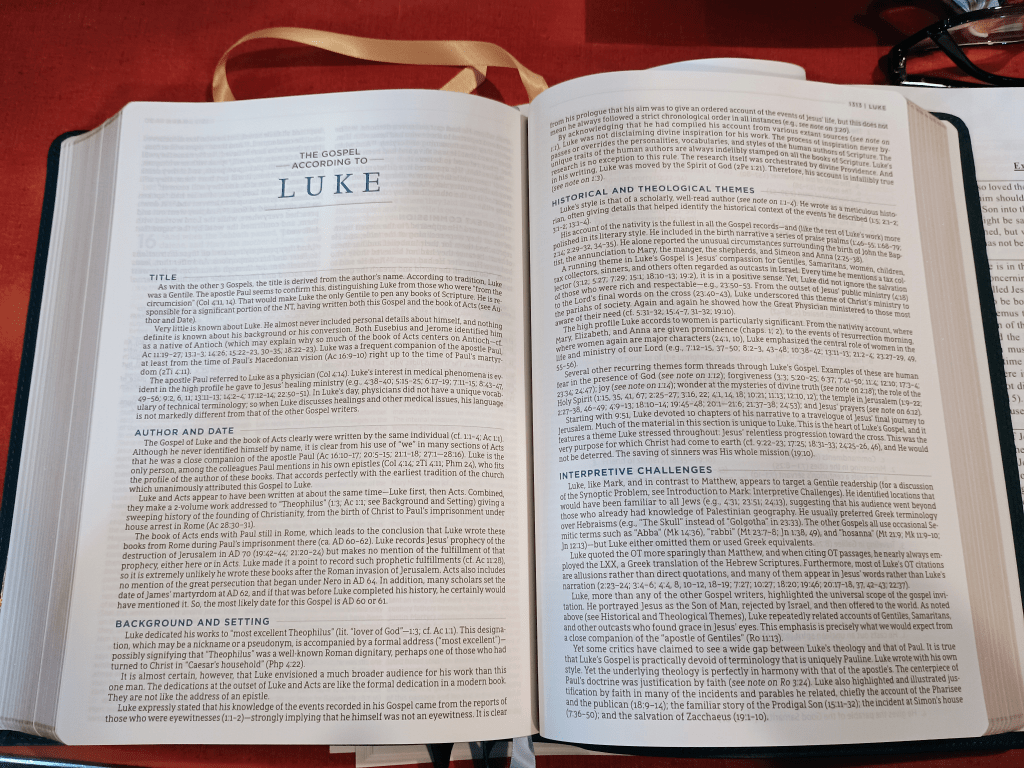
You’ll notice on page 6 titled, “The Right Tools” the author includes some things that will be helpful in your study. I’ve included some pictures of the resources I like to use. You’ll have to purchase your own. I think this book could be done with a simple study Bible. You definitely don’t need all the resources I’ve put up. You can also use Bible Hub for free. It has tons of resources. Something you might notice, is that if you are using bound books, they can get pretty heavy to carry around with you. There is an alternative. You can use a Bible program like Bible Study from Olive Tree. You can purchase digital copies of all the same resources. Makes it a lot more portable. Here are the pictures.
This is a John MacArthur Study Bible in the Legacy Standard Bible(LSB) translation.
You might also need a New Testament Greek dictionary, A good commentary set, and a Greek New Testament.
Who is this workbook for? Anyone who is attempting to discover more about God, and His will for us. I would use it for a middle school, and up, homeschool curriculum. It would be helpful to keep you focused on specifics in a study if you are easily distracted. It would also be great to use in a group. It may not seem like the value it is due to there being a lot of worksheets, and hardly any written pages, but that is the point. It is inductive. I hope this helps you make up your mind to get the workbook, and learn more about you’re Creator, and Savior.
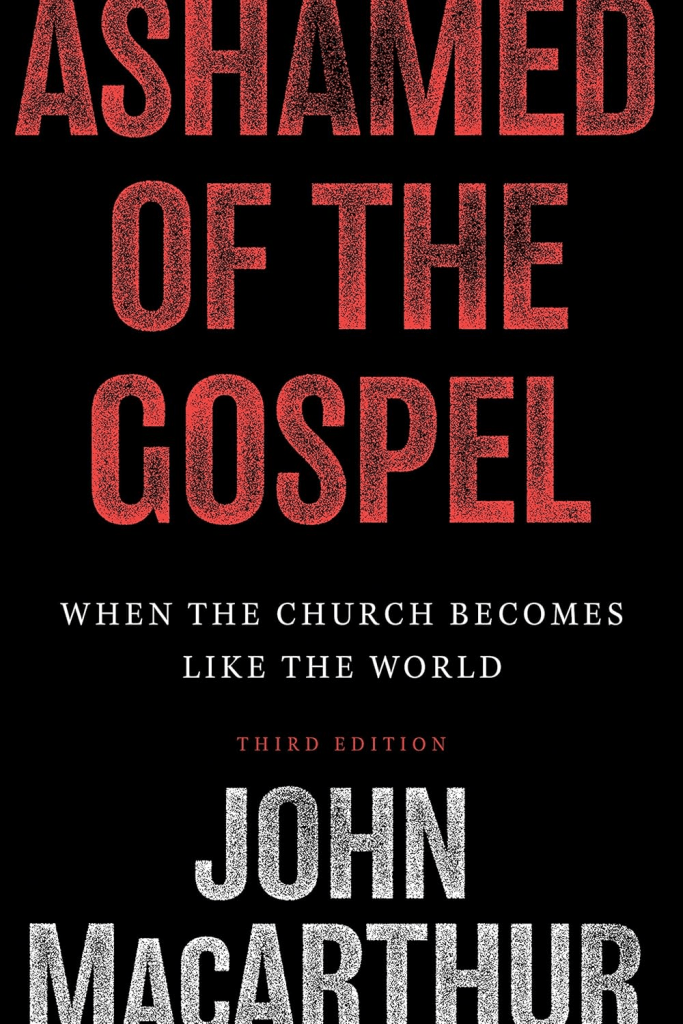
In this book MacArthur correctly diagnoses some major problems within the Church. They are not new problems. Charles Spurgeon dealt with similar problems during the Downgrade controversies. I won’t be listing all of the problems. Instead I’ll sum them up. The gospel of Christ, and His word, are not believed to be, relevant or sufficient, for the Church today. This view is held by Church leaders, and Church goers. There are many ways this is fleshed out, and put on display in this book. MacArthur identifies many of the bad ideas, and explains them. He also gives examples. Of course, the book wouldn’t be complete without giving the solution as well. That part is simple. The gospel, and the word of God, are always sufficient, and relevant. MacArthur also fleshes those ideas out. When you look at the over 50 years of service to Christ, and His Church, that John has committed his life to, you can see how the elders at Grace Church have protected the congregation from these bad ideas. This book is a quick read. If you are a young Pastor, or even someone who is concerned about the direction their local Church is going, I’d recommend this book. It will be a great help to you in keeping the main thing, the main thing.
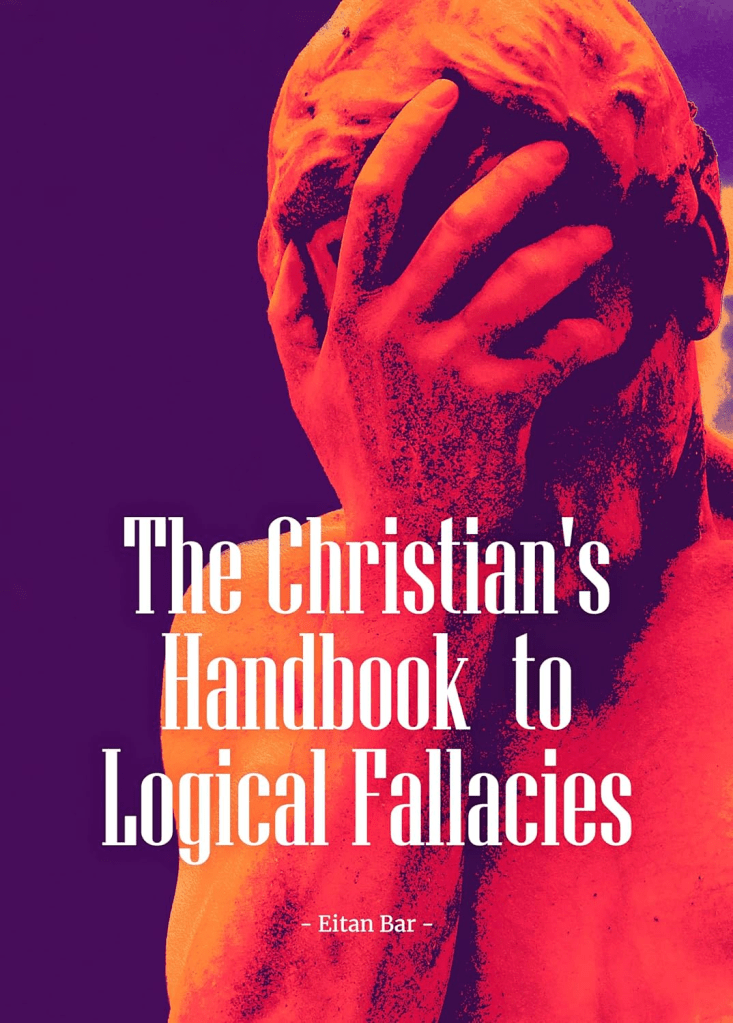
This will be a short review. If you are looking for a book to use as a concise, and quick reference on logical fallacies, or a primer on the topic, this will suffice for most people. I did find the author’s understandings of Calvinism to be offensive, and lacking understanding. If you are not a Calvinist, you’ll probably chuckle at some of his attempted whit. I did not. That aside, for the price, and the accessible way the book is organized, it is helpful as a quick reference book. There are better ones out there, but if you are a laymen, this one will be one of the better ones you can get. I do recommend it in that regard.
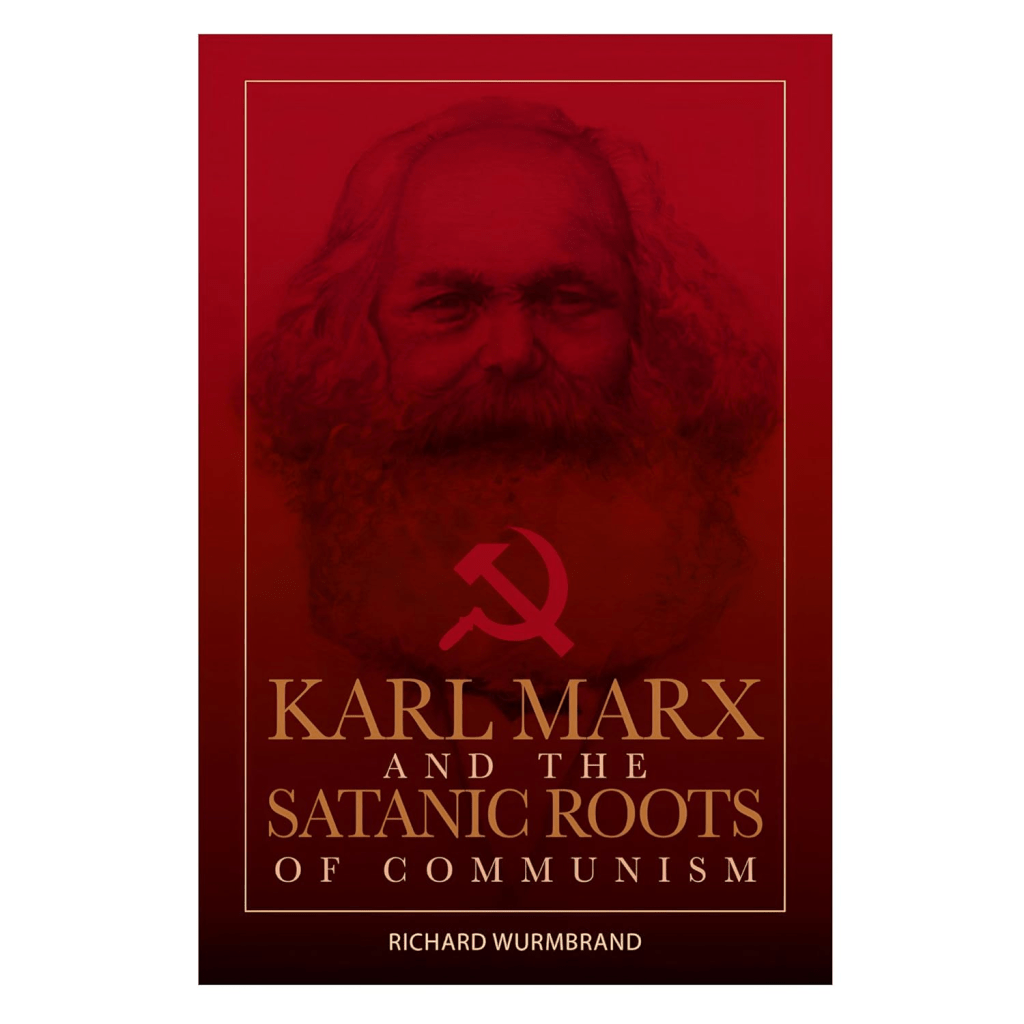
I’ve been alive long enough to have come to the conclusions that Marxism/Communism is satanic. I arrived at this conclusion due to the fact that Communism does not allow for a power more authoritative than the dictator, state, or politburo. Communism rejects the truth that God has created every man equally human, with all that entails, even their human rights. Under Communism the politburo is more than equal, and subjugates everyone else underneath them. You have no God given rights under the satanic system of Communism. I was curious what Wurmbrand’s insights would be. He experienced the literal torture of Communism first hand during the Communist revolution in his homeland Romania. He and his wife, were thrown into a gulag/prison work camp for 14 years. He was tortured on a daily basis. Eventually he, and his wife were released. They were never the same after that. Wurmbrand studied the writings, and correspondence, of Marx, and other prominent Communists after his release. Like I mentioned above, I understood that Communism was satanic, but I had no idea how fundamental satanism is to Communism, and those who fought to impose it.
I assumed Marx was a satanist ignorantly so by what he stood against, and was simply a fool seeking an impossible goal, and that he was willing to kill as many people as it took to achieve it. I was wrong. Marx was a satanist first. Communism was just a means to an end for him, and those like him. This book made that abundantly clear. Wurmbrand uses many citations from Marx, and his contemporaries. Some of the things these men wrote are so blasphemous, I had to skim through them as they afflicted my conscience sorely. I would warn you that this could also be your experience reading this book, but I find it necessary to know how blatantly satanic Communism, and Marx’s writings are.
Marx wrote, “I wish to avenge myself from the One who rules above.”
Here is an excerpt from the book,
“Let us remember that Marx’s ideal was to descend into the abyss of hell and draw all mankind in after him. Let us not follow him on this vicious path, but rather follow Jesus Christ who leads us upward to peaks of light, wisdom, and love, toward a heaven of unspeakable glory.”
This excerpt was at the end of the book recalling a citation from one of Marx’s writings. He wanted to have as many people die without hearing the gospel. He said something to the effect that he would go into hell laughing after them. Lenin, and Stalin, were also monsters. I encourage you to read this book, and share it with friends in the Church who are tempted to lean into socialism, communism, and warn them strongly.
I am glad to say that the gospel is shared towards the end of the book, so if you do share this book with someone who is curious, they will also get the gospel message. I hope you will take the short time this148 pages require to be forewarned.
I know this book has been around for a few decades now. I also know that there are many younger Christians who have never heard of it. That is one of my reasons for reviewing this book, at this time. If you are over 50, like myself, and have never heard of this book, you can lump yourself into the group of people who should read it. I usually review books to put them in the recommended category, or the don’t waste your time category. I recommend books that should be put in your library due to their value in reading again, or lending/giving to people for their edification, and for reference. This book gets a recommend, and I’ll tell you why in the review.
Schaeffer gives us a broad overview of human philosophies, and societal changes, including the effects of Jesus’ life, and ministry. He takes us from the beginnings of human philosophy, to our times of postmodernism, and explains the dangers of communism. The effects of Christianity on the world, including western civilization, art, and thinking are all explained efficiently, in laymen’s terms. The book also gives us some analysis of those eras, and their worldviews. If you’ve ever wanted to take a warp speed trip through the eras of our history, but not miss any key points, this book is for you. It is just shy of 300 pages. I don’t know how he managed to stuff them full of important data, and insights. If anyone else had written this, it would have been bloated, and 500 pages. More than likely, it would have become dry as well. Schaeffer did a tremendous favor to all of us who came after him. He was one of our great thinkers. Don’t miss this one.
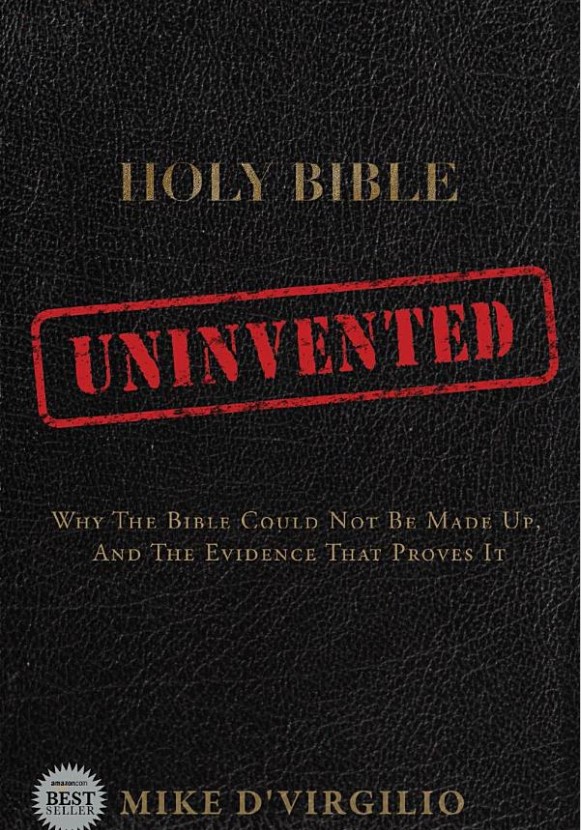
As many of you know, I determine a book’s value in the individual’s home library primarily on a few factors. First of course, it must be doctrinally sound. Second, its message must be one that is valuable for rereading. Third, it must be an asset to lend out to others to read. I recently read a book titled, “Uninvented” by Mike D’Virgilio. I have several people send me titles they’d like reviewed, but most of them are self-published, poorly edited, and ill thought out. Their theology is usually a hot-soup-sandwich. I was pleasantly surprised by this book. It was none of those things. As a bonus, I can actually recommend it according to the criteria I previously discussed.
The book is an apologetic work in which D’Virgilio argues for the authority, and trustworthiness of the Bible as the actual word of God. He argues that its verisimilitude is potent evidence. Some might call that a circular argument, or an appeal to authority, but those arguments are null if the Bible is actually true. I’ve read other works with some of the same arguments for the trustworthiness of the Bible, but few with as many of them compiled together, and organized in such a way as to lend them to the work of strengthening the believer. If you are a Christian who has run into some arguments that have shaken your faith in the trustworthiness of God’s word, this book is for you. I highly recommend it. It is a brief work, but in its brevity lacks nothing significant for the intended work at hand.
Here is a link to a Youtube vlogcast that Mike was on a while ago discussing his book, and some of the ideas in it.
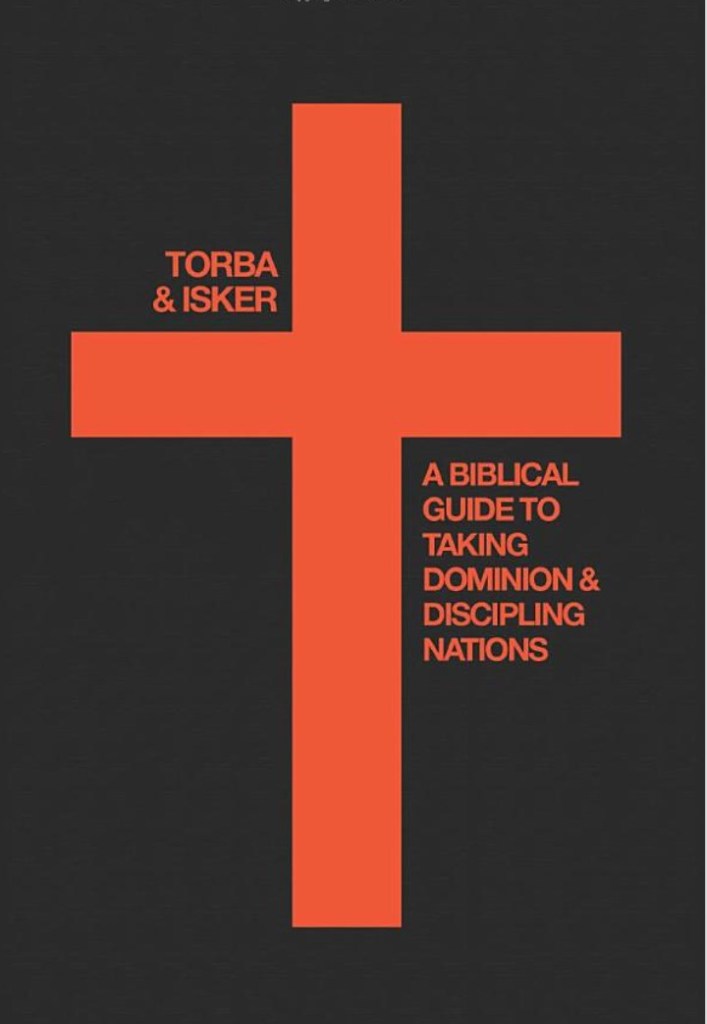
This book is a brief treatment of the idea of Christian Nationalism. It is not an in depth theological, or philosophical work. It is only 106 pages long. Don’t expect a detailed, and compelling, set of arguments. Think of this more as a manifesto of Torba & Isker. While I agree with some of the sentiments, I found the work lacking. It wasn’t a compelling argument for Christian Nationalism. I do believe that the U.S.A. started out as a Christian nation, comprised of Christian states, in a loose understanding, but the authors call Roman Catholics, and Orthodox Christians, brothers way to often. They may be co-belligerents, but they are not brothers in Christ. It is sloppy ecumenism at best, and dangerous conflation at worst. The line spacing is excessive, and the font size is pretty large. If it were formatted like most other books, it would probably be 75 pages long. I am a fan of what Torba is doing with Gab.com, and many of his other projects. I like some of what he has to say in this book, but I don’t find it compelling. If you are looking for a deeper, and more compelling treatment of the topic, that might convince you that Christian Nationalism is a good thing, you may have to look further. This book may be the one that starts you looking into the topic. The authors blame pre-mil eschatology for the problems in our nation, and insist the early Church knew nothing about this view, but my Church father can beat up your Church father. I could cite from the works of the early Church that would demonstrate that they did hold a pre-mil view, but I digress. The point is, he didn’t really cite those works. He simply listed some well known names. I do recommend staying far away from books written by liberal theologians, Roman Catholics, and other non-Christian authors, until you’ve grown enough in your faith to know the difference between truth, and lies. If you are interested in the topic, I suggest reading what the founders of the colonies wrote. Read, and understand the idea of manifest destiny that drove them. Also, look at all of the wonderful results of Christianity. If not for Christianity, you would not be here. It is irrefutable. You can try, but that is like an atheist arguing that he had no creator. It is self-refuting.
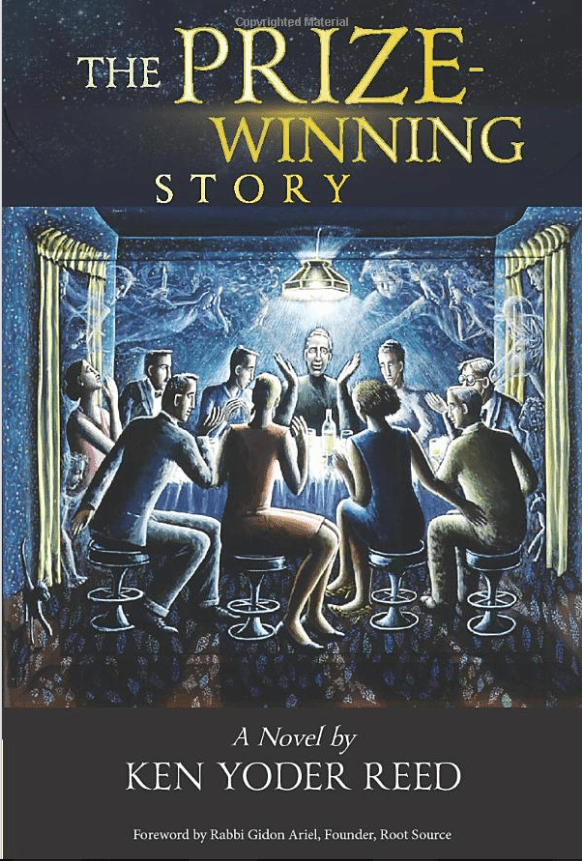
It wasn’t my cup of tea. I imagine you’d have to have given yourself over to panderous obsequity in regards to the Jews, and Israel to appreciate this book. It is one thing to be pro-Israel/Jewish people, it is another to pursue their favor like a beggar with no dignity. Regrettably, this is how the story goes, “Jews=great, Christians=abusers” I had enough of this book after reading the fictional account of a woman being abused by her father, and men in the Church. I mean, come on? Seriously? Like the Jewish people don’t do any of that either? I’m not trying to be mean. It simply wasn’t for me.
If you happen to be a Hebrew Roots movement heretic, or John Hagee fan, you might enjoy this book. For me, it was tedious, boring, and worst, insulting.
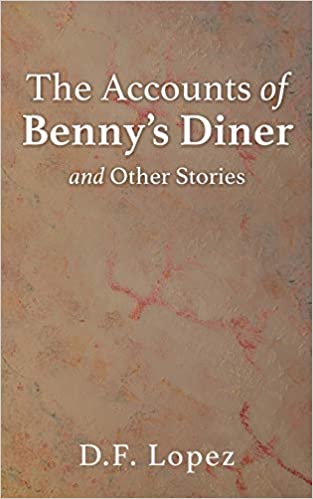
I was solicited to do this review by the author. He sent a copy of his book to me at no charge for the purpose of an honest review. First, I do not want to harm the author. Honesty demands that I give bad news as well as good news. The book is in dire need of editing, and rewriting. It was a difficult book to read. So much so, that it took away from the author’s message. The poor writing was so bad, I did not finish reading the book. You only need to eat so much of a sandwich made from rotten meat to know you won’t be nourished by consuming more of it. You would also know by that analogy that you may even be poisoned, and made sick by it. This is how poor the writing was.
I don’t want to give the impression that the review is based solely on the poor writing. It is also on the focus of the author which seemed to be an eschatological one. The book is a collection of short fictional stories, set in a diner, focused on the end times. I want to encourage the author here. Christian allegories, and stories, if done right, can be very inspirational, and thought provoking. When done wrong, they can lead people into heterodoxy, and be a waste of time. The stories that I read lead me to believe that the author should focus more on the glory of God, and seeking first His kingdom, and less on eschatological pursuits. In my opinion, he was passionate about what he wanted to communicate. He should take that passion, and use it to further improve his writing skills. It would help to take a few classes on writing, and literature. If that is out of the question, he should read the classics. If he coupled that with a class or two at a solid seminary, he might have something of value to add.
At the end of the day, his story telling skills are going to be subjective. If you like reading self-published books, with subpar writing, then you will like this book. I don’t. I usually grade a book for Christians either one of two ways. Does it add value to an individual’s personal Christian library? If the answer is, “No” I don’t recommend it. If the answer is, “Yes” I recommend it. In this case, the answer is no. I might change my mind if the author gets an editor to go through his work thoroughly, and he makes the necessary revisions. Again, what do I know? I’m just some guy, sitting at home, hacking away on an old Unicomp keyboard for his own web site. I apologize for the blunt summation, but I didn’t want to flatter the author, or protect his feelings, when he could really crank out some good work if he gets the education.
ps. Dave, you need to learn the difference between the book of Revelation, and revelations. You called the last book of the Bible, “Revelations” numerous times. Don’t start sentences with a conjunction.






 Snyder's Soapbox