
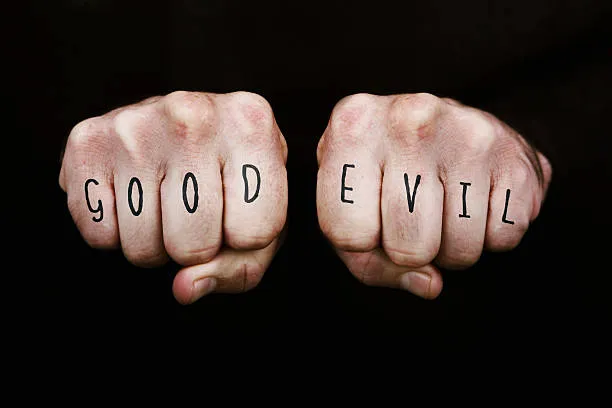
They Cannot Ground Objective Good and Evil. A Presuppositional Take-Down
Friends, let us cut straight to the point. Paganism and Wicca claim to deliver spiritual truth, harmony with nature, and a reliable moral path. They speak of “harm none,” the Threefold Law, cosmic balance, and reverence for the Goddess and God or multiple deities. These ideas appear appealing at first glance. When examined closely on the question of objective good and evil, however, the entire framework collapses into incoherence.
This approach follows presuppositional apologetics. Neutral ground does not exist. Only the triune God of Scripture supplies the necessary foundation for logic, morality, and intelligible human experience. Every non-Christian worldview borrows from Christianity to function. It then disintegrates under its own terms when scrutinized. Paganism and Wicca demonstrate this failure precisely in the realm of morality.
1. Objective Morality Requires a Transcendent, Unchanging Standard
Everyone presupposes objective good and evil. No advanced degree is needed to recognize that torturing the innocent is evil in itself. Such acts are not merely distasteful according to personal or cultural preference. Without an absolute foundation, morality dissolves into subjective tastes, power struggles, or biological byproducts. No genuine obligation remains.
Scripture provides the sole consistent basis. God declares, “For I the Lord do not change” (Malachi 3:6). His holy nature defines goodness (Psalm 119:68 – “You are good and do good”). Evil consists of rebellion against that immutable standard. The explanation remains straightforward, consistent, and universal.
Paganism and Wicca offer no such transcendent anchor. Their deities are finite beings. These gods form part of the cosmos, operate in cycles, or emerge from primordial chaos. The Goddess ebbs and flows with lunar phases. Odin displays wisdom alongside deception. Zeus exercises justice while indulging in repeated adultery. When gods remain as mutable and imperfect as the universe they inhabit, they cannot establish eternal, objective moral norms. Any standard they propose stays contingent rather than absolute.
2. The Wiccan Rede and Threefold Law – Subjective at Best, Incoherent at Worst
The well-known Rede states, “An it harm none, do what ye will.” The principle appears peaceful and permissive. The critical question persists. Who determines what constitutes harm? One coven permits a love spell as harmless. Another labels it psychic violation. The criterion remains subjective. The Threefold Law asserts that actions return threefold, whether good or ill. This mechanism functions as an impersonal cosmic reflex rather than the decree of a personal Judge. No mind directs it. No justice truly operates. The process resembles gravity applied to morality. Such a concept proves incoherent.
Observe the borrowing here. Pagan systems adopt the notion of cosmic justice, which echoes divine judgment in Scripture. They then remove the personal, holy God who actually enforces it. The result becomes mere sentimental assertion without foundation.
You end up basing good, and evil, solely on your own preferences. You’d prefer nobody rob you, or murder you, but you couldn’t say it was morally wrong. Imagine one tribe thinks that it is morally wrong to murder the children of your enemy, and eat them. The other neighboring tribe thinks that it is morally good to do so. They believe it gives them power. Without the God of the Bible, there is no absolute good, or evil. Only human preference. This can lead to a secular consensus, that has no firm foundation, and swings back and forth with their fickle minds.
3. Mutually Exclusive Claims – Polytheism’s Inherent Contradictions
Polytheism inevitably produces conflict. Multiple gods possess opposing wills. No single authority can define objective morality.
A war deity such as Ares or Mars endorses violence. A peace goddess denounces it. Which position represents objective good? Certain Pagan traditions revive historical practices including animal sacrifice or fertility rites. Modern Wicca insists on “harm none.” These positions stand in direct contradiction. Nature receives worship as sacred and inherently good. Nature also encompasses predation, disease, and indiscriminate natural disasters. Tsunamis kill without moral intent. Pagans nevertheless condemn human interference with nature as evil. The condemnation requires a transcendent norm that their system explicitly rejects.
The Threefold Law claims inevitable, objective consequences for actions. The Rede simultaneously exalts personal will as supreme. These principles clash. If cosmic returns operate as unavoidable law, free will becomes illusory. Actions fall under the control of an impersonal force. If will reigns sovereign, the Law reduces to an optional guideline. No coherent synthesis exists.
Modern Paganism frequently blends Celtic, Norse, Hindu, and New Age elements. Practitioners declare that all paths hold validity. When every path qualifies as true, no path possesses objective truth. Relativism masquerades as broad-mindedness. The same voices then denounce intolerance as evil. The critique depends on a standard their worldview cannot supply.
4. The Impossibility of the Contrary
Paganism and Wicca rely on objective morality to operate. They denounce oppression, environmental destruction, and patriarchal harm as universal wrongs. Their own presuppositions provide no grounding for such judgments. No unchanging God exists in their system. No absolute standard endures. Feelings, group consensus, or vague “energy” serve as substitutes. The foundation remains arbitrary, inconsistent, and ultimately absurd.
Adherents live as though Christianity were true. They assume objective moral norms exist. They simultaneously reject the only worldview capable of accounting for those norms. This pattern constitutes intellectual theft.
The triune God—Father, Son, and Holy Spirit—reveals Himself in Scripture as the necessary precondition for all truth, moral truth included. Without Him, outrage over evil loses rational coherence.
Final Word – Repent and Believe the Gospel
Pagans and Wiccans, your system cannot withstand examination. It contradicts itself repeatedly on the very issue required for coherence: objective good and evil.
Turn from these false deities. Scripture identifies them as demons in disguise (1 Corinthians 10:20). Repent of your sins, including the idolatry of self-will and nature-worship. Trust in the Lord Jesus Christ alone. He died for sinners and rose again. He offers justification through faith alone. “For there is no other name under heaven given among men by which we must be saved” (Acts 4:12).
Christ stands as the only way. Look to Him on the cross. He bore the full wrath deserved for objective evil, including yours. Believe and be saved.
Soli Deo Gloria
 Snyder's Soapbox