
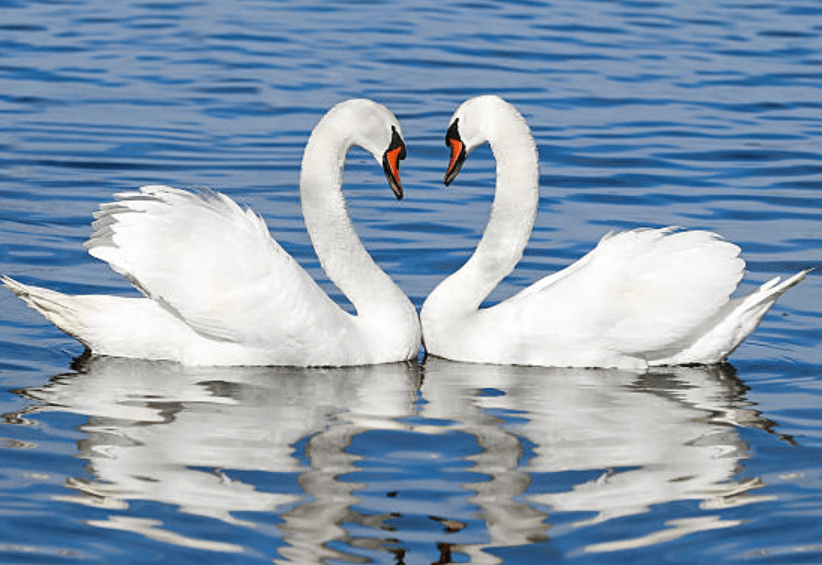
In the vast tapestry of God’s creation, where the roar of lions mingles with the whisper of windswept plains, there lies a quiet testimony to fidelity that stirs the soul. From the elegant arch of a swan’s neck to the steadfast howl of a wolf pack, certain animals form bonds that endure a lifetime. But from a Biblical vantage, rooted in the unyielding authority of Scripture, these pairings are no mere quirk of nature. They are divinely etched parables, faint glimmers of the profound glory entrusted to humanity as the pinnacle of creation.
As we peer into the wild, let us allow these creatures to demonstrate words, illuminating the covenantal mystery of marriage that God ordained from the dawn of time.
The Created Echo: Monogamy in the Animal Kingdom
Scripture declares that the heavens proclaim the glory of God, and the firmament shows His handiwork (Psalm 19:1). So too do the beasts of the field and the birds of the air bear witness to His wise and good design (Romans 1:20). Consider the swan, gliding in perfect symmetry with its mate, performing courtship dances that span decades. Or the albatross, traversing vast oceans only to reunite with its lifelong partner in an aerial ballet of devotion. Gibbons swing through the canopy, their duets a symphony of territorial love, while wolves—fierce guardians of the pack—stand as alpha pairs, unyielding in loyalty until death claims one.
These are not anomalies; they are echoes. In a world marred by the Fall, where entropy pulls at every thread, God has preserved these instincts as signposts. The beaver dams its family fortress with tireless labor alongside its mate; the prairie vole clings with a hormonal tenacity studied by scientists yet ordained by the Creator. Even the humble French angelfish patrols coral realms in exclusive tandem.
Yet these bonds, beautiful as they are, remain creaturely—instinctual, not intentional. The animals do not utter vows; they do not grasp the weight of covenant. They simply are, displaying a shadow of permanence and exclusivity that whispers of something higher.
Humanity’s High Calling: The Imago Dei in One-Flesh Union
Here the glory ascends from shadow to substance, for man alone wears the crown of creation. “Then God said, ‘Let us make man in our image, after our likeness… male and female he created them'” (Genesis 1:26–27, ESV). In this divine pronouncement, we find the blueprint: humanity, differentiated yet unified, reflecting the relational Trinity itself—Father, Son, and Spirit in eternal, perfect communion.
Marriage, then, is no human invention but a sacred ordinance, the “one-flesh” union that crowns Eden’s garden (Genesis 2:24). Jesus Himself harks back to this foundation, declaring it indissoluble save for the grave (Matthew 19:4–6). And in the New Testament, Paul unveils its deepest mystery: “This mystery is profound, and I am saying that it refers to Christ and the church” (Ephesians 5:32).
The animals’ fidelity is a prelude; human marriage is the symphony. Where the wolf models loyalty without words, the Christian husband and wife proclaim it—with vows spoken before God and witnesses, with forgiveness extended in the shadow of the cross, with children raised as arrows in the hand of the Almighty (Psalm 127:3–5). This is glory: not mere survival, but an institutional witness. The self-sacrificial love of spouses images the Bridegroom who “loved the church and gave himself up for her” (Ephesians 5:25).
A Rebuke and a Redemption: Shamed by Swans, Saved by the Savior
Oh, how these creatures indict us! In an age of no-fault divorce and fleeting affections, the swan does not abandon its mate for a newer pond; the albatross does not “trade up” after half a century; the gibbon sings no dirge of regret over infidelity. Their unthinking faithfulness shames our calculated betrayals, reminding us that lifelong monogamy is etched into the created order—a common grace that testifies against every heart grown callous (Jeremiah 17:9).
But praise God, the story does not end in shame. For those in Christ, marriage becomes a theater of redemption. The Spirit empowers what the flesh weakens; grace transforms stumbling fidelity into radiant gospel display. A couple who cleaves through trials, who serves without tallying score, who bears fruit in holiness—these are not just surviving Eden’s curse; they are previewing the wedding feast of the Lamb (Revelation 19:7–9).
The Pinnacle’s Privilege: Worship in Wedlock
Thus, the monogamous menagerie serves as a divine object lesson—a whisper from pre-Fall Eden, a call to reclaim what sin has fractured. Yet the full splendor belongs to us, image-bearers called to higher things. To whom much is given, much is required (Luke 12:48). Let us, then, steward this glory with fear and wonder: husbands loving as Christ, wives submitting as the Church, both walking in the light of covenant-keeping grace.
In the end, the animals point beyond themselves. Their bonds allure us to gaze higher, toward the eternal union where no death parts, no shadow dims, and every vow finds its fulfillment in Him.
What say you, reader? Have you seen God’s fingerprints in the wild? Share in the comments below, and may your own story, wed or single, echo the faithful love of our Creator.
Further Reading:
- Genesis 1–2 and Ephesians 5 (your Bible—start there!)
If this stirred your heart, subscribe for more reflections at the intersection of creation, theology, and everyday wonder. Grace and peace.
 Snyder's Soapbox