
Fruitful Obedience: Why Christian Couples Should Welcome as Many Children as God Permits
I want to talk plainly today about a conviction that’s rooted in Scripture, and the early Church. It’s this: Christian couples should joyfully embrace as many children as God permits, not out of legalism, but as faithful gratitude for His design and gifts.
Why Children Are Blessings (Not Burdens)
Go back to Genesis 1:28, God’s command to “be fruitful and multiply, and fill the earth.” That wasn’t a cultural suggestion—it came straight from the Maker of heaven and earth. Children aren’t a burden. They are blessings, wrapped in promise.
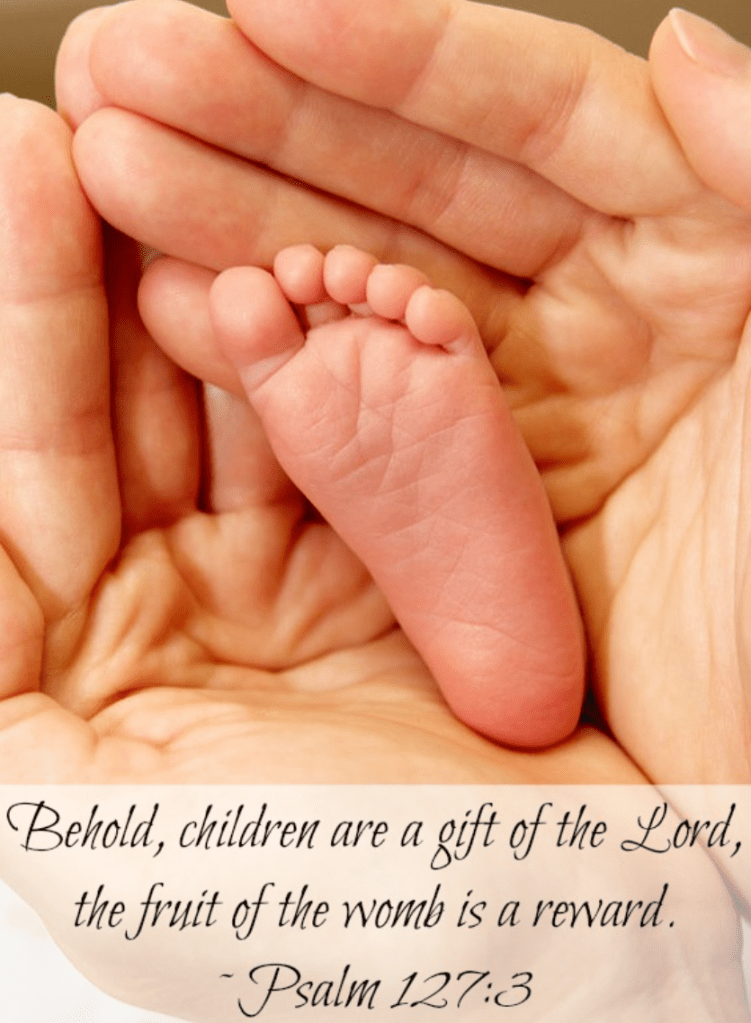
And again, Psalm 127:3–5: “Children are a heritage from the Lord… blessed is the man whose quiver is full of them.” David saw children as spiritual arrows—heirs of the faith, contributors to God’s mission. That’s how we ought to view them.
Jesus said in Matthew 6 not to worry over daily needs. Our calling to obey, trust, and walk by faith comes first. Stewardship is biblical—but faith in God’s provision must shape our decisions.
What the Early Church Told Us
The early Christians didn’t think twice about rejecting contraception, abortion, and the like. They believed marriage existed to produce life.
- Athenagoras, writing around 177 AD, bluntly rejected birth control methods and argued Christians “marry only to produce children.”
- The Didache (c. 1st/2nd century) commands: “You shall not kill the child by abortion, nor kill that which is born.” It underlines sanctity, conviction, and openness to life.
- Clement of Alexandria warns against marrying merely for pleasure, apart from procreation.
These voices remind us that early Church letters saw procreation as inseparable from Christian marriage—not optional, not incidental, and not merely biological.
Augustine: Children, Marriage, and the Gospel
Augustine (354–430 AD) is crystal clear: in De Bono Coniugali, he holds up three goods of marriage—offspring, fidelity, and sacrament. Yet “offspring” is first among equals. Marriage without openness to life, he argued, is a distortion.
He wrote in On Marriage and Concupiscence: “Intercourse even with a lawful wife is unlawful… where the conception of the offspring is prevented.” Augustine isn’t just talking biology—he’s affirming childbearing as divine involvement, vocation, and gospel stewardship.
Raising children isn’t optional. It’s participatory discipleship—shaping souls in the faith, training them in the Lord (Ephesians 6:4), and building up the City of God.
John Calvin: Covenant, Providence, and Children
Jump forward to the Reformation. Calvin picks up these themes—in his Genesis Commentary, he reiterates that God intended marriage as the means to multiply humankind.
In Institutes 2.8.41, he offers a pointed critique: those who “refuse to receive the children that God gives them” are smothering grace, resisting providence, and placing self above God’s wisdom. For Calvin, rejecting children is often rooted in fear, pride, or comfort—not trust in God.
He frames children covenantally. God’s promise to Abraham—“I will be your God, and the God of your descendants” (Genesis 17:7)—is foundational. To refuse children is, in a sense, to shrink back from the continuation of God’s promise and blessing.
On Trust, Not Obligation
Some might say: “But what about modern concerns—world overpopulation, financial strain, or environmental issues?” In many ways the world is different, but in the most important ways, it is still the same. Truth is true, whether we like it or not. The world doesn’t need less people. It needs more! The principle holds: God calls us to fruitfulness, and then to trust His provision.
Perhaps you struggle with infertility—that grief is real. Maybe your health, age, or resources are limited. I’m not saying Christian couples owe the world a big family at all costs, but if God opens the door, we shouldn’t slam it shut out of fear, pride, or a desire for personal comfort.
Paul said, “God will supply your every need according to His riches in Christ Jesus” (Philippians 4:19). Obedience is rarely convenient, but more often, it is faithful.
How This Plays Out in Marriage
To live this out is to shift mindset:
- Children cease being inconveniences, becoming arrows in your quiver.
- Every baby is a covenant heir—a soul to nurture in Christ.
- Your marriage rejoices in faith over fear, depending on God more than calculators.
This isn’t a glib “more is always better” bumper sticker. It is a gospel call to trust Him, take Him at His Word, and see children as gifts, not burdens.
Final Word
So church-families, listen up: from Genesis, through Athenagoras, Clement, Augustine, and Calvin, the tradition is clear. Openness to life is part of loving God, trusting His plan, and obeying His Word. Children are not obstacles. They are opportunities.
If God grants you life, welcome it. If God has withheld, trust His sovereignty. And if you’re struggling in that in-between, know the Lord sees, hears, and cares.
May Christian marriages, energized by the gospel, be marked by joyful fruitfulness. May our quivers be full. May our trust be firm. And may our families echo His faithfulness, generation after generation.
Key Biblical Anchors
- Genesis 1:28; Psalm 127:3–5; Matthew 6:25–33; Ephesians 6:4
Early Church Witness
- Athenagoras, A Plea for the Christians (~177 AD); Didache 2:2; Clement of Alexandria, Paedagogus
Augustine
- De Bono Coniugali; On Marriage and Concupiscence
John Calvin
- Commentary on Genesis; Institutes 2.8.41

 Snyder's Soapbox